
The Best Backpacking Stoves of 2026
 By Ian Freng
Updated November 12, 2026
A good backpacking stove boils water fast, works in the wind and is simple enough to use in the dark when you’re tired and hungry. These are the best backpacking stoves for most hikers, from fast integrated systems that make freeze-dried meals effortless to tiny canister stoves that weigh almost nothing.
Best backpacking stoves compared
| Product | Type | Igniter | Best for | Buy |
|---|---|---|---|---|
 Jetboil Flash
Best overall |
Integrated system | Push-button | Freeze-dried meals, coffee | $144.95 at Amazon |
 MSR PocketRocket Deluxe
Best canister stove |
Canister stove | Push-button | All-around backpacking | $83.95 at Amazon |
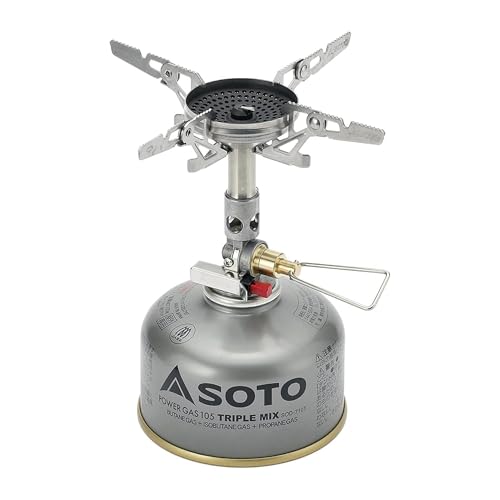 SOTO WindMaster
Best in wind |
Canister stove | Push-button | Windy, exposed camps | $69.95 at Amazon |
 Jetboil MiniMo
Best for cooking |
Integrated system | Push-button | Cooking real meals | $154.25 at Amazon |
 BRS-3000T
Best budget ultralight |
Canister stove | None | Ultralight, budget | $16.89 at Amazon |
Amazon price as of Nov 12, 2026 8:13 am GMT+0000. Prices and availability are accurate as of the date/time indicated and are subject to change.
We may earn a commission when you buy through links on this page, at no extra cost to you. As an Amazon Associate we earn from qualifying purchases.
Quick picks
- Best overall: Jetboil Flash: a fast, all-in-one system for boiling water.
- Best canister stove: MSR PocketRocket Deluxe: a light, regulated stove with a built-in igniter.
- Best in wind: SOTO WindMaster: a concave burner that keeps working in the wind.
- Best for cooking: Jetboil MiniMo: an integrated system with real simmer control.
- Best budget ultralight: BRS-3000T: a tiny titanium stove that costs very little.
How I picked these
I compared backpacking stoves on boil speed, wind performance, simmer control, weight, stability and ease of use, based on manufacturer specs, independent testing reports and long-term owner reviews. All of these stoves run on standard isobutane-propane canisters, which are easy to find at outdoor stores.
1. Jetboil Flash: best overall
Jetboil Flash Cooking System
A fast, efficient all-in-one stove system for boiling water.
- Type Integrated system
- Igniter Push-button
- Best for Freeze-dried meals, coffee
What we like
- Very fast boils
- Efficient in wind
- Everything nests in the cup
- Push-button igniter
What we don't
- Heavier and bulkier than a stove alone
- Poor at simmering
Amazon price as of Nov 12, 2026 8:13 am GMT+0000. Prices and availability are accurate as of the date/time indicated and are subject to change.
If your camp meals are mostly freeze-dried food, oatmeal and coffee, the Jetboil Flash is hard to beat. The pot has a built-in heat exchanger and insulating cozy, so it boils water quickly and uses less fuel than an open burner, especially in wind.
The stove, a small fuel canister and the burner all nest inside the cup, so the whole kitchen packs into one unit. A color-changing indicator on the cozy shows when the water is hot.
Where it falls short: it’s heavier and bulkier than a simple canister stove, and it’s designed for boiling water, not simmering real meals.
2. MSR PocketRocket Deluxe: best canister stove
MSR PocketRocket Deluxe Stove
A light, regulated canister stove that handles cold and wind well.
- Type Canister stove
- Igniter Push-button
- Best for All-around backpacking
What we like
- Pressure regulator for cold weather
- Built-in igniter
- Wide burner head
- Very compact
What we don't
- Pot sold separately
- Less wind-efficient than a Jetboil
Amazon price as of Nov 12, 2026 8:13 am GMT+0000. Prices and availability are accurate as of the date/time indicated and are subject to change.
The PocketRocket Deluxe is a versatile backpacking stove that works with any pot. A pressure regulator keeps output steady as the canister cools and empties, and the wide, recessed burner head handles wind better than most small stoves.
It weighs only a few ounces, folds down to fit inside a pot, and has a reliable push-button igniter.
Where it falls short: you’ll need your own pot, and in strong wind it’s less efficient than an integrated system.
3. SOTO WindMaster: best in wind
SOTO WindMaster Backpacking Stove
A wind-resistant, regulated stove that performs in rough conditions.
- Type Canister stove
- Igniter Push-button
- Best for Windy, exposed camps
What we like
- Excellent wind performance
- Micro regulator
- Built-in igniter
What we don't
- Pot support is a separate small part
- Pot sold separately
Amazon price as of Nov 12, 2026 8:13 am GMT+0000. Prices and availability are accurate as of the date/time indicated and are subject to change.
SOTO’s WindMaster uses a concave burner head that shelters the flame, so it keeps cooking when other backpacking stoves sputter. A micro regulator keeps the flame steady in cold weather, and the igniter is built in.
It’s a great backpacking stove for exposed alpine camps and shoulder-season trips.
Where it falls short: the pot support is a small removable part that’s easy to lose, and you’ll need your own pot.
4. Jetboil MiniMo: best for cooking
Jetboil MiniMo Cooking System
An integrated stove system with real simmer control and a wider pot.
- Type Integrated system
- Igniter Push-button
- Best for Cooking real meals
What we like
- Real simmer control
- Wide, shallow pot is easy to eat from
- Fast boils
What we don't
- Heavier than the Flash
- Pricier
Amazon price as of Nov 12, 2026 8:13 am GMT+0000. Prices and availability are accurate as of the date/time indicated and are subject to change.
The MiniMo is Jetboil’s answer for backpackers who actually cook. It has a regulator and a valve that adjusts down to a low simmer, and its wider, shorter pot is easier to stir and eat from than the Flash.
You still get the fast, efficient boiling and nested design that make Jetboil systems popular.
Where it falls short: it’s heavier and more expensive than the Flash.
5. BRS-3000T: best budget ultralight
BRS-3000T Ultralight Titanium Stove
A tiny, very cheap titanium stove for ultralight kits.
- Type Canister stove
- Igniter None
- Best for Ultralight, budget
What we like
- Extremely light
- Very inexpensive
- Packs tiny
What we don't
- Poor in wind
- Small pot supports, less stable
- No igniter
Amazon price as of Nov 12, 2026 8:13 am GMT+0000. Prices and availability are accurate as of the date/time indicated and are subject to change.
The BRS-3000T is one of the lightest backpacking stoves you can buy, and one of the cheapest. It screws onto a canister and folds down to the size of a matchbox, which makes it popular with ultralight hikers and as a backup stove.
Use it with a small, light pot and a windscreen that doesn’t trap heat around the canister.
Where it falls short: it struggles in wind, the small pot supports make it less stable with larger pots, and it has no igniter. Treat it as a light, budget option, not a do-everything stove.
How to choose a backpacking stove
- Integrated systems (like Jetboil) pair the stove with a heat-exchanger pot. They boil fastest, are most fuel-efficient and handle wind best, but they’re heavier and less versatile.
- Canister stoves (like the PocketRocket and WindMaster) screw onto a fuel canister and work with any pot. They’re light and versatile.
- Regulators keep the flame steady as the canister cools and empties, which helps in cold weather.
- Simmer control matters if you cook real meals. If you only boil water, focus on speed and efficiency.
- Igniters are convenient but can fail. Always carry a lighter as a backup.
Stove safety tips
- Never cook inside a tent. Stoves can start fires and produce carbon monoxide.
- Cook on a stable, level surface clear of dry grass and leaves, and follow local fire restrictions.
- Don’t use a windscreen that fully wraps a canister stove: it can overheat the canister.
- Let the stove cool before packing it away, and check the canister threads for damage before each trip.
How much fuel do you need?
Fuel use depends on your stove, the temperature, wind and how much you cook. As a rough starting point, many backpackers plan around 15 to 25 grams of fuel per person per day for boiling water for two meals and a hot drink. Integrated systems use less; cold weather and wind use more. Weigh your canister before and after a trip to learn your own numbers.
Canister, liquid fuel or alcohol stove?
- Canister stoves are the easiest choice for most backpackers: light, simple, quick to light and clean-burning. Their weakness is cold weather, when canister pressure drops.
- Liquid fuel stoves burn white gas and keep working in deep cold and at high altitude. They’re heavier, need priming and are popular for winter and international trips.
- Alcohol stoves are very light and cheap but slow, hard to control, and often restricted during fire bans.
- Wood stoves need no fuel to carry but depend on dry wood and are banned in many areas during fire season.
What pot do you need?
If you choose an integrated system like the Jetboil Flash or MiniMo, the pot is included. For a canister stove, a 750 ml to 1 liter titanium or aluminum pot is the sweet spot for one person; it’s big enough to boil water for a freeze-dried meal and a hot drink, and a small fuel canister and the stove usually nest inside. Groups and people who cook real meals should look at a larger pot with a lid and a heat exchanger for efficiency.
Fire restrictions and stoves
During fire season, many public lands restrict campfires and some types of stoves. Canister stoves with an on/off valve are often still allowed when campfires are banned, but alcohol and wood stoves may not be. Always check current fire restrictions with the land manager before your trip.
Backpacking stove FAQ
What is the best backpacking stove for beginners?
An integrated system like the Jetboil Flash is the easiest backpacking stove for beginners: everything fits together, it lights with a button and it boils water quickly.
Can you take a backpacking stove on a plane?
You can usually pack the stove itself, cleaned of fuel residue, in checked luggage, but you cannot fly with fuel canisters. Buy fuel at your destination and check your airline’s rules.
Do backpacking stoves work in cold weather?
Canister stoves lose pressure in the cold. Regulated stoves like the MSR PocketRocket Deluxe and SOTO WindMaster handle it better. Keep the canister warm in your sleeping bag or jacket overnight.
Are fuel canisters interchangeable between brands?
Most backpacking stoves use the standard threaded (EN417 / Lindal valve) isobutane-propane canisters, so brands are generally interchangeable. Check your stove’s manual to be sure.
How long does a fuel canister last?
A small 100 gram canister often lasts a solo hiker two to four days of boiling water for meals and drinks, depending on the stove, weather and how much you cook.
Is a Jetboil worth it?
If you mostly boil water for freeze-dried meals and drinks, a Jetboil is worth it for its speed, fuel efficiency and convenience. If you want to cook real meals or save weight, a canister stove with a separate pot is more versatile.
What’s the lightest backpacking stove?
Tiny canister stoves like the BRS-3000T weigh about an ounce. They’re light and cheap, but they’re less stable and struggle in wind compared with heavier stoves.
Final thoughts on the best backpacking stoves
For most backpackers who eat freeze-dried meals, the Jetboil Flash is the best backpacking stove: fast, efficient and simple. If you want a light stove that works with any pot, the MSR PocketRocket Deluxe is the all-around pick, and the SOTO WindMaster is the one to choose for windy camps. Whatever backpacking stove you pick, carry a backup lighter and practice using it at home first.