
The Best Trekking Poles of 2026
 By Ian Freng
Updated November 12, 2026
Good trekking poles take weight off your knees on descents, give you balance on creek crossings and loose rock, and help you keep a steady rhythm on long climbs. The best trekking poles also lock securely, adjust quickly and don’t rattle. Below are five trekking poles that cover every budget and style, from a dependable aluminum workhorse to a folding pole that disappears into your pack.
Best trekking poles compared
| Product | Material | Lock | Grip | Collapsed | Buy |
|---|---|---|---|---|---|
 Black Diamond Trail
Best overall |
Aluminum | Lever (FlickLock Pro) | Foam | Telescoping | $87.88 at Amazon |
 LEKI Makalu Cork Lite
Best premium |
Aluminum | Lever (SpeedLock) | Cork | Telescoping | $159.95 at Amazon |
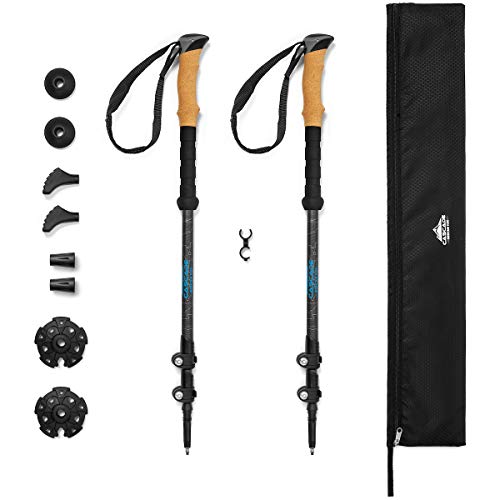 Cascade Mountain Tech Carbon
Best value |
Carbon fiber | Lever | Cork | Telescoping | $64.99 at Amazon |
 TrailBuddy
Best budget |
7075 aluminum | Lever | Cork-style | Telescoping | $49.99 at Amazon |
 Black Diamond Distance Z
Best folding |
Aluminum | Push-button (Z-pole) | Foam | Folding | $209.95 at Amazon |
Amazon price as of Nov 12, 2026 8:12 am GMT+0000. Prices and availability are accurate as of the date/time indicated and are subject to change.
We may earn a commission when you buy through links on this page, at no extra cost to you. As an Amazon Associate we earn from qualifying purchases.
Quick picks
- Best overall: Black Diamond Trail: dependable aluminum poles with secure FlickLock adjusters.
- Best premium: LEKI Makalu Cork Lite: premium cork-grip poles from one of the best-known pole makers.
- Best value: Cascade Mountain Tech Carbon: carbon poles with cork grips at a mid-range price.
- Best budget: TrailBuddy: inexpensive aluminum poles with lever locks.
- Best folding: Black Diamond Distance Z: folding Z-poles that pack down small.
How I picked these
I compared trekking poles on what matters on the trail: how securely they lock, how comfortable the grips are after a few hours, weight, packed size and durability. The picks are based on research, manufacturer specs and long-term owner feedback, and each one is checked against current Amazon availability and pricing every day.
I left out cheap twist-lock poles. Twist locks slip when they’re dirty or cold, and a pole collapsing under you on a descent is exactly what trekking poles are supposed to prevent.
1. Black Diamond Trail: best overall
Black Diamond Trail Trekking Poles
Durable aluminum trekking poles with lever locks that stay put.
- Material Aluminum
- Lock Lever (FlickLock Pro)
- Grip Foam
- Collapsed Telescoping
What we like
- FlickLock Pro lever locks hold firmly
- Tough aluminum shafts
- Comfortable foam grips with long extension
What we don't
- Heavier than carbon poles
- Don't fold down as small as Z-poles
Amazon price as of Nov 12, 2026 8:12 am GMT+0000. Prices and availability are accurate as of the date/time indicated and are subject to change.
The Black Diamond Trail is the trekking pole most hikers should start with. The aluminum shafts flex instead of snapping when they get wedged between rocks, and the FlickLock Pro lever locks are easy to adjust with gloves on and hold their length under load.
The foam grips have an extended section below the handle, so you can choke down on short, steep climbs without stopping to shorten the poles. It’s a simple, durable design that holds up to years of use and is easy to service.
Where it falls short: aluminum is heavier than carbon, and the telescoping design packs longer than a folding Z-pole, which matters if you stow poles on your pack often.
2. LEKI Makalu Cork Lite: best premium
LEKI Makalu Cork Lite Trekking Poles
Premium trekking poles with cork grips and refined lever locks.
- Material Aluminum
- Lock Lever (SpeedLock)
- Grip Cork
- Collapsed Telescoping
What we like
- Cork grips mold to your hands and wick sweat
- SpeedLock lever adjusters
- Excellent build quality
What we don't
- Expensive
- Cork needs occasional sealing
Amazon price as of Nov 12, 2026 8:12 am GMT+0000. Prices and availability are accurate as of the date/time indicated and are subject to change.
LEKI has been making trekking poles for decades, and the Makalu Cork Lite shows it. Cork grips stay comfortable in hot, sweaty hands and slowly mold to your grip, and the lever locks are some of the smoothest you’ll find.
If you hike a lot of miles every year and want trekking poles you’ll keep for a long time, this is a worthwhile upgrade over budget poles.
Where it falls short: it costs a lot more than the budget picks, and cork grips need a little care to stay in good shape.
3. Cascade Mountain Tech Carbon: best value
Cascade Mountain Tech Carbon Fiber Trekking Poles
Lightweight carbon fiber poles with cork grips and quick locks for the price of aluminum.
- Material Carbon fiber
- Lock Lever
- Grip Cork
- Collapsed Telescoping
What we like
- Light carbon fiber shafts
- Cork grips
- Quick lever locks
- Comes with extra tips
What we don't
- Carbon can snap under sideways force
- Not as refined as LEKI or Black Diamond
Amazon price as of Nov 12, 2026 8:12 am GMT+0000. Prices and availability are accurate as of the date/time indicated and are subject to change.
Cascade Mountain Tech’s carbon trekking poles are popular for a reason: you get carbon shafts, cork grips and lever locks for well under the price of name-brand carbon poles. They’re noticeably lighter in hand than aluminum, which adds up over a long day of pole plants.
They typically ship with a set of replacement tips and baskets, so you’re ready for trails, mud and snow out of the box.
Where it falls short: carbon is stiffer and lighter but can snap if it gets levered sideways between rocks, where aluminum would bend.
4. TrailBuddy: best budget
TrailBuddy Trekking Poles
Inexpensive 7075 aluminum trekking poles that get the basics right.
- Material 7075 aluminum
- Lock Lever
- Grip Cork-style
- Collapsed Telescoping
What we like
- Very affordable
- Lever locks instead of twist locks
- Light for aluminum
What we don't
- Basic grips and straps
- Less durable than premium poles
Amazon price as of Nov 12, 2026 8:12 am GMT+0000. Prices and availability are accurate as of the date/time indicated and are subject to change.
If you’re not sure how often you’ll use trekking poles, TrailBuddy is a low-risk way to find out. You still get lever locks and 7075 aluminum shafts, which is more than most poles at this price offer.
They’re a great pick for day hikers, occasional backpackers and anyone who wants a spare pair in the car.
Where it falls short: the grips, straps and locks feel more basic than the premium options, and they won’t hold up to heavy, frequent use as well.
5. Black Diamond Distance Z: best folding
Black Diamond Distance Z Trekking Poles
Folding trekking poles that collapse in seconds and pack small.
- Material Aluminum
- Lock Push-button (Z-pole)
- Grip Foam
- Collapsed Folding
What we like
- Fold down very small
- Fast to deploy
- Light
What we don't
- Fixed length: you must buy the right size
- Expensive
Amazon price as of Nov 12, 2026 8:12 am GMT+0000. Prices and availability are accurate as of the date/time indicated and are subject to change.
Z-poles fold into three sections like a tent pole, so they collapse much smaller than telescoping trekking poles and stow easily on the side of your pack or in a duffel. That makes them a favorite with trail runners, fastpackers and anyone who only uses poles on climbs and descents.
Deploying them takes a couple of seconds: pull the top section and the pole snaps together.
Where it falls short: most Distance Z poles are fixed length, so you need to choose the right size, and you can’t shorten them for long descents.
How to choose the best trekking poles
- Locking mechanism: lever (flick) locks are more reliable than twist locks and easier to adjust with cold hands.
- Material: aluminum bends instead of breaking and costs less; carbon is lighter and absorbs more vibration but can snap.
- Grips: cork handles sweat best, foam is light and soft, and rubber is best for cold weather. Extended grips let you choke down on steep sections.
- Packed size: folding Z-poles pack smallest. Telescoping trekking poles are more adjustable.
- Weight: you lift your poles thousands of times a day, so a few ounces matter more than you’d think.
How to size your poles
Stand on flat ground in your hiking shoes with your arm at your side and your elbow bent to 90 degrees. Adjust the trekking poles so the tip touches the ground and your forearm is parallel to the ground. Shorten them by about 5 to 10 cm for long climbs and lengthen them for descents.
For fixed-length folding poles, most brands publish a height chart. If you’re between sizes, longer poles are usually easier to manage than poles that are too short.
Do you really need hiking poles?
Not on every hike, but trekking poles make a real difference on steep descents, on uneven or rocky ground, at stream crossings and when you’re carrying a heavy pack. Many hikers find they reduce fatigue in the knees and help them keep a steady rhythm on long climbs. If you have knee or balance concerns, they’re one of the best investments you can make.
Using poles on the trail
- Use the straps: put your hand up through the strap from below, then grip the pole so the strap supports your wrist.
- Plant opposite to your feet: left pole with right foot, like a natural walking rhythm.
- Descents: lengthen the poles and plant them slightly ahead to take load off your knees.
- Rubber tips: use them on pavement and rock to reduce noise and trail damage; remove them for mud and snow.
Pole features explained
- Tips: carbide tips grip rock and ice. Rubber tip covers reduce noise and wear on pavement and slick rock.
- Baskets: small trekking baskets stop poles sinking in mud; wide snow baskets keep them from punching through snow.
- Straps: padded, adjustable straps let you push down through the strap instead of gripping hard, which saves your hands on long days.
- Shock absorbers: some poles have springs that soften impacts. They can help sore wrists and elbows, but add weight and a slight bounce.
- Sections: two-section poles are simpler and stiffer; three-section poles pack shorter.
Poles vs. a hiking staff
A single hiking staff gives you a point of balance and a free hand, and it’s a classic look on easy trails. A pair of trekking poles gives you symmetrical support, takes more strain off your knees on descents and helps you keep a steady rhythm when climbing. For steep or rocky hikes and anything with a heavy pack, two poles are the better tool. If you like the look of a wooden staff, our guide to the best wood for a hiking stick covers how to make your own.
Many hikers carry trekking poles on their pack until the trail gets steep, then use them for climbs, descents and stream crossings. That’s where they earn their weight.
How to care for your poles
- Separate the sections after wet hikes and let them dry fully before storing them.
- Wipe grit out of lever locks and check the lock tension every few trips. Most lever locks have a small screw or dial to tighten them.
- Replace worn tips and baskets before they fail. They’re inexpensive and easy to swap.
- Store poles extended loosely or collapsed in a dry place, away from heat.
Trekking poles FAQ
Are carbon or aluminum trekking poles better?
Carbon trekking poles are lighter and absorb more vibration, but they can snap if they get levered sideways. Aluminum poles are heavier and cheaper, and they bend instead of breaking, which makes them more forgiving for rough terrain.
How long do trekking poles last?
A good pair of aluminum trekking poles can last many years with basic care. Tips and baskets wear out first and are cheap to replace. Dry your poles after wet hikes and keep the locks clean.
Should I use one trekking pole or two?
Two trekking poles give you balanced support and rhythm and do more to protect your knees. One pole is handy for easy trails or when you want a free hand for photos.
Can trekking poles be used as tent poles?
Yes. Many ultralight trekking pole tents and tarps are designed to pitch with trekking poles instead of dedicated tent poles, which saves weight. Adjustable poles work best for this.
Can I take trekking poles on a plane?
Rules vary. In the US, TSA generally doesn’t allow trekking poles as carry-on items, so check them in your luggage.
How much do trekking poles weigh?
Most pairs of trekking poles weigh between about 10 and 22 ounces. Carbon and folding poles are at the light end; aluminum poles with shock absorbers are at the heavy end.
Are expensive trekking poles worth it?
More expensive trekking poles usually have better locks, more comfortable grips and lighter shafts, and they last longer. If you hike often, the upgrade is worth it. For occasional hikes, a good budget pair with lever locks is fine.
Final thoughts on the best trekking poles
For most hikers, the Black Diamond Trail is the best trekking pole: durable, secure and easy to adjust. If you want cork grips and premium build quality, go with the LEKI Makalu Cork Lite. On a budget, the Cascade Mountain Tech carbon poles and TrailBuddy both get the important things right. Whichever trekking poles you choose, size them properly and practice using them on easy trails first.