
The 5 Best Survival Axes & Hatchets of 2026
 By Ian Freng-Meeteer
Updated November 11, 2026
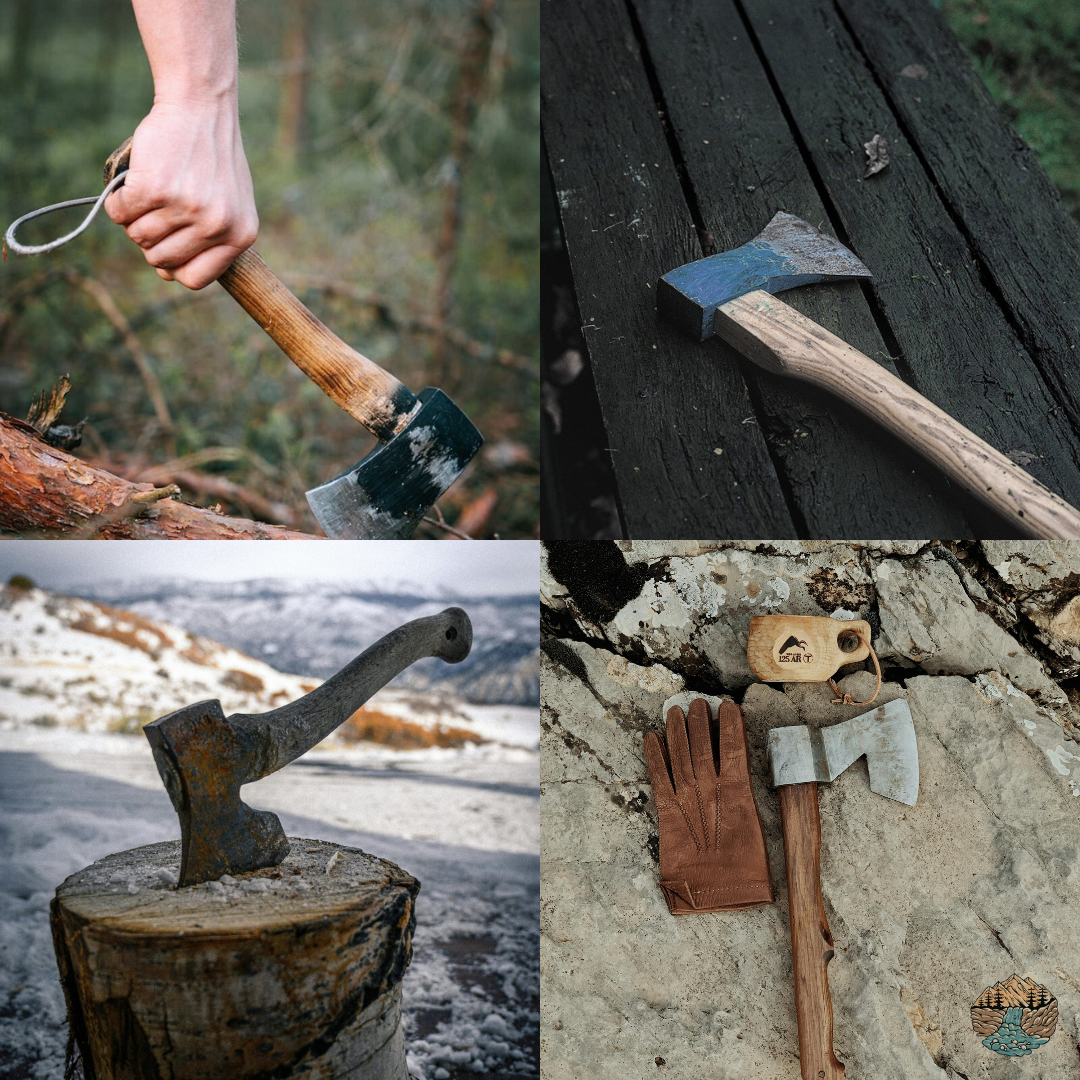
An axe is still the best tool for splitting firewood and doing heavy work around camp. My #1 is the Hults Bruk carpenter axe I’ve used regularly for over five years. The rest of the list covers an all-in-one tactical tomahawk, a lightweight modern hatchet, a classic American one-piece hatchet, and a carving axe for bushcraft.
We may earn a commission when you buy through links on this page, at no extra cost to you. As an Amazon Associate we earn from qualifying purchases.
Quick picks
- Best overall: Hults Bruk Stalberg Carpenter Axe, mine for 5+ years. Swedish steel that holds an edge.
- Best all-in-one: Gerber Downrange: axe, hammer and pry bar in one.
- Best lightweight value: Fiskars X7 Hatchet: light, tough, and around $35.
- Best classic hatchet: Estwing Sportsman’s Axe: one-piece forged steel, made in the USA.
- Best for carving: BeaverCraft AX6: a bushcraft carving hatchet.
Best survival axes and hatchets compared
| Product | Type | Handle | Best for | Buy |
|---|---|---|---|---|
 Hults Bruk Stalberg
Best Overall |
Carpenter axe | 20" hickory | All-around camp work | Check price on Amazon |
 Gerber Downrange
Best All-in-One |
Tomahawk / pry bar | Steel w/ G-10 scales | Vehicle, home kit | Check price on Amazon |
 Fiskars X7
Best Lightweight Value |
Hatchet | 14" composite | Kindling, camp | Check price on Amazon |
 Estwing Sportsman's
Best Classic |
Hatchet | 14" steel/leather | Durable camp hatchet | Check price on Amazon |
 BeaverCraft AX6
Best for Carving |
Carving hatchet | Ash wood | Bushcraft carving | Check price on Amazon |
How to choose the best survival axe or hatchet
- Purpose: carving and fine work call for a thin bit and a short handle; splitting firewood needs more head weight and a longer handle.
- Steel: high-carbon steel takes and holds a sharper edge; stainless and coated heads need less care.
- Weight: a full-size axe rarely belongs in a bug-out bag. For carrying, a hatchet under ~2 lb is plenty. Keep heavier axes at camp or in the vehicle.
- A sheath matters for safe carrying and to protect the edge.
1. Hults Bruk Stalberg Carpenter Axe: best overall
Hults Bruk Stalberg Carpenter Axe
Mine for 5+ years: Swedish steel that holds an edge.
- Type Carpenter axe
- Handle 20" hickory
- Best for All-around camp work
What we like
- Precise enough for carving
- Heavy enough for real work
- Lasts decades
What we don't
- Expensive
- Not a dedicated splitter
I’ve had mine for over five years of regular use, and with a good sharpening stone it’ll last many more. The Stalberg is a Swedish carpenter’s axe from Hults Bruk (Hultafors Group’s axe brand): a 1.75 lb head on a 20″ handle, with a straight, fine edge that’s as good at shaping and notching wood as it is at chopping. That versatility (precise enough for carving, heavy enough for real work) is why I think it’s still the best survival axe available.
Where it falls short: it’s expensive, and the thinner carpenter’s bit isn’t a dedicated splitter. For big rounds of firewood, a splitting axe or maul does better.
2. Gerber Downrange Tomahawk: best all-in-one
Gerber Downrange Tomahawk
Axe, hammer face and pry bar in one tool.
- Type Tomahawk / pry bar
- Handle Steel w/ G-10 scales
- Best for Vehicle, home kit
What we like
- Three tools in one
- Durable 420HC body
- G-10 scales
What we don't
- Heavy
- Expensive
The Downrange combines an axe head, a hammer face and a pry bar on a single 420HC steel body with G-10 handle scales. It’s built more for rough utility work than for fine bushcraft: prying, hammering stakes and storm cleanup, plus chopping when needed.
Where it falls short: it’s heavy and expensive, and better suited to a vehicle or home kit than a bug-out bag.
3. Fiskars X7 Hatchet: best lightweight value
Fiskars X7 14 inch Hatchet
Light, tough and around $35.
- Type Hatchet
- Handle 14" composite
- Best for Kindling, camp
What we like
- Head can't loosen
- Lightweight
- Includes sheath
What we don't
- Handle not replaceable
Fiskars’ 14″ hatchet uses a lightweight composite handle bonded to the head, so it can’t loosen like a wooden handle. It’s balanced for kindling and small splitting, comes with a carrying sheath, and costs about $35. It’s one of the most-recommended camp hatchets for good reason.
Where it falls short: the handle can’t be replaced if it breaks, and it’s not suited to fine carving.
4. Estwing Sportsman’s Axe: best classic hatchet
Estwing Sportsman’s Axe 14 inch
One-piece forged steel, made in the USA.
- Type Hatchet
- Handle 14" steel/leather
- Best for Durable camp hatchet
What we like
- Extremely durable
- Nothing to loosen
- Affordable
What we don't
- More hand shock
Forged from a single piece of American steel with a stacked-leather grip, the Estwing is about as durable as a hatchet gets. There’s no head to loosen and no handle to crack. It’s a timeless, affordable camp hatchet.
Where it falls short: the all-steel construction transmits more shock to your hand than wood or composite, and the leather grip needs occasional care.
5. BeaverCraft AX6: best for carving
BeaverCraft AX6 Bushcraft Hatchet
A small carving hatchet for bushcraft work.
- Type Carving hatchet
- Handle Ash wood
- Best for Bushcraft carving
What we like
- Great for carving
- High-carbon head
- Ash handle
What we don't
- Too light for splitting
A small forged bushcraft hatchet with a high-carbon head and ash handle, designed for carving and detailed work: making tent stakes, spoons, notches and feather sticks.
Where it falls short: it’s too light for heavy chopping or splitting larger wood.
Axe safety and care
- Chop with your legs out of the arc (kneel or stand to the side) and split on a solid chopping block, never on the ground.
- Keep it sharp. A dull axe glances off wood, which is more dangerous than a sharp one.
- Oil the head and treat wooden handles with linseed oil once or twice a year.
Survival axe safety and care
- Chop with your legs out of the arc: kneel or stand to the side, and split on a solid chopping block, never on the ground.
- Keep it sharp. A dull survival axe glances off wood, which is more dangerous than a sharp one.
- Check the head on wooden handles before every use; a loose head is a serious hazard.
- Oil the head to prevent rust and treat wooden handles with linseed oil once or twice a year.
- Always sheath the edge when carrying or storing.
Survival axe FAQ
What is the best survival axe for 2026?
The Hults Bruk Stalberg carpenter axe, the survival axe I’ve used for over five years. It’s precise enough for carving and heavy enough for real work.
What is the difference between a hatchet and an axe?
A hatchet is a small one-handed axe, usually with a handle under about 16 inches. Axes have longer handles for two-handed swings and more power.
Can I use a survival axe for camping?
Yes. A hatchet or small axe splits kindling, drives stakes and processes firewood at camp. Use a chopping block and keep your legs out of the swing.
How do I maintain my survival axe?
Keep the edge sharp with a puck or stone, oil the head to prevent rust, treat wooden handles with linseed oil, and store it in a sheath.
Are there lightweight survival axes for backpacking?
Yes. The Fiskars X7 and BeaverCraft AX6 are light enough to carry, though many backpackers prefer a folding saw for weight.
Should I carry an axe or a saw?
For carrying, a folding saw is lighter and safer. A survival axe earns its weight when you need to split wood regularly, such as at a base camp or cabin.
Final thoughts on the best survival axes
A good survival axe is a tool you’ll pass down. Mine is the Hults Bruk Stalberg, and with a sharpening stone it’ll last many more years. If you’re on a budget, the Fiskars X7 is an excellent, nearly indestructible starting point.