
Kingbull Hunter 2.0S vs Rover 2.0: Which Should You Buy?
 By Ian Freng
Updated November 12, 2026
The Kingbull Hunter 2.0S and Rover 2.0 are two of Kingbull’s most popular fat tire e-MTBs, and the Hunter 2.0S vs Rover 2.0 choice comes down to one question: do you want more battery or more suspension? The Hunter 2.0S is a hardtail with an 864Wh battery for $949. The Rover 2.0 adds a rear shock and 1300W peak power for $1,299, but has a smaller 720Wh battery.
Kingbull Hunter 2.0S vs Rover 2.0: specs side by side
| Product | Motor | Battery | Claimed range | Suspension | Weight | Buy |
|---|---|---|---|---|---|---|
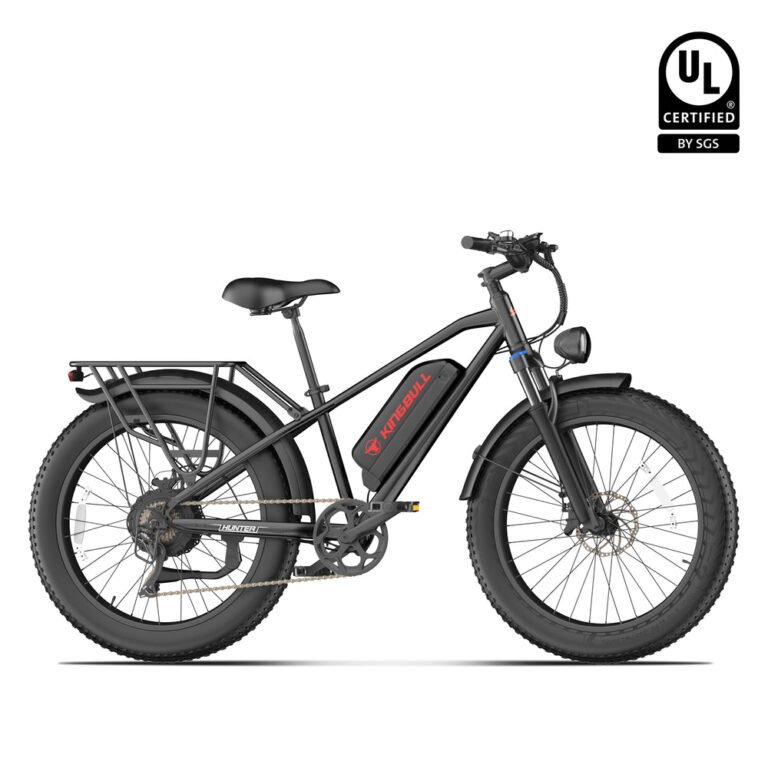 Kingbull Hunter 2.0S
Best for range and value |
750W hub | 864Wh (48V 18Ah) | 80+ miles | Front (hydraulic) | 77 lbs | $949 at Kingbull |
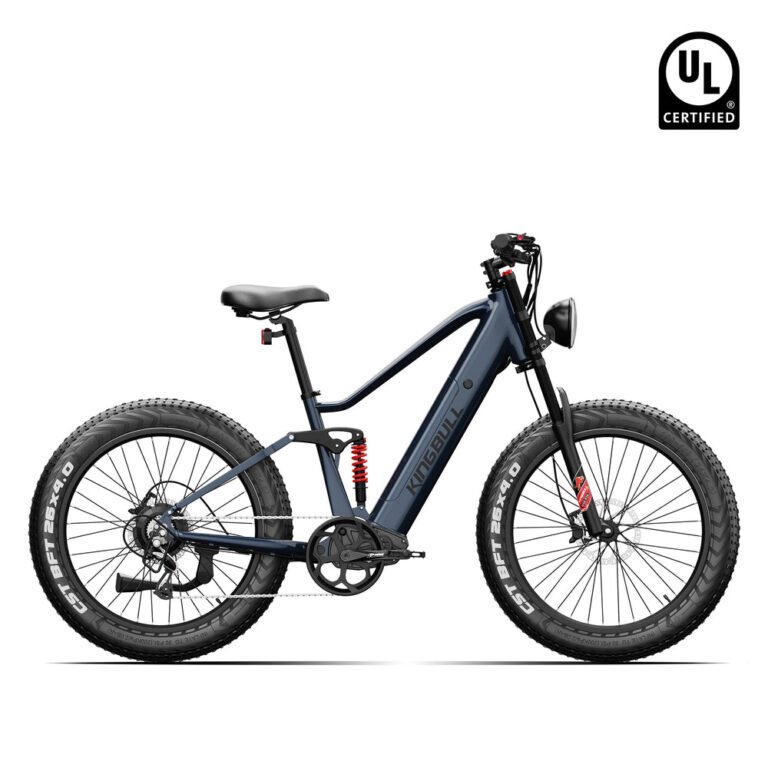 Kingbull Rover 2.0
Best for rough terrain |
750W hub (1300W peak) | 720Wh (48V 15Ah) | 60 miles | Full | 80 lbs | $1,299 at Kingbull |
We may earn a commission when you buy through links on this page, at no extra cost to you. As an Amazon Associate we earn from qualifying purchases.
Quick picks
- Best for range and value: Kingbull Hunter 2.0S: more battery for less money.
- Best for rough terrain: Kingbull Rover 2.0: full suspension and more climbing power.
How I compared them
I’ve been riding e-bikes for six years, and I know what works and what doesn’t once the novelty wears off: real-world range, brakes that stay strong on a heavy bike, comfort on long rides, and how easy a bike is to live with.
I compared both bikes spec by spec using the manufacturers’ published specifications and owner feedback, then looked at who each bike suits best. Specs and range figures are manufacturer claims. Real-world range depends on rider weight, terrain, temperature, tire pressure and how much you use pedal assist versus the throttle, so expect less than the claimed number on hilly rides or with heavy loads.
1. Kingbull Hunter 2.0S: best for range and value
Kingbull Hunter 2.0S Fat Tire Electric Mountain Bike
More battery, less weight and $350 less.
- Motor 750W hub
- Battery 864Wh (48V 18Ah)
- Claimed range 80+ miles
- Tires 26" x 4"
- Suspension Front (hydraulic)
- Top speed 28 mph
- Weight 77 lbs
- Max payload 400 lbs
- Best for Range, value, gravel
What we like
- Big 864Wh battery for the price
- Hydraulic suspension fork
- Hydraulic disc brakes
- Class 1-3 capable, up to 28 mph
What we don't
- 77 lbs is heavy to lift
- Front suspension only
The Hunter 2.0S wins on value. Its 864Wh battery gives it about 20% more capacity than the Rover 2.0, it weighs 3 lbs less, and it costs $350 less. The hydraulic fork handles gravel and moderate trails well.
Where it falls short: without rear suspension, rough rocky trails and washboard roads are harsher.
2. Kingbull Rover 2.0: best for rough terrain
Kingbull Rover 2.0 Full Suspension Electric Bike
Full suspension comfort and stronger climbing.
- Motor 750W hub (1300W peak)
- Battery 720Wh (48V 15Ah)
- Claimed range 60 miles
- Tires 26" x 4"
- Suspension Full
- Top speed 28 mph
- Weight 80 lbs
- Max payload 400 lbs
- Best for Rough trails, comfort
What we like
- Full suspension for rough trails
- 1300W peak power for climbs
- Removable integrated battery
- Up to 28 mph
What we don't
- 80 lbs
- Smaller battery than the 960Wh models
The Rover 2.0 wins on comfort and control on rough ground. The rear shock keeps the back tire planted on roots and rocks and saves your back on long, bumpy rides, and the 1300W peak output helps on steep climbs.
Where it falls short: less battery, more weight and a higher price.
Hunter 2.0S vs Rover 2.0: key differences
- Suspension: Hunter 2.0S is a hardtail with a hydraulic fork; Rover 2.0 has full suspension.
- Battery: 864Wh (Hunter 2.0S) vs. 720Wh (Rover 2.0).
- Claimed range: 80+ miles vs. 60 miles.
- Power: both use 750W hub motors; the Rover 2.0 lists 1300W peak.
- Weight: 77 lbs vs. 80 lbs.
- Price: $949 vs. $1,299 (list prices; check current prices).
Who should buy the Hunter 2.0S
Buy the Hunter 2.0S if you ride mostly gravel roads, fire roads, beach paths and smooth dirt trails, if range matters to you, or if you want to keep the cost under $1,000. It’s also the better choice for hunting and long scouting days where battery life comes first.
Who should buy the Rover 2.0
Buy the Rover 2.0 if you ride rough, rooty or rocky trails, washboard roads, or if you have back or joint issues that make a hardtail uncomfortable. The comfort difference on rough ground is significant.
E-bike classes and where you can ride
Most US states use three e-bike classes. Class 1 bikes are pedal assist only, up to 20 mph. Class 2 bikes add a throttle, also capped at 20 mph. Class 3 bikes are pedal assist up to 28 mph. Many bikes here can be set to different classes, and trail and bike-path access often depends on class. Check local rules and set your bike to match.
Riding experience
On gravel roads and smooth dirt, the Hunter 2.0S feels efficient and direct. Every pedal stroke goes into forward motion, and the hydraulic fork handles bumps at the front. On rough trails, though, the rear wheel bounces over roots and rocks, and you’ll want to stand on the pedals for big hits.
The Rover 2.0 feels calmer on rough ground. The rear shock keeps the tire in contact with the trail, so you have more traction on loose climbs and more control on bumpy descents. On smooth roads, the extra weight and suspension movement make it feel a little less lively than the Hunter 2.0S.
Cost of ownership
The Hunter 2.0S costs $350 less up front, and with no rear shock or linkage pivots, there’s less to maintain. The Rover 2.0’s rear shock and pivots need occasional cleaning and checks, but on rough terrain the comfort is worth it.
Both bikes use common parts such as standard disc brake pads, 20 or 26 x 4-inch tires and Bafang-style hub motor components, which keeps long-term maintenance affordable.
Accessories worth adding
- A good helmet: an e-bike-rated helmet is designed for higher speeds.
- A U-lock or heavy chain: e-bikes are a theft target. Remove the battery when parked.
- Lights: a bright front light and a rear light, even if the bike has built-in lights.
- A rear rack and panniers: carry gear without a sweaty backpack.
- An e-bike-rated hitch rack: most standard racks can’t carry 70+ lb e-bikes.
Kingbull Hunter 2.0S vs Rover 2.0 FAQ
Is the Rover 2.0 worth the extra money over the Hunter 2.0S?
If you ride rough terrain, yes: full suspension makes a real difference. On gravel and smooth trails, the Hunter 2.0S is the better value.
Which has more range, Hunter 2.0S or Rover 2.0?
The Hunter 2.0S, with an 864Wh battery and an 80+ mile claim, vs. 720Wh and 60 miles for the Rover 2.0.
Are both bikes Class 3?
Both can reach 28 mph in pedal assist where Class 3 is allowed and can be limited to lower classes.
Which is better for heavier riders?
Both are rated for 400 lbs. For more capacity, look at the Kingbull EX-Titan, rated for 450 lbs.
Which is better for beginners?
The Hunter 2.0S is simpler, cheaper and has more range, which makes it a great first e-bike. The Rover 2.0 is better if your local trails are rough.
Hunter 2.0S vs Rover 2.0: the verdict
For most riders, the Hunter 2.0S is the smarter buy: more battery, less weight and $350 less. Choose the Rover 2.0 if your rides are rough enough that full suspension matters more than range.