
The Best Ultralight Tents of 2026
 By Ian Freng
Updated November 12, 2026
An ultralight tent can cut a pound or two from your pack, which makes a real difference over many miles. The trade-offs are thinner fabrics, tighter interiors and, for some designs, a little more skill to pitch. These five ultralight tents range from premium semi-freestanding tents to budget trekking pole shelters popular with thru-hikers.
Best ultralight tents compared
| Product | Type | Pitch | Best for | Buy |
|---|---|---|---|---|
 NEMO Hornet OSMO 2P
Best overall |
Semi-freestanding | Tent poles | Solo or minimalist pairs | Check price on Amazon |
 Big Agnes Fly Creek HV UL2
Best for solo comfort |
Semi-freestanding | Tent poles | Solo backpacking | Check price on Amazon |
 MSR FreeLite 2
Best freestanding |
Freestanding | Tent poles | Pairs who want freestanding | Check price on Amazon |
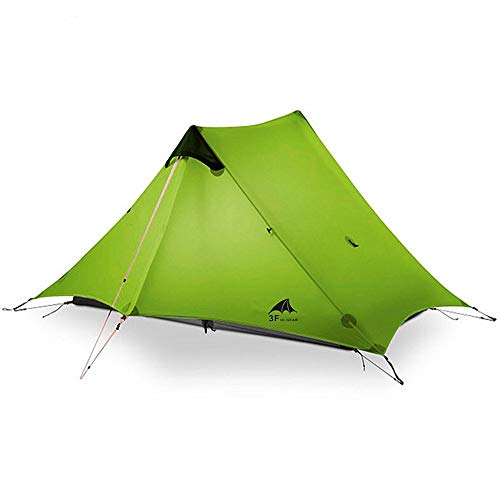 3F UL Lanshan 2
Best budget ultralight |
Non-freestanding | Trekking poles | Budget thru-hiking | Check price on Amazon |
 Naturehike Mongar 2
Best budget freestanding |
Freestanding | Tent poles | Budget backpacking | Check price on Amazon |
We may earn a commission when you buy through links on this page, at no extra cost to you. As an Amazon Associate we earn from qualifying purchases.
Quick picks
- Best overall: NEMO Hornet OSMO 2P: a very light semi-freestanding tent.
- Best for solo comfort: Big Agnes Fly Creek HV UL2: a light tent with a roomy single-wall feel.
- Best freestanding: MSR FreeLite 2: a freestanding tent at ultralight weight.
- Best budget ultralight: 3F UL Lanshan 2: a trekking pole tent at a low price.
- Best budget freestanding: Naturehike Mongar 2: a light freestanding tent for little money.
How I picked these
I’ve been backpacking for 16 years and hiking for 20, and I’ve owned and used a lot of gear in that time. I know what works on overnight trips and what doesn’t: gear that holds up, packs down, and earns its place on your back.
I compared these ultralight tents on weight, livability, weather protection, ease of pitching and durability. Picks are based on that experience, manufacturer specifications and long-term owner feedback.
1. NEMO Hornet OSMO 2P: best overall
NEMO Hornet OSMO 2P Ultralight Tent
A very light, easy-to-pitch ultralight tent.
- Type Semi-freestanding
- Pitch Tent poles
- Best for Solo or minimalist pairs
What we like
- Very light
- Easy semi-freestanding pitch
- OSMO fabric holds its pitch when wet
- Two doors
What we don't
- Tight for two
- Thin fabrics need care
The Hornet OSMO is one of the lightest tents you can buy that still pitches like a regular tent. It’s a favorite with solo backpackers who want room to spread out, and with minimalist couples.
Where it falls short: it’s tight for two people, and the light fabrics need care.
2. Big Agnes Fly Creek HV UL2: best for solo comfort
Big Agnes Fly Creek HV UL2 Tent
A light, roomy tent for solo hikers.
- Type Semi-freestanding
- Pitch Tent poles
- Best for Solo backpacking
What we like
- Light
- Spacious for one
- Simple setup
What we don't
- Single door
- Tight for two
The Fly Creek HV UL2 is light and roomy for a solo hiker with gear inside. Setup is simple and fast.
Where it falls short: the single front door makes it awkward for two.
3. MSR FreeLite 2: best freestanding
MSR FreeLite 2 Ultralight Tent
An ultralight, freestanding tent from MSR.
- Type Freestanding
- Pitch Tent poles
- Best for Pairs who want freestanding
What we like
- Freestanding
- Two doors
- Light
What we don't
- Less durable than the Hubba Hubba
- Pricey
The FreeLite 2 gives you a freestanding, two-door design at ultralight weight, so you can pitch on rock and platforms without fuss.
Where it falls short: the light fabrics are less durable than the Hubba Hubba.
4. 3F UL Lanshan 2: best budget ultralight
3F UL GEAR Lanshan 2 Ultralight Tent
An inexpensive trekking pole tent loved by budget thru-hikers.
- Type Non-freestanding
- Pitch Trekking poles
- Best for Budget thru-hiking
What we like
- Very light
- Very affordable
- Roomy for two
What we don't
- Needs trekking poles and good stakes
- Seams may need sealing
The Lanshan 2 is a budget favorite on long trails. It uses your trekking poles to pitch, which saves weight, and it’s roomy for two.
Where it falls short: it takes practice to pitch tight, and you may need to seal the seams.
5. Naturehike Mongar 2: best budget freestanding
Naturehike Mongar 2 Person Backpacking Tent
An affordable, light freestanding tent.
- Type Freestanding
- Pitch Tent poles
- Best for Budget backpacking
What we like
- Affordable
- Freestanding
- Two doors
What we don't
- Heavier than premium ultralight tents
- Less durable
The Mongar 2 is a popular budget tent with two doors and a freestanding design. It’s not as light as premium tents, but it’s a great value.
Where it falls short: it’s heavier and less durable than premium ultralight tents.
What counts as an ultralight tent?
There’s no official definition, but most hikers consider a 2-person tent under about 3 lbs ultralight. Trekking pole shelters and single-wall tents go lighter still. The lightest tents save weight by using thinner fabrics, fewer poles and tighter interiors.
Living with an ultralight shelter
- Pick your site carefully: look for flat, sheltered ground without sharp debris.
- Practice pitching: non-freestanding tents need taut, well-placed stakes.
- Manage condensation: ventilate and wipe the walls in the morning.
- Use a light groundsheet: thin floors last longer with protection.
The big three: shelter, pack and sleep system
Your tent, backpack and sleeping bag and pad are usually the heaviest items you carry, so they’re the best place to save weight. Cutting a few pounds across the big three makes more difference than shaving ounces anywhere else. Start with a shelter and sleep system that match your climate, then choose a pack sized for the gear you actually carry.
Trekking pole tent setup tips
- Stake the four corners first, square and taut, then insert your poles.
- Adjust pole height to tension the walls.
- Use longer, stronger stakes in soft ground.
- Practice in your yard until you can pitch it in under five minutes.
Tent materials explained
Most ultralight tents use thin silnylon or silpoly, which are light and inexpensive but stretch or sag slightly when wet (silpoly less so). Premium shelters use Dyneema composite fabric, which doesn’t stretch, absorbs almost no water and is extremely light, but it’s expensive and packs bulkier. NEMO’s OSMO fabric is designed to resist stretching when wet. All thin fabrics need care around sharp sticks and rocks.
Leave No Trace at camp
- Camp on durable surfaces like established sites, rock or gravel, at least 200 feet from lakes and streams.
- Pack out all trash, including food scraps.
- Use established fire rings, or skip the fire and use a stove.
- Store food properly to protect wildlife.
- Leave what you find, and respect other visitors.
Gear shakedown before your trip
- Set up your tent, inflate your pad and test your stove at home.
- Weigh your loaded pack and cut anything you didn’t use on your last trip.
- Check the forecast and pack layers for the coldest likely night.
- Pack the ten essentials: navigation, light, sun protection, first aid, knife, fire, shelter, extra food, extra water and extra clothes.
- Tell someone your route and expected return time.
Ultralight tent FAQ
Are ultralight tents durable?
They’re less durable than heavier tents. With care, a good site and a groundsheet, they last for many trips.
Are trekking pole tents hard to set up?
They take some practice. After a few pitches at home, most hikers find them quick.
Is a single-wall tent worth it?
Single-wall tents are lighter and quicker to pitch, but they’re more prone to condensation.
What’s the lightest 2-person tent?
Among the tents here, the NEMO Hornet OSMO and the trekking-pole Lanshan 2 are the lightest options.
Do I need to seam seal my ultralight tent?
Some budget tents and many cottage-brand shelters ship unsealed. Check the manufacturer’s instructions.
Which ultralight tent should you buy?
The NEMO Hornet OSMO is the best ultralight tent for most backpackers who want light weight and an easy pitch. Budget thru-hikers love the 3F UL Lanshan 2, and the MSR FreeLite 2 is the pick if you need a freestanding tent.