
The Best Solar Generators of 2026
 By Ian Freng
Updated November 12, 2026
A solar generator is a portable power station (a big lithium battery with outlets) that you can recharge with solar panels. Unlike a gas generator, it’s silent, has no fumes and can run indoors, which makes it ideal for power outages, camping and RV trips. The best solar generators have enough capacity to run what matters, enough output for your appliances and a safe, long-lasting LiFePO4 battery.
Best solar generators compared
| Product | Capacity | Battery | Best for | Buy |
|---|---|---|---|---|
 Jackery Explorer 1000 v2
Best overall |
About 1 kWh | LiFePO4 | Home backup, camping | $649.00 at Amazon |
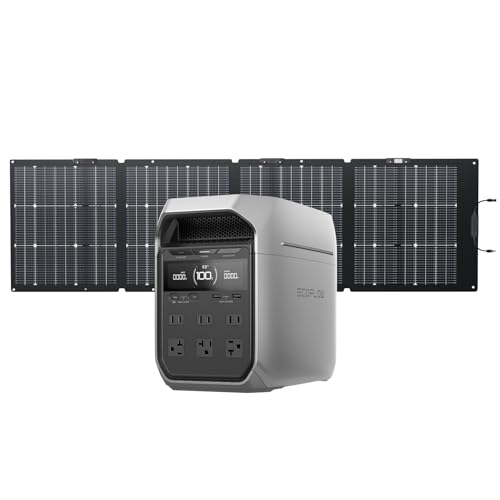 EcoFlow DELTA Solar Generator
Best for home backup |
1 kWh+ class (see listing) | LiFePO4 | Home backup | $919.00 at Amazon |
 Anker SOLIX C1000
Best value |
1,056 Wh | LiFePO4 | Value, home backup | $479.99 at Amazon |
 BLUETTI AC180
Best for high output |
1,152 Wh | LiFePO4 | Appliances, RVs | $499.00 at Amazon |
 EcoFlow RIVER 3
Best portable |
245 Wh | LiFePO4 | Camping, phones, laptops | $249.00 at Amazon |
Amazon price as of Nov 12, 2026 2:05 pm GMT+0000. Prices and availability are accurate as of the date/time indicated and are subject to change.
We may earn a commission when you buy through links on this page, at no extra cost to you. As an Amazon Associate we earn from qualifying purchases.
Quick picks
- Best overall: Jackery Explorer 1000 v2: a 1kWh-class station that’s simple and reliable.
- Best for home backup: EcoFlow DELTA Solar Generator: a powerful station with expandable capacity.
- Best value: Anker SOLIX C1000: 1,056Wh at a strong price.
- Best for high output: BLUETTI AC180: strong output for appliances.
- Best portable: EcoFlow RIVER 3: a small station for camping and essentials.
How I picked these
I’ve been into preparedness and survival for 13 years and spent 20 years hiking and 16 backpacking, and I’ve owned and used a lot of gear in that time. I know what works when it matters and what’s just marketing.
I compared these solar generators on battery capacity, continuous output, battery chemistry and lifespan, charging speed, ports, weight and price. Picks are based on that experience, manufacturer specifications and long-term owner feedback.
1. Jackery Explorer 1000 v2: best overall
Jackery Solar Generator 1000 v2
The best all-around solar generator for outages and camping.
- Capacity About 1 kWh
- Battery LiFePO4
- Best for Home backup, camping
What we like
- About 1 kWh of capacity
- LiFePO4 battery for long life
- Simple to use
- Fast AC charging
What we don't
- Panels sold in bundles add cost
- Heavy to carry far
Amazon price as of Nov 12, 2026 2:05 pm GMT+0000. Prices and availability are accurate as of the date/time indicated and are subject to change.
Jackery’s Explorer 1000 v2 is the solar generator most people should start with. It has enough capacity to run a fridge for hours, charge phones and laptops for days and power CPAP machines overnight, and its LiFePO4 battery is rated for thousands of cycles.
It’s easy to use, charges quickly from the wall and pairs with Jackery’s solar panels for off-grid recharging.
Where it falls short: it’s heavy to carry long distances, and bundles with panels cost significantly more.
2. EcoFlow DELTA Solar Generator: best for home backup
EcoFlow DELTA Solar Generator
A powerful solar generator for home backup.
- Capacity 1 kWh+ class (see listing)
- Battery LiFePO4
- Best for Home backup
What we like
- High output for big appliances
- Very fast charging
- App control
- Expandable on many models
What we don't
- Expensive
- Heavy
Amazon price as of Nov 12, 2026 2:05 pm GMT+0000. Prices and availability are accurate as of the date/time indicated and are subject to change.
EcoFlow’s DELTA line is known for fast charging and high output, which lets it run bigger appliances like fridges, power tools and small space heaters for short periods. Many models can add extra batteries for longer outages.
Where it falls short: it’s expensive and heavy.
3. Anker SOLIX C1000: best value
Anker SOLIX C1000 Portable Power Station
A high-capacity power station at a strong price.
- Capacity 1,056 Wh
- Battery LiFePO4
- Best for Value, home backup
What we like
- 1,056Wh capacity
- LiFePO4 battery
- Fast charging
- Compact for its capacity
What we don't
- Fewer ports than some
Amazon price as of Nov 12, 2026 2:05 pm GMT+0000. Prices and availability are accurate as of the date/time indicated and are subject to change.
The SOLIX C1000 offers over 1 kWh of LiFePO4 capacity in a compact body, often at a lower price than competitors. It charges fast and works with solar panels.
Where it falls short: it has fewer ports than some rivals.
4. BLUETTI AC180: best for high output
BLUETTI AC180 Portable Power Station
A solid power station with strong output.
- Capacity 1,152 Wh
- Battery LiFePO4
- Best for Appliances, RVs
What we like
- 1,152Wh capacity
- Strong AC output
- LiFePO4 battery
- Fast charging
What we don't
- Heavier
Amazon price as of Nov 12, 2026 2:05 pm GMT+0000. Prices and availability are accurate as of the date/time indicated and are subject to change.
The AC180 pairs over 1 kWh of LiFePO4 capacity with strong AC output, making it a good choice for running appliances during outages or in an RV.
Where it falls short: it’s heavier than the Anker.
5. EcoFlow RIVER 3: best portable
EcoFlow RIVER 3 Portable Power Station
A small, light power station for camping and charging essentials.
- Capacity 245 Wh
- Battery LiFePO4
- Best for Camping, phones, laptops
What we like
- Light and portable
- Affordable
- Charges fast
- Quiet
What we don't
- Small 245Wh capacity
- Won't run big appliances
Amazon price as of Nov 12, 2026 2:05 pm GMT+0000. Prices and availability are accurate as of the date/time indicated and are subject to change.
If you mainly need to keep phones, laptops, lights and a CPAP running for a night or two, the RIVER 3 is a light, affordable option that’s easy to carry.
Where it falls short: its small capacity won’t run a fridge or power tools for long.

How much capacity do you need?
- 250-500 Wh: phones, laptops, lights, fans and a CPAP for a night or two.
- 1,000-1,500 Wh: add a fridge for several hours, a TV, a microwave briefly or power tools.
- 2,000+ Wh or expandable: longer home backup and bigger appliances.
- Add up the watts of what you want to run and how many hours, then add 20% for losses.
Solar vs. gas generators
Solar generators are silent, fume-free, safe indoors and need no fuel storage, but they cost more per watt and recharge slowly from solar alone. Gas generators provide much more power for longer, but they’re loud, need fuel and must run outdoors away from windows because of carbon monoxide. For most apartment dwellers, campers and short outages, a solar generator is the safer, simpler choice. For long outages with big loads, some households use both.
Why LiFePO4 batteries matter
Most newer solar generators use lithium iron phosphate (LiFePO4) batteries, which last thousands of charge cycles, are more thermally stable and lose capacity more slowly than older lithium-ion batteries. That makes them a better long-term investment for emergency preparedness.
Choosing solar panels
- Match the panel’s voltage and connector to your power station’s solar input.
- 100-200W of panels recharges a 1 kWh station in a sunny day or two.
- Portable folding panels work best angled toward the sun and moved through the day.
- Shade on even part of a panel cuts output sharply.
Make a simple family emergency plan
- Agree on a meeting place near home and one outside your neighborhood.
- Choose an out-of-area contact everyone can check in with.
- Store at least three days of water and food per person, plus pet supplies.
- Keep copies of important documents and some cash in your kit.
- Review your plan and rotate supplies every six months.
What can a 1,000Wh station run?
- Phone: dozens of full charges.
- Laptop: roughly 10-15 charges.
- CPAP machine: several nights, depending on settings and humidifier use.
- Full-size refrigerator: several hours to most of a day, depending on the fridge and how often it’s opened.
- LED lights and a fan: days.
- These are estimates; check each device’s wattage and your station’s specs.
Practice before you need it
Gear only helps if you know how to use it under stress. Test your equipment at home and on camping trips: run your power station through a night, start a fire with your ferro rod, use your radios on a hike, and pack and carry your go-bag around the block. Practice turns gear into real preparedness.
Solar generator FAQ
What’s the best solar generator for home backup?
For most homes, a 1 kWh-class station like the Jackery 1000 v2 or Anker SOLIX C1000 covers essentials. Larger, expandable systems handle longer outages.
Can a solar generator run a refrigerator?
Yes. A 1 kWh station can run a typical fridge for several hours, depending on the fridge.
Can I use a solar generator indoors?
Yes. Unlike gas generators, they produce no fumes.
How long does a solar generator last?
LiFePO4 models are rated for thousands of cycles, often around 10 years of normal use.
How long does it take to charge with solar?
It depends on panel wattage and sun. A 1 kWh station might take most of a sunny day with 200W of panels.
Is a solar generator the same as a power bank?
It’s a much bigger version with AC outlets. For phones only, see our guide to the best power banks for power outages.
Can a solar generator power a whole house?
Not portable ones. They power essentials. Whole-home backup needs large battery systems or a standby generator.
Which solar generator should you buy?
The Jackery Explorer 1000 v2 is the best solar generator for most people. Choose the Anker SOLIX C1000 for value, an EcoFlow DELTA for heavier home backup, and the EcoFlow RIVER 3 if you mostly need to charge small devices.