
How to Purify Water: 5 Methods That Work at Home and in an Emergency
 By Ian Freng
Updated November 16, 2026
A boil-water notice, a hurricane, a broken water main or a creek on a backpacking trip: sooner or later you’ll need water you can trust and won’t have a tap you can. The good news is that making water safe isn’t complicated. The bad news is that most people mix up filtering, disinfecting and purifying, and that’s where they get sick.
I’ve been backpacking for 16 years and prepping for 13, and I’ve treated water every way on this list. Below is how to purify water at home and in the field, with the exact boiling times and bleach doses from the CDC and EPA, and the limits of each method.
The short version
- Boil it: bring clear water to a rolling boil for 1 minute (3 minutes above 6,500 feet). This is the most reliable method.
- Can’t boil? Use plain, unscented bleach: 8 drops of 6% bleach (or 6 drops of 8.25%) per gallon of clear water. Stir and wait 30 minutes.
- Cloudy water: let it settle and pour it through a clean cloth first, or double the bleach dose.
- Filters remove protozoa and bacteria but usually not viruses. Pair them with boiling or chemicals if viruses are a concern.
- Nothing on this list removes chemicals or fuel. If water may be contaminated with chemicals, find another source.
Filter, disinfect or purify: what’s the difference?
These words get used interchangeably, but they mean different things, and the difference decides which method you need.
| Term | What it does | What it misses |
|---|---|---|
| Filter | Physically strains out protozoa (Giardia, Cryptosporidium), bacteria and sediment | Most filters don’t catch viruses; none remove dissolved chemicals |
| Disinfect | Kills or inactivates germs with heat, chemicals or UV light | Doesn’t remove dirt; chlorine is weak against Cryptosporidium |
| Purify | Handles protozoa, bacteria and viruses, usually by combining methods | Still doesn’t remove chemicals, metals or salt |
In practice, learning how to purify water means stacking methods: clear the water first (settle and filter), then disinfect it (boil, bleach or UV).
Method 1: Boiling (the most reliable)
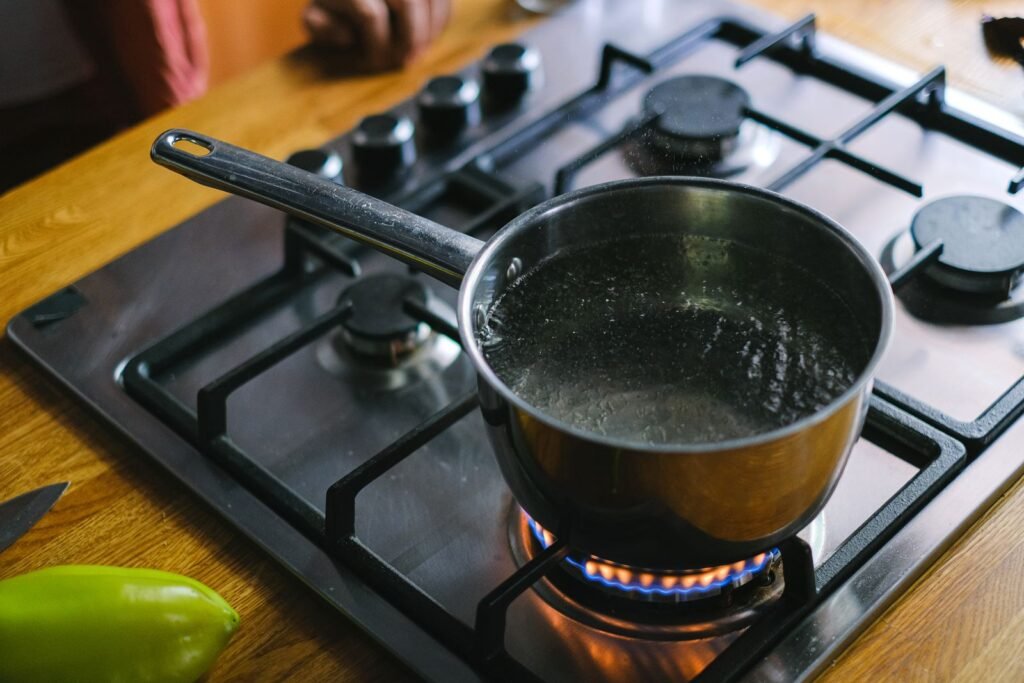
Boiling kills bacteria, viruses and protozoa, including Cryptosporidium, which shrugs off chlorine. The CDC’s guidance:
- If the water is cloudy, let it settle, then pour the clear water off the top or through a clean cloth, paper towel or coffee filter.
- Bring it to a rolling boil for 1 minute. Above 6,500 feet, boil for 3 minutes, because water boils at a lower temperature at altitude.
- Let it cool, then store it in a clean container with a lid.
- To improve the flat taste, pour it back and forth between two clean containers a few times, or add a pinch of salt per quart.
No power at home? A propane camp stove or a backpacking stove will boil water, outdoors only. Never run one inside. (More on that in our guide to what to do during a power outage.)
Method 2: Household bleach
When you can’t boil, regular unscented household bleach disinfects water against most bacteria and viruses. Check the label for the sodium hypochlorite percentage, and skip scented, color-safe or “splash-less” bleach. Use a clean dropper.
| Bleach strength | Clear water (per gallon) | Cloudy water (per gallon) |
|---|---|---|
| 5–6% sodium hypochlorite | 8 drops (about ⅛ teaspoon) | 16 drops (about ¼ teaspoon) |
| 8.25% sodium hypochlorite | 6 drops | 12 drops |
Stir it in and wait at least 30 minutes. The water should smell slightly of chlorine. If it doesn’t, the CDC says to repeat the dose and wait another 15 minutes. Bleach slowly loses strength once opened, so replace your emergency bottle about once a year.
One limitation: chlorine works poorly against Cryptosporidium. For water from lakes, rivers or floodwater, boiling or a good filter followed by bleach is safer.
Method 3: Water filters
Portable filters (squeeze, pump, gravity or straw) are the backpacker’s default. They’re fast, need no fuel and improve taste. For protozoa like Giardia and Cryptosporidium, look for an absolute pore size of 1 micron or smaller; most hollow-fiber filters are 0.1 to 0.2 microns, which also catches bacteria. Most filters do not remove viruses, which are much smaller. In North American backcountry water the virus risk is generally considered low, but near people, livestock or floodwater, add a disinfection step. We compare the options in our survival water filter guide.
Pitcher and fridge filters are a different thing. They improve the taste of water that’s already safe; they’re not meant to make untreated water drinkable.
Method 4: Purification tablets
- Chlorine dioxide tablets work against bacteria, viruses and, given enough time, Cryptosporidium. Follow the label: often 30 minutes for most germs and up to 4 hours for Cryptosporidium, longer in cold water.
- Iodine works but tastes worse, isn’t reliable against Cryptosporidium, and isn’t recommended for pregnant people, people with thyroid problems or long-term daily use.
Tablets weigh almost nothing, so I keep a strip in every go-bag and survival kit as a backup to the filter.
Method 5: UV light and sunlight
Battery UV pens disinfect a bottle of clear water in about a minute. They don’t work well in cloudy water, because particles shade the germs, and they’re useless once the batteries die.
Solar disinfection (SODIS) is the no-gear version: fill a clear plastic PET bottle (2 liters or smaller) with clear water and leave it in full sun for 6 hours, or 2 days if it’s cloudy. It’s a real, studied method, but it’s slow, so I treat it as a last resort.
How to purify water at home without power
Put the methods together. Here’s the sequence I’d use with questionable water and no electricity:
- Collect the clearest water you can find. Rainwater and moving water beat stagnant puddles.
- Let it sit so sediment settles, then pour it through a cloth.
- Run it through a filter if you have one.
- Disinfect it: boil it on a stove outdoors, or use bleach at the doses above.
- Store it in clean, covered containers and label them.
And the honest limit: none of these steps removes fuel, pesticides, heavy metals or salt. Boiling actually concentrates chemicals. If floodwater may have mixed with sewage lines, fuel or industrial runoff, don’t drink it. Use stored water or wait for bottled water.
How much water to store so you don’t have to purify it
The easiest water to purify is water you never have to. Ready.gov recommends 1 gallon per person per day for drinking and sanitation, with at least a 3-day supply, and more for hot climates, pregnant or nursing people and pets. Store it in food-grade containers away from sunlight and chemicals, and replace tap water you bottled yourself every 6 months. We compare jugs, barrels and stackable bricks in our water storage guide, and for carrying on the trail, see our water bottles for hiking.
Which method I actually use
- At home: stored water first, then unscented bleach and a pot on the camp stove if an outage drags on.
- Backpacking: a hollow-fiber filter for everything, with chlorine dioxide tablets as the backup if it cracks or freezes.
- Go-bag: a straw or squeeze filter plus a strip of tablets. Light, cheap and covers most situations.
How to purify water FAQ
What is the safest way to purify water?
Boiling. A rolling boil for 1 minute (3 minutes above 6,500 feet) kills bacteria, viruses and protozoa. If you can’t boil, use unscented household bleach or chlorine dioxide tablets, and filter cloudy water first.
How many drops of bleach do I add to a gallon of water?
The CDC says 8 drops of 5–6% unscented bleach, or 6 drops of 8.25% bleach, per gallon of clear water. Double it for cloudy water, stir, and wait at least 30 minutes before drinking.
Does boiling water remove chemicals or lead?
No. Boiling kills germs, but it doesn’t remove lead, pesticides, fuel or other chemicals, and it can concentrate them as water evaporates. Water that may be chemically contaminated needs a different source.
Can a water filter remove viruses?
Most portable filters can’t; viruses are smaller than their pores. Some purifiers are rated for viruses, or you can follow a filter with boiling, bleach or chlorine dioxide.
Is a Brita filter enough to purify water?
No. Pitcher filters are designed to improve taste and reduce some contaminants in water that’s already safe to drink, not to make untreated water safe.
Can you purify salt water?
Not with these methods. Salt has to be removed by distillation or a desalination device. Boiling, bleach and filters won’t do it.
Is rainwater safe to drink?
Not without treatment. It can pick up bacteria and debris from roofs and gutters. Collect it in a clean container, then filter and disinfect it like any other untreated water.