
E-Bike Classes Explained: Class 1, 2 and 3 (and What ‘Class 4’ Really Means)
 By Ian Freng
Updated November 18, 2026
When I ride my e-bike from a bike lane onto a paved multi-use path, I’ve found that the little class sticker on the frame decides more about where I can go than the motor, the battery or the price. Two bikes that look almost identical can be welcome on completely different paths and trails, purely because of their class.
I’ve been riding e-bikes for six years, and the three-class system is the single most useful thing to understand before you buy one. This guide covers how the e-bike classes work, what each one is allowed to do, where each is usually allowed to ride, and what those “Class 4” and “unlimited mode” bikes sold online really are. Rules vary by state, city and land manager, so treat this as a map, then confirm the details locally.
The short version
- Class 1: pedal-assist only, motor stops helping at 20 mph. Allowed in the most places, including many trails that allow e-bikes at all.
- Class 2: has a throttle that can move the bike without pedaling, but the motor stops at 20 mph. Usually treated like Class 1 on roads and paths; often excluded from natural-surface trails.
- Class 3: pedal-assist up to 28 mph and a speedometer. Great for road commuting, but often comes with a minimum age (commonly 16), a helmet rule and limits on multi-use paths.
- “Class 4” isn’t a legal class. A bike over 750 watts or faster than 28 mph on the motor is usually a moped, motor-driven cycle or motorcycle under state law.
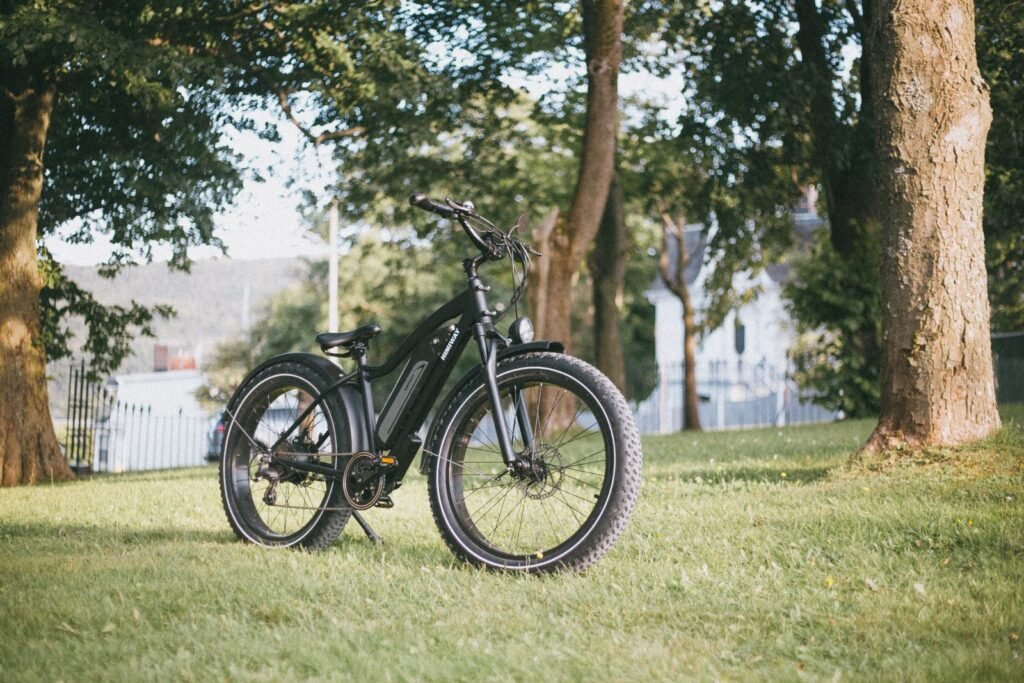
E-bike classes at a glance
Most US states now use a three-class system based on model legislation from PeopleForBikes, the bike industry’s trade group. The classes are defined by two things: how the motor engages (pedaling only, or a throttle too) and the speed where the motor stops helping. You can still pedal faster than that speed under your own power; the motor just stops adding to it.
| Class | How the motor engages | Max assisted speed | Throttle? | Typically allowed |
|---|---|---|---|---|
| Class 1 | Only while you pedal | 20 mph | No | Roads, bike lanes, most multi-use paths; some natural-surface trails where the land manager allows e-bikes |
| Class 2 | While you pedal or with the throttle alone | 20 mph | Yes | Roads, bike lanes, most multi-use paths; often excluded from singletrack |
| Class 3 | Only while you pedal (a few states allow a throttle that cuts out at 20 mph) | 28 mph | Usually no | Roads and bike lanes; often restricted on multi-use paths and trails |
| “Class 4” / off-road | Throttle and pedal, often unlimited | Above 28 mph or over 750 W | Usually | Not an e-bike in most states; treated as a moped or motorcycle on public roads, or off-road use only |
Under the model law, all three classes share the same power cap: 750 watts (1 horsepower). Class 3 bikes must also have a speedometer that shows miles per hour.
Where the 750-watt number comes from
At the federal level, the Consumer Product Safety Act defines a “low-speed electric bicycle” as a two- or three-wheeled vehicle with fully operable pedals, an electric motor under 750 watts, and a top speed under 20 mph when powered by the motor alone with a 170-pound rider on flat pavement. That definition puts e-bikes under the CPSC’s bicycle safety rules instead of federal motor vehicle rules.
That federal definition covers how bikes are made and sold, not where or who can ride. States set those rules, which is why the class system lives in state law and differs from state to state.
What each class is like to ride
Class 1: the “most welcome” e-bike
A Class 1 bike feels like a regular bike with a tailwind. The motor only works when the cranks turn, and it fades out at 20 mph. Because it rides at speeds close to a fit cyclist, it’s the class most land managers and trail groups are willing to allow. If you want one bike that can go the most places, this is it.
Class 2: the throttle class
Class 2 adds a throttle, usually a thumb lever or twist grip, so you can move without pedaling. That’s genuinely useful when starting from a stop on a hill, crossing an intersection quickly, or riding with sore knees. The tradeoff is access: many trail systems that allow Class 1 bikes exclude throttles. Many Class 2 bikes also have pedal assist that cuts out at 20 mph.
Class 3: the commuter class
Class 3 bikes assist up to 28 mph, which lets you hold a steady pace with traffic on a 30–35 mph road instead of having cars squeeze past you. The legal tradeoffs are real, though. In states that follow the model law, Class 3 riders face a minimum age (commonly 16), a helmet requirement, and restrictions on multi-use paths where people walk and push strollers.
What “Class 4” and “unlimited mode” bikes really are
Search for e-bikes online and you’ll see “Class 4,” “off-road mode” or “unlimited” settings, along with 1,000 to 3,000+ watt motors and top speeds over 30 mph. Here’s the honest picture:
- There is no legal Class 4. It’s a marketing term. The three-class system stops at Class 3, and PeopleForBikes has said it doesn’t support stretching the class system to cover faster or more powerful devices.
- Over the limits, it’s not an e-bike. A bike with a motor over 750 watts or assisted speed past 28 mph generally falls outside every class. Many states then treat it as a moped, motor-driven cycle or motorcycle, which can mean a license, registration, plates and insurance to ride it on public roads.
- An unlocked mode changes the bike’s legal status. If a bike ships as Class 2 but can be switched to an unlimited mode, riding it in that mode can push it out of its class. The label on the frame says what it was sold as, not what you’re riding.
- Off-road only means private land or motorized areas. Many of these “e-motos” are only legal on private property or on trails and areas open to motorcycles and off-highway vehicles.
Licensing is its own topic, and we cover it in detail in do you need a license for an electric bike. The short version: if a bike is outside the classes, assume your state treats it as a motor vehicle until its vehicle code says otherwise.
Where each class is generally allowed
Access depends on who manages the surface you’re riding. Here’s how it typically breaks down.
Roads and bike lanes
All three classes are generally allowed on roads and in bike lanes wherever regular bicycles are. That’s the core idea of the model law: e-bikes that fit a class are regulated much like bicycles, with no license, registration or insurance.
Multi-use paths
Class 1 and 2 bikes are usually allowed on paved multi-use paths. Class 3 bikes are often barred from them unless the path runs alongside a road or the local agency opens it to them. Cities and park districts can add their own rules, including speed limits, so look for signs at the trailhead.
Singletrack and public lands
This is where the rules get the strictest, and they depend on the federal agency, not your state:
- National Parks (NPS): e-bikes are allowed only where traditional bikes are allowed, and each park superintendent decides which classes can use which routes. Class 2 riders can’t rely on the throttle alone for long stretches except on roads open to cars. Bikes of any kind aren’t allowed in designated wilderness.
- National Forests (USFS): the Forest Service classifies e-bikes as motor vehicles. They’re allowed on roads and trails shown as open to them on each forest’s Motor Vehicle Use Map (MVUM), which can now list trails open to specific e-bike classes. Non-motorized trails stay closed to e-bikes unless the forest goes through a public process to change them.
- BLM land: BLM’s rule recognizes Class 1, 2 and 3 e-bikes and lets local managers allow them on non-motorized trails, but the rule by itself doesn’t open any non-motorized trail. E-bikes can already use trails and areas open to off-highway vehicles.
- Local and state trail systems: rules vary. Mountain-bike advocacy group IMBA considers Class 1 the most appropriate class for non-motorized natural-surface trails, where the land manager approves it, and many local trail systems follow that lead.
My rule of thumb: on dirt, assume Class 1 only until a sign, map or agency website tells you otherwise.
Age and helmet rules for Class 3
The extra rules usually attach to Class 3. Under the PeopleForBikes model law, Class 3 bikes come with a minimum rider age and a helmet mandate, and many states set that age at 16. California, for example, requires Class 3 riders to be at least 16 and to wear a helmet.
States vary in both directions. Some require helmets for all riders under 18 on any e-bike, and a few require them for everyone. Class 1 and 2 bikes usually have no minimum age under state law, though some cities and states have added their own. Check your state’s vehicle code before buying a bike for a teenager.
How to read the class label sticker
The model law requires manufacturers and distributors to put a class label on every e-bike. In states like California, that label must be permanently attached in a prominent spot and list three things:
- The class number (1, 2 or 3).
- The top assisted speed (20 or 28 mph).
- The motor wattage (750 W or less for a legal e-bike).
Look for it on the seat tube, down tube or near the bottom bracket. If a bike has no label, a wattage over 750, or a listing that only says “Class 2/3 switchable” without saying how it ships, ask the seller exactly how it’s classified. Rangers and police look at that sticker too.
How to choose between e-bike classes
Start with where you’ll ride most, then pick the lowest class that does the job. A lower class gets you onto more paths and trails; a higher class only helps where you can legally use the speed.
| If you mostly ride… | Best fit | Why |
|---|---|---|
| Road commuting on faster streets | Class 3 | Keeps up with traffic; bike lanes are open to it |
| Commuting on paths and greenways | Class 1 or 2 | Allowed on more multi-use paths |
| Mountain bike trails | Class 1 | The class most trail systems allow, when they allow e-bikes at all |
| Forest roads for hunting or scouting | Class 1 or 2 (check the MVUM) | National forests list which roads and trails allow e-bikes; a throttle helps with loads where allowed |
| Easy rides, errands, older riders | Class 1 or 2 | Lower speeds; a throttle makes starts and hills easier |
Commuting
If your route is mostly roads and bike lanes, a Class 3 bike makes a real difference in commute time and in how comfortable you feel around cars. If your route uses a greenway or rail-trail, check whether Class 3 is allowed there before you buy. Our best commuter electric bikes guide notes each bike’s class.
Trails
For singletrack, get a Class 1 e-MTB. A throttle or 28 mph assist won’t help you on a trail you can’t legally ride. See our best electric mountain bikes for Class 1 options.
Hunting and backcountry access
Many hunters use e-bikes to ride gated forest roads quietly. On national forests that only works where the MVUM shows the road or trail open to e-bikes; behind a closed gate is still closed. A Class 1 or 2 bike with a cargo rack is the usual pick, and a throttle helps when hauling gear, where throttles are permitted.
Seniors and newer riders
A Class 2 bike is often the most comfortable choice: the throttle gets you rolling from a stop without a wobbly first pedal stroke. If you’ll ride paths and park trails, make sure throttles are allowed there, or choose Class 1. Plenty of solid Class 2 bikes are in our budget e-bike picks.
Common mistakes
- Buying the fastest bike by default. If you ride paths or trails, a Class 3 or out-of-class bike shuts you out of the places you wanted to ride.
- Trusting the listing over the label. “Class 2/3” or “Class 4” in a product title isn’t a legal classification. The frame label and the bike’s actual settings are what count.
- Assuming state rules apply on federal land. National parks, forests and BLM land set their own access rules. State law still covers things like helmets and age.
Once you know your class, browse every category in our e-bike reviews.
E-bike class FAQ
What is the difference between Class 1, 2 and 3 e-bikes?
Class 1 bikes assist only while you pedal and stop at 20 mph. Class 2 bikes add a throttle but the motor still stops at 20 mph. Class 3 bikes assist only while you pedal, up to 28 mph, and must have a speedometer. All three are capped at 750 watts under the model law.
Is there a Class 4 e-bike?
No. “Class 4” is a marketing term, not a legal class. Bikes with motors over 750 watts or motor-assisted speeds above 28 mph fall outside the e-bike classes and are usually treated as mopeds, motor-driven cycles or motorcycles under state law.
Can Class 3 e-bikes ride on bike paths?
Often not. Class 3 bikes are generally allowed on roads and in bike lanes, but many states and cities restrict them on multi-use paths unless the path is next to a road or the local agency allows them. Look for posted rules.
How old do you have to be to ride a Class 3 e-bike?
In many states the minimum age is 16, following the PeopleForBikes model law, and Class 3 riders are commonly required to wear a helmet. Class 1 and 2 bikes usually have no state minimum age. Check your state’s vehicle code.
Which e-bike class is allowed on mountain bike trails?
Class 1 is the class most often allowed on non-motorized trails, and only where the land manager approves it. National forests treat e-bikes as motor vehicles and list allowed trails on their Motor Vehicle Use Maps, and national parks allow them only where bikes are allowed.
Can I change my e-bike’s class?
Some bikes let you switch between settings, such as Class 2 and Class 3. The bike is legally whatever class it’s operating as, so if you ride a path that only allows Class 1 or 2, it needs to be set to that class. Unlocking it past 28 mph or 750 watts takes it out of the classes entirely.