The Best Base Layer for Hiking and Cold Weather (2026)
 By Ian Freng
Updated November 23, 2026
When I hike in winter, I’ve found that the layer touching my skin decides more about staying warm than the jacket on top, because sweat that sits against your skin chills you the moment you stop moving. The best base layer pulls that moisture away, keeps insulating when it’s damp, and fits close enough to do its job. This guide covers five picks, merino and synthetic, tops and bottoms, plus how to choose the right weight for the temperature and how hard you’ll be working. One rule comes first: no cotton, anywhere in your layers.
Quick answer: Our top pick is the Icebreaker 260 Tech Crewe (best overall). A 260-weight, 100% merino crew with a snug fit, gusseted underarms and offset shoulder seams, built for most winter days on the trail. Best for: most winter hiking.
- Best lightweight merino: Icebreaker 200 Oasis Crewe
- Best synthetic: Columbia Midweight Stretch Top
- Best bottoms: Smartwool Classic Thermal Merino Bottom
- Best budget set: Thermajohn Fleece-Lined Set
Base layers compared
| Product | Fabric | Weight | Fit | Best for | Buy |
|---|---|---|---|---|---|
 Icebreaker 260 Tech Crewe
Best overall |
100% merino wool | 260 (midweight) | Slim (snug) | Most winter hiking | $105.00 at Amazon |
 Icebreaker 200 Oasis Crewe
Best lightweight merino |
100% merino wool | 200 (lightweight-midweight) | Slim | Hard climbs, layering | $90.00 at Amazon |
 Columbia Midweight Stretch Top
Best synthetic |
85% polyester, 15% elastane | Midweight (g/m² not listed) | Fitted | Wet, sweaty days; durability | $41.25 at Amazon |
 Smartwool Classic Thermal Merino Bottom
Best bottoms |
100% merino wool | 250 g/m² (midweight) | Slim (tight) | Cold days, slow pace | $92.99 at Amazon |
 Thermajohn Fleece-Lined Set
Best budget set |
92% polyester, 8% spandex | Fleece lined (g/m² not listed) | Fitted | Camp, sleeping, budget | $26.99 at Amazon |
Amazon price as of Nov 23, 2026 5:15 pm GMT+0000. Prices and availability are accurate as of the date/time indicated and are subject to change.
We may earn a commission when you buy through links on this page, at no extra cost to you. As an Amazon Associate we earn from qualifying purchases.
Quick picks
- Best overall: Icebreaker 260 Tech Crewe: a 100% merino midweight top that handles most winter hiking.
- Best lightweight merino: Icebreaker 200 Oasis Crewe: a lighter 100% merino top for hard climbs and layering.
- Best synthetic: Columbia Midweight Stretch Top: a stretchy polyester midweight that dries fast and shrugs off hard use.
- Best bottoms: Smartwool Classic Thermal Merino Bottom: 100% merino midweight tights to wear under hiking or shell pants.
- Best budget set: Thermajohn Fleece-Lined Set: a top and bottom in one low-cost polyester set for camp, sleeping and cold errands.
How I picked these
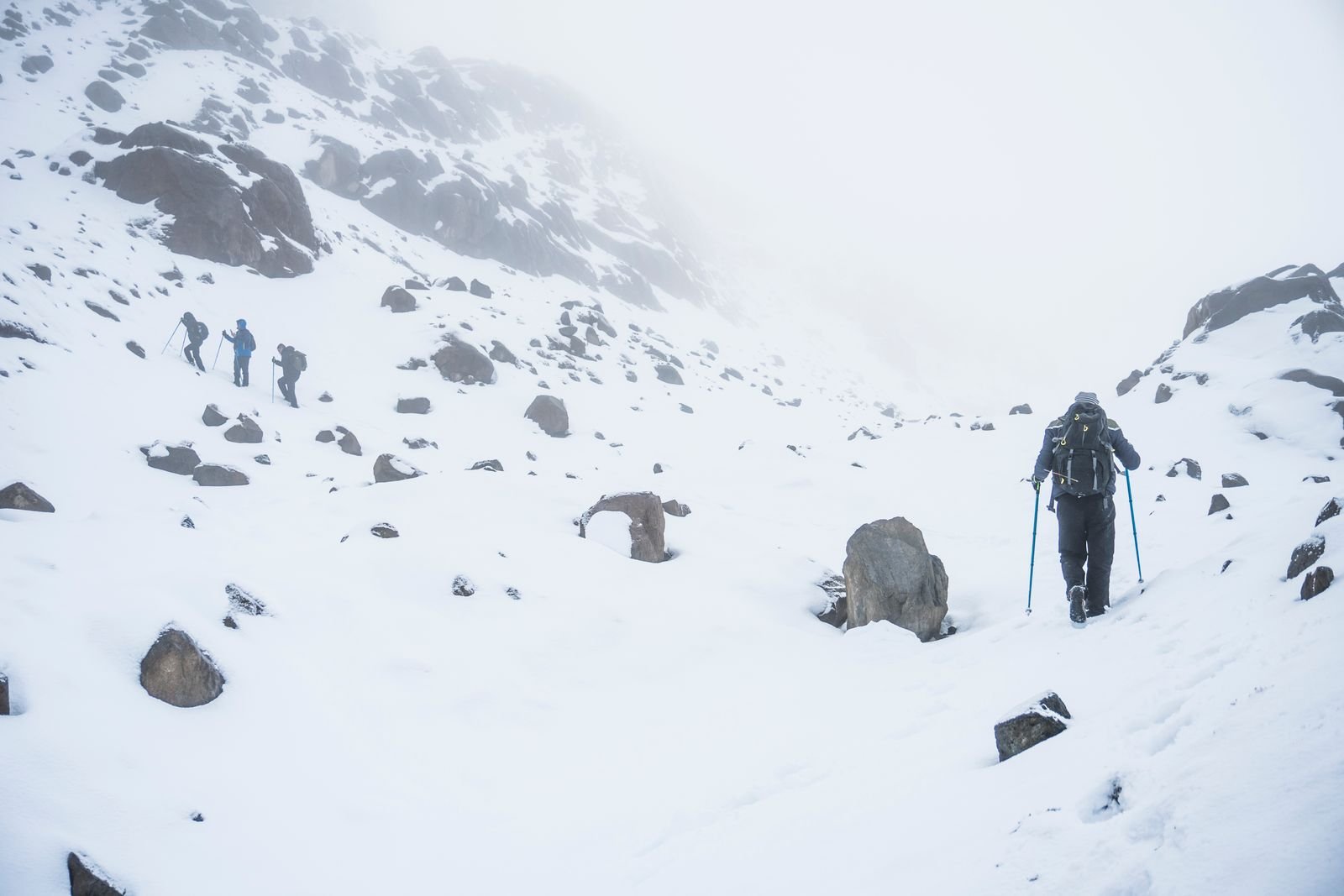
I’ve been hiking for 20 years and backpacking for 16, and most of my cold, miserable moments on the trail trace back to a damp layer against my skin. I compared these base layers on fabric, weight, fit, odor control, care and how well each one matches a type of winter day: hard climbs, all-around cold, deep cold, or a budget set for camp and sleeping. Fabric content and weights come from each maker’s own product pages or the Amazon listing, and we note where a maker doesn’t publish a number.
We kept the list to tops and bottoms you can buy on Amazon in common sizes, with no more than two picks from one brand. We also left out anything with cotton in it. That includes the “thermal” waffle-knit cotton sets sold in big-box stores, which feel warm in the house and turn cold and heavy once you sweat.
1. Icebreaker 260 Tech Crewe: best overall
Icebreaker Men’s Merino 260 Tech Long Sleeve Crewe Thermal Top
A 260-weight, 100% merino crew with a snug fit, gusseted underarms and offset shoulder seams, built for most winter days on the trail.
- Fabric 100% merino wool
- Weight 260 (midweight)
- Fit Slim (snug)
- Best for Most winter hiking
What we like
- 100% merino wool, 260 weight (midweight)
- Resists odor over several days of wear
- Snug, close-to-body fit for low-bulk layering
- Offset shoulder and flatlock seams to limit chafing under a pack
- Gusseted underarms for reaching and scrambling
- Warmer version of Icebreaker's best-selling Oasis
What we don't
- Merino is less durable than synthetics
- Dries slower than polyester
- Icebreaker says to line dry, not tumble dry
Amazon price as of Nov 23, 2026 5:15 pm GMT+0000. Prices and availability are accurate as of the date/time indicated and are subject to change.
The Icebreaker 260 Tech Crewe is the one base layer to buy if you only buy one for winter. It’s 100% merino wool in Icebreaker’s 260 midweight, and midweight is what our winter hiking clothing guide recommends as the all-around choice for cold days. Icebreaker describes it as a warmer, midweight version of its best-selling Oasis top, and lists a men’s medium at about 310 grams. It’s warm enough to wear alone on a cold morning under a shell and thin enough to layer under a fleece without feeling bulky.
The construction is built for hiking under a pack. Offset shoulder seams keep seams out from under the straps, flatlock seams limit rubbing, and gusseted underarms give you room to reach for a trekking pole plant or a handhold. Icebreaker calls the fit snug and close to the body, which is what you want in a base layer: fabric needs to touch your skin to move sweat away from it. Merino’s other big advantage is odor. It holds less smell than polyester, so you can wear it for a weekend trip without it turning rank. Icebreaker’s US page says to machine wash it cold on a gentle cycle and line dry it in the shade, not in the dryer.
Where it falls short: merino is softer and less tough than polyester, so pack straps and rough rock can wear thin spots over time, and it dries slower than a synthetic. On a steep climb above freezing, a 260 midweight can be more warmth than you need, which is where the lighter Icebreaker 200 comes in.
2. Icebreaker 200 Oasis Crewe: best lightweight merino
Icebreaker Men’s Merino 200 Oasis Long Sleeve Crewe
A 200-weight merino crew with gusseted underarms and offset shoulder seams, light enough to hike hard in.
- Fabric 100% merino wool
- Weight 200 (lightweight-midweight)
- Fit Slim
- Best for Hard climbs, layering
What we like
- 100% merino wool, 200 weight
- Lighter than a midweight: easier to hike hard in
- Gusseted underarms and offset shoulder seams
- Flatlock seams and a drop-tail hem that stays tucked
- Odor-resistant merino
- Icebreaker's best-selling base layer
What we don't
- Not as warm as a midweight on very cold, slow days
- Icebreaker says to line dry, not tumble dry
- Thin merino can wear through over time
Amazon price as of Nov 23, 2026 5:15 pm GMT+0000. Prices and availability are accurate as of the date/time indicated and are subject to change.
The Icebreaker 200 Oasis is the merino top for people who run warm or hike fast. At 200 weight it sits between a lightweight and a midweight, so it breathes better on a long uphill and still keeps you comfortable at a cold summit once your fleece and puffy go on top. Icebreaker calls it its best-selling base layer, and it lists a men’s medium at about 217 grams.
The construction is built for moving under a pack. Gusseted underarms give you room to reach, offset shoulder seams keep seams out from under the straps, and flatlock seams limit chafing. A longer drop-tail hem stays tucked in when you bend over to tie a boot. It’s also a good shoulder-season and three-season layer, so it’s the base layer you’ll likely get the most use from all year. Icebreaker’s US care label says to machine wash warm with like colors, skip fabric softener, and line dry in the shade instead of tumble drying.
Where it falls short: it’s not the warmest option for very cold, slow days, and you’ll need to line dry it. Like all thin merino, it can wear through at high-friction spots after many seasons.
3. Columbia Midweight Stretch Top: best synthetic
Columbia Men’s Midweight Stretch Long Sleeve Top (Omni-Heat)
An 85% polyester, 15% elastane midweight top with Omni-Heat reflective lining and Omni-Wick moisture management.
- Fabric 85% polyester, 15% elastane
- Weight Midweight (g/m² not listed)
- Fit Fitted
- Best for Wet, sweaty days; durability
What we like
- Synthetic: dries faster than merino
- Omni-Heat thermal-reflective lining
- Omni-Wick moisture management
- Four-way stretch for climbing and scrambling
- Machine washable and tough
- Big and tall sizes sold
What we don't
- Holds odor more than merino
- Maker doesn't publish a fabric weight
- Reflective lining can feel warm on hard climbs
Amazon price as of Nov 23, 2026 5:15 pm GMT+0000. Prices and availability are accurate as of the date/time indicated and are subject to change.
If you sweat a lot, hike in wet snow, or want a base layer you don’t have to baby, a synthetic is the better choice. The Columbia Midweight Stretch Long Sleeve Top is 85% polyester and 15% elastane, so it stretches with you and dries faster than wool. Columbia adds its Omni-Heat lining, a pattern of silver dots that reflects body heat back toward you, and Omni-Wick, which moves sweat to the fabric surface so it can evaporate.
Synthetics are also tougher than merino, so this is the top to grab for bushwhacking, ice climbing approaches or days when you’ll be scraping against rock and branches. The trade-off is odor. Polyester holds smell more than wool, so plan to wash it after a day or two of hard use. Columbia sells it in regular, big and tall sizes, and the Amazon listing says it’s machine washable.
Where it falls short: polyester holds odor more than merino, and Columbia doesn’t list a fabric weight, so compare it by feel rather than by numbers. The reflective lining adds warmth, which is great on a cold ridge and can feel like too much on a steep climb.
4. Smartwool Classic Thermal Merino Bottom: best bottoms
Smartwool Men’s Classic Thermal Merino Base Layer Bottom
A 250 g/m² merino bottom with a merino-covered waistband and flatlock seams, rated for cold conditions.
- Fabric 100% merino wool
- Weight 250 g/m² (midweight)
- Fit Slim (tight)
- Best for Cold days, slow pace
What we like
- 100% merino wool, 250 g/m² midweight
- Merino-covered elastic waistband
- Flatlock seams and a slim, tight fit
- Fits under hiking pants, softshells or shell pants
- Odor-resistant for multi-day trips
What we don't
- Too warm under pants for hard climbs on mild days
- Merino wears faster than synthetic at the knees and seat
Amazon price as of Nov 23, 2026 5:15 pm GMT+0000. Prices and availability are accurate as of the date/time indicated and are subject to change.
Your legs make a lot of heat while you hike, so many hikers skip a leg base layer until it gets properly cold. When it does, the Smartwool Classic Thermal Merino Bottom is the one to wear under your hiking pants. It’s 100% merino at 250 g/m², a true midweight, and Smartwool rates the Classic Thermal line for cold conditions, roughly below 25°F, and for winter skiing or slower-paced activities like winter hiking.
Smartwool updated it to a better-fitting tight, with a merino-covered elastic waistband so there’s no bare elastic against your skin, and flatlock seams to limit chafing. A close fit matters even more on your legs than up top: loose fabric bunches at the knees under pants and rubs as you walk. Pair it with a softshell or lined hiking pant on a cold day, or with shell pants in deep snow. The Amazon ASIN here is one size and color; pick yours on the listing.
Where it falls short: under insulated or lined pants it can be too warm for a hard climb on a mild day, and merino wears faster than polyester where your knees and seat rub.
5. Thermajohn Fleece-Lined Set: best budget set
Thermajohn Long Johns Thermal Underwear for Men, Fleece Lined Base Layer Set
A fleece-lined, 92% polyester and 8% spandex top-and-bottom set with four-way stretch, sold in sizes XS to 4XL.
- Fabric 92% polyester, 8% spandex
- Weight Fleece lined (g/m² not listed)
- Fit Fitted
- Best for Camp, sleeping, budget
What we like
- Top and bottom in one set
- 92% polyester, 8% spandex: no cotton
- Fleece lining for warmth at low effort
- Four-way stretch
- Wide size range, XS to 4XL
- Machine washable
What we don't
- Fleece lining runs warm for hard hiking
- Holds odor like any polyester
- Maker doesn't publish a fabric weight
Amazon price as of Nov 23, 2026 5:15 pm GMT+0000. Prices and availability are accurate as of the date/time indicated and are subject to change.
Merino base layers aren’t cheap, and not every cold-weather use needs one. The Thermajohn set is a fleece-lined top and bottom made of 92% polyester and 8% spandex, so it skips the cotton found in many cheap thermals and still stretches with you. It’s sold in sizes from XS to 4XL, which makes it an easy pick for a family or for gear you’ll lend out.
The brushed fleece lining traps warm air well when you’re not working hard, so this set shines at camp, in a sleeping bag, ice fishing, at a cold ballgame or shoveling the driveway. On a hard uphill, a fleece-lined base layer can run hot and hold more sweat than a smooth merino or synthetic knit, so plan to vent or start in a thinner top. Thermajohn’s care instructions say to wash it cold, inside out, and tumble dry on low.
Where it falls short: the fleece lining is warm for slow days but can run hot when you’re climbing, and polyester holds odor more than merino. Thermajohn doesn’t list a fabric weight.
How to choose the best base layer
- Pick the fabric: merino or synthetic. Both move sweat away from your skin. Merino stays warmer when damp and resists odor. Synthetics (polyester, polypropylene) dry faster, last longer and usually cost less.
- Pick the weight by temperature and effort. Lightweight for mild days and hard climbs, midweight as the all-around winter choice, heavyweight for very cold days and slow hikes. More on this below.
- Get a snug fit. A base layer only wicks sweat if it touches your skin. It should feel close but not tight, with no gaps at the lower back when you bend over.
- Check the seams. Flatlock seams and shoulder seams moved off the top of the shoulder mean less rubbing under pack straps.
- Buy tops and bottoms separately. Most hikers need a top far more often than a bottom. Add a leg layer when it’s below about 25°F, when it’s windy, or when you’ll be moving slowly.
- Never cotton. Not the shirt, not the long johns, not your underwear.
Why cotton kills: what not to wear as a base layer
Hikers have a blunt saying, “cotton kills,” and it’s about base layers more than anything. Cotton soaks up sweat and snowmelt, holds it against your skin and stops insulating once it’s wet. On a winter hike you sweat on the way up, stop at the top, and that wet cotton turns into a cold compress just as the wind hits. That’s how a normal day turns into the early stages of hypothermia.
Watch for cotton in places people forget: waffle-knit “thermal” long johns, cotton-blend t-shirts, sweatshirts, jeans, cotton socks and cotton underwear. If the tag says cotton, leave it for the drive home. Your base layer, socks and underwear should all be merino wool or synthetic. For the full system, from socks to shell, see what to wear hiking in winter.
Base layer weights: lightweight vs. midweight vs. heavyweight
- Lightweight (about 150–200 g/m² in merino): mild winter days around 40–50°F, hard climbs, trail running, and anyone who runs warm. Also a good three-season layer.
- Midweight (about 200–260 g/m²): the all-around choice for most winter hiking, roughly 10–40°F with a fleece and shell on top.
- Heavyweight (about 260 g/m² and up, or fleece-lined): very cold days, slow hikes, snowshoeing at an easy pace, winter camping, ice fishing and sleeping.
- Match effort, not just temperature. A steep climb at 15°F can call for a lightweight top, while standing around camp at 35°F can call for a heavyweight. Many hikers own a lightweight and a midweight and pick one at the trailhead.
Makers describe merino weight in grams per square meter (g/m² or GSM). The higher the number, the thicker and warmer the fabric. Smartwool’s Classic Thermal bottom, for example, is 250 g/m² and is called midweight. Icebreaker names its tops by weight: the 260 Tech is its midweight, and the 200 Oasis sits a step lighter. Synthetic makers often don’t publish GSM, so their tops are simply labeled lightweight, midweight or heavyweight.
Merino vs. synthetic: odor, warmth, drying and durability
- Odor: merino holds much less smell than polyester, so it’s the better choice for multi-day backpacking trips when you can’t wash. Synthetics can get smelly after a single hard day, even with odor treatments.
- Warmth when damp: merino keeps more of its warmth when it’s damp with sweat. Synthetics feel cooler when wet but dry faster, so they recover quickly once you vent or stop sweating.
- Drying time: polyester dries much faster than merino. In wet snow, sleet or very sweaty conditions, that matters a lot.
- Durability: polyester is tougher. Merino is softer and can wear thin under pack straps and at the knees over several seasons.
- Itch: modern fine merino rarely itches, but if wool bothers your skin, a synthetic is the easy answer.
- Blends: merino-synthetic blends try to get the best of both, with merino’s odor control and polyester’s toughness.
Fit, sizing and care
Base layers are meant to fit close. Both Icebreaker tops here are cut slim, so if you’re between sizes and plan to wear one over a heavier shirt (which you shouldn’t), size up; otherwise, take your normal size. Check sleeve length: cuffs should reach your wrist bone with your arms out in front, so no skin shows between the sleeve and your glove. Bottoms should sit snug at the ankle so they don’t bunch inside your socks and boots.
Care varies by maker, so read the label. Smartwool says to machine wash its Classic Thermal merino warm on a gentle cycle, with no bleach or fabric softener, and tumble dry low. Icebreaker’s US label says to wash warm with like colors, skip fabric softener and line dry in the shade, not in the dryer. Synthetics are easier: machine wash and dry per the label, and wash them often, since polyester holds onto odor. Fabric softener can coat fibers and slow wicking on any base layer, so leave it out.
Best base layer FAQ
What is the best base layer for hiking?
For most winter hikers, the top pick is a midweight merino top like the Icebreaker 260 Tech Crewe, which is 100% merino in Icebreaker’s 260 midweight. If you hike hard or run warm, a lighter merino like the Icebreaker 200 Oasis is a better fit. If you sweat a lot or want something tougher, choose a synthetic like the Columbia Midweight Stretch Top.
Is merino or synthetic better for a base layer?
Both work. Merino resists odor and stays warmer when damp, so it’s great for multi-day trips. Synthetics dry faster, last longer and usually cost less, so they’re great for very sweaty or wet days. Avoid cotton either way.
What weight base layer should I wear?
Lightweight for mild days and hard climbs, midweight for most winter hiking, and heavyweight for very cold days, slow hiking and camp. Effort matters as much as temperature: the harder you’ll be working, the lighter you can go.
Should a base layer be tight or loose?
Snug. A base layer has to touch your skin to pull sweat away from it. It shouldn’t restrict movement or cut into you, but it shouldn’t hang loose either.
Do I need base layer bottoms for winter hiking?
Not always. Your legs make a lot of heat while you hike, so many hikers skip them until it’s below about 25°F, windy, or a slow day. For very cold weather, snowshoeing or winter camping, a midweight or heavyweight bottom under your pants makes a big difference.
Can I wear a base layer for sleeping when camping?
Yes. A clean, dry base layer is one of the warmest things you can sleep in. Many backpackers keep a dry set just for the sleeping bag and never hike in it, so it stays dry overnight.
Final thoughts on the best base layer
The best base layer for most winter hikers is a midweight merino top like the Icebreaker 260 Tech Crewe. Go lighter with the Icebreaker 200 Oasis if you hike hard or run warm, choose the Columbia Midweight Stretch Top if you want fast drying and toughness, add the Smartwool Classic Thermal bottom for very cold days, and grab the Thermajohn set for camp and sleeping on a budget. Whatever you choose, keep cotton out of every layer and fit it snug.
A base layer is only the start. Build the rest of your system with what to wear hiking in winter, our guides to the best down jacket, the best hiking socks and the best rain jacket for hiking, and cover your face and neck with the best balaclava for cold wind. For long stops in deep cold, add a pair of the best hand warmers.