The Best Winter Hiking Boots for Snow and Ice (2026)
 By Ian Freng
Updated November 23, 2026
When I hike in winter, I’ve found that the trail changes more than the temperature does: the same route can be bare ice at the trailhead, packed snow in the trees and soft powder near the top. The best winter hiking boots handle all of it. They keep your feet dry, hold warmth while you move and stop, grip cold rubber on cold ground, and leave room for a thick sock. This guide covers five insulated, waterproof boots for men and women, from a light hiker for packed trails to a tall boot for deep snow. It also covers when boots are enough on their own and when you need microspikes or snowshoes.
Quick answer: Our top pick is the KEEN Revel IV EXP Mid Polar (best overall). A lighter, mesh-upper version of KEEN’s Revel IV Polar winter hiker, with a published -25°F rating and KEEN’s Polar traction outsole. Best for: winter day hikes, icy trails.
- Best grip on snow and ice: Danner Arctic 600 Side-Zip
- Best for deep snow and cold: Oboz Bridger 10″ Insulated
- Best budget: Merrell Thermo Chill 2 Mid
- Best snow boot for short hikes: Columbia Bugaboot III
Best winter hiking boots compared
| Product | Insulation | Waterproofing | Height | Best for | Buy |
|---|---|---|---|---|---|
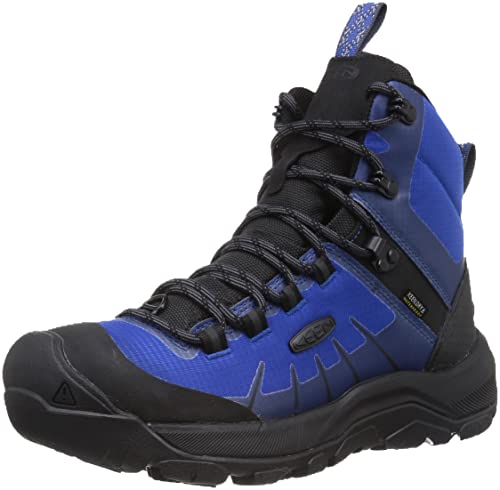 KEEN Revel IV EXP Mid Polar
Best overall |
200 g KEEN.WARM (rated -25°F) | KEEN.DRY membrane | Mid | Winter day hikes, icy trails | $149.95 at Amazon |
 Danner Arctic 600 Side-Zip
Best grip on snow and ice |
200G PrimaLoft Gold | Danner Dry membrane | 7 in | Icy trails, town and trail | $279.95 at Amazon |
 Oboz Bridger 10" Insulated
Best for deep snow and cold |
400 g Freeze Guard | B-DRY liner | 10 in | Deep snow, snowshoeing, cold | $239.98 at Amazon |
 Merrell Thermo Chill 2 Mid
Best budget |
200 g | Merrell waterproof membrane | Mid | Casual winter walks, light trails | $144.00 at Amazon |
 Columbia Bugaboot III
Best snow boot for short hikes |
200 g | Omni-Tech + rubber shell | Snow-boot height | Slush, deep snow, short hikes | $95.13 at Amazon |
Amazon price as of Nov 23, 2026 5:14 pm GMT+0000. Prices and availability are accurate as of the date/time indicated and are subject to change.
We may earn a commission when you buy through links on this page, at no extra cost to you. As an Amazon Associate we earn from qualifying purchases.
Quick picks
- Best overall: KEEN Revel IV EXP Mid Polar: a light, -25°F-rated hiking boot with an outsole built for ice.
- Best grip on snow and ice: Danner Arctic 600 Side-Zip: a 7-inch, PrimaLoft-insulated boot with a Vibram Arctic Grip outsole and a side zip.
- Best for deep snow and cold: Oboz Bridger 10″ Insulated: a tall, 400 g boot for snowshoeing, deep snow and long cold stops.
- Best budget: Merrell Thermo Chill 2 Mid: a light, comfortable 200 g hiker for casual winter trails.
- Best snow boot for short hikes: Columbia Bugaboot III: a classic pac-style snow boot that handles slush and deep snow.
How I picked these
I’ve been hiking for 20 years and backpacking for 16, and a lot of those miles were on snow. Cold, wet feet end more winter hikes than anything else. I compared these boots on what matters most in winter: how much insulation the maker uses, what keeps water out, how the outsole is built for cold, how tall the boot is, and whether it works with gaiters and traction devices. I also looked for both men’s and women’s versions.
Specs come from each maker’s own product pages and the Amazon listings. Temperature ratings are listed only where the maker publishes one. Most brands don’t, so we note insulation in grams instead. More grams generally means a warmer boot, but how warm your feet stay also depends on fit, socks and how hard you’re working.
1. KEEN Revel IV EXP Mid Polar: best overall
KEEN Men’s Revel IV EXP Mid Polar Insulated Waterproof Winter Hiking Boots
A lighter, mesh-upper version of KEEN's Revel IV Polar winter hiker, with a published -25°F rating and KEEN's Polar traction outsole.
- Insulation 200 g KEEN.WARM (rated -25°F)
- Waterproofing KEEN.DRY membrane
- Height Mid
- Best for Winter day hikes, icy trails
What we like
- 200 g KEEN.WARM insulation rated to -25°F (maker rating)
- KEEN.DRY waterproof, breathable membrane
- KEEN.Polar traction outsole with 5 mm lugs
- Mesh upper with TPU overlays: lighter than leather
- Wider fit leaves room for thick socks
What we don't
- Wider fit isn't for narrow feet
- Mid height: deep snow needs gaiters
- Women's version is the leather Revel IV Mid Polar
Amazon price as of Nov 23, 2026 5:14 pm GMT+0000. Prices and availability are accurate as of the date/time indicated and are subject to change.
The KEEN Revel IV EXP Mid Polar is the best all-around pick because it does the most with the least weight. It’s one of the few winter hiking boots with a published temperature rating: KEEN lists 200 g of KEEN.WARM insulation, made from recycled plastic bottles, rated to -25°F. A KEEN.DRY membrane lets sweat vapor out while keeping water out. The EXP version swaps the leather of the standard Revel IV for a performance mesh upper with TPU overlays, which keeps it closer to a hiking boot than a snow boot.
Grip is the other big reason to pick it. The KEEN.Polar traction outsole uses 5 mm multi-directional lugs and a rubber made for cold and ice. Underfoot, a compression-molded EVA midsole and a stability shank add support on uneven, snowy trails. It’s built on KEEN’s wider last, which leaves room for a thick sock. This link is the men’s EXP. For women, KEEN makes the Women’s Revel IV Mid Polar with the same 200 g of insulation and -25°F rating in a leather and mesh upper.
Where it falls short: the wide fit can feel sloppy on a narrow foot, and as a mid-height boot it needs gaiters in deep snow. A traction outsole helps on ice, but it isn’t a replacement for microspikes on steep, glazed trails.
2. Danner Arctic 600 Side-Zip: best grip on snow and ice
Danner Men’s Arctic 600 Side-Zip 7″ 200G Insulated Waterproof Winter Boots
A waterproof 7-inch winter boot with 200G PrimaLoft Gold insulation, a Vibram Arctic Grip outsole and a side zip for easy on and off.
- Insulation 200G PrimaLoft Gold
- Waterproofing Danner Dry membrane
- Height 7 in
- Best for Icy trails, town and trail
What we like
- 200G PrimaLoft Gold insulation
- Danner Dry waterproof membrane
- Vibram Nisqually Arctic Grip outsole for snow and ice
- Side zip makes it easy on and off with gloves
- Men's and women's versions; wide widths offered
What we don't
- Arctic Grip rubber can mark indoor floors
- Heavier than a light hiker
- No published temperature rating
Amazon price as of Nov 23, 2026 5:14 pm GMT+0000. Prices and availability are accurate as of the date/time indicated and are subject to change.
The Danner Arctic 600 Side-Zip is the pick for icy winter trails and everyday winter use. Its Vibram Nisqually Arctic Grip outsole uses Vibram’s Arctic Grip compound, plus flex lines and a split heel, for grip on snow and ice. Danner pairs it with 200G of PrimaLoft Gold insulation, which Danner picked for how well it holds up to repeated compression, and a Danner Dry waterproof membrane.
The 7-inch height keeps out more snow than a mid hiker, and a side zip lets you get in and out without unlacing, which is handy at a cold trailhead or a cabin door. A Vibram SPE midsole adds cushioning. Danner lists the men’s boot at about 45 oz per pair, and the Amazon listing offers wide widths. This link is the men’s boot, and Danner makes a women’s Arctic 600 Side-Zip 7″ 200G too.
Where it falls short: Danner warns that Arctic Grip rubber may harm indoor surfaces, so don’t wear it on wood floors, and that no outsole prevents every slip or replaces spikes or crampons. It’s heavier than a light hiking boot on long trail days.
3. Oboz Bridger 10″ Insulated: best for deep snow and cold
Oboz Men’s Bridger 10″ Insulated B-DRY Waterproof Winter Boots
A tall, heavily insulated leather winter boot with Oboz's B-DRY waterproof liner and a winterized outsole.
- Insulation 400 g Freeze Guard
- Waterproofing B-DRY liner
- Height 10 in
- Best for Deep snow, snowshoeing, cold
What we like
- 400 g Freeze Guard insulation
- B-DRY waterproof liner and DWR-treated nubuck leather
- 10-inch height keeps snow out
- Winterized outsole with Trail Tread POLAR rubber
- Gaiter D-ring; women's 9-inch version available
What we don't
- Heavier and warmer than you need for mild days
- Can run hot on a hard climb
Amazon price as of Nov 23, 2026 5:15 pm GMT+0000. Prices and availability are accurate as of the date/time indicated and are subject to change.
The Oboz Bridger 10″ Insulated is the warmest boot here. Oboz uses 400 g of Freeze Guard insulation, made from recycled polyester, with a B-DRY waterproof liner under a DWR-treated nubuck leather upper. The tall 10-inch height is the real winter advantage: it keeps snow out when you step off a packed trail or wear snowshoes in powder.
Underfoot, it has a TPU chassis for support and a winterized Granite Peak outsole with Oboz’s Trail Tread POLAR rubber for icy ground. A thermal insole adds another layer between your foot and the snow, and the Amazon listing notes a gaiter D-ring at the front. This link is the men’s boot. For women, Oboz makes the Bridger 9″ Insulated B-DRY with the same 400 g of insulation.
Where it falls short: 400 g of insulation can make your feet sweat on a warm day or a long, steep climb, and wet socks get cold fast. On mild winter days, a 200 g boot is often more comfortable.
4. Merrell Thermo Chill 2 Mid: best budget
Merrell Men’s Thermo Chill 2 Mid Waterproof Winter Hiking Boots
An affordable, lightweight winter hiking boot with 200 g insulation, a fleece lining and a waterproof membrane.
- Insulation 200 g
- Waterproofing Merrell waterproof membrane
- Height Mid
- Best for Casual winter walks, light trails
What we like
- 200 g insulation
- Waterproof membrane
- Recycled fleece lining and collar
- Light EVA foam midsole
- Men's and women's versions
What we don't
- No published temperature rating
- Not built for deep cold or rough mountain terrain
- Softer build gives less support with a heavy pack
Amazon price as of Nov 23, 2026 5:15 pm GMT+0000. Prices and availability are accurate as of the date/time indicated and are subject to change.
The Merrell Thermo Chill 2 Mid is the easy, lower-cost way into winter hiking. Merrell lists 200 g of insulation and a 100% recycled fleece lining, which puts it in the middle of Merrell’s own warmth scale. A waterproof membrane keeps out snowmelt and slush, and a fleece collar seals the top of the boot.
It’s light and soft, with an EVA foam midsole and a sticky rubber outsole. That makes it comfortable for snowy neighborhood walks, groomed park trails and short winter day hikes. Merrell uses recycled materials in the laces, webbing, collar, lining and footbed. This link is the men’s boot, and there’s a women’s version too.
Where it falls short: Merrell doesn’t publish a temperature rating, and the soft build gives less support on rocky, steep trails or with a heavy pack. It’s a winter walking and day-hiking boot, not a mountain boot.
5. Columbia Bugaboot III: best snow boot for short hikes
Columbia Men’s Bugaboot III Waterproof Snow Boot
A waterproof leather and rubber snow boot with 200 g insulation for snowy walks, short hikes and camp.
- Insulation 200 g
- Waterproofing Omni-Tech + rubber shell
- Height Snow-boot height
- Best for Slush, deep snow, short hikes
What we like
- 200 g insulation
- Waterproof leather upper with Omni-Tech membrane
- Rubber shell handles slush and puddles
- Omni-Grip outsole
- Men's and women's versions
What we don't
- Heavier and clunkier than a hiking boot
- Columbia rates it 'Light Warmth'
- Fits small: size up
Amazon price as of Nov 23, 2026 5:15 pm GMT+0000. Prices and availability are accurate as of the date/time indicated and are subject to change.
The Columbia Bugaboot III is a snow boot first and a hiking boot second, and that’s why it’s here. A rubber shell wraps the lower boot, so slush and standing water can’t soak in. Above that is a waterproof leather upper with Columbia’s Omni-Tech breathable membrane. Columbia lists 200 g of insulation, a TechLite midsole and an Omni-Grip outsole.
It’s the right choice for short snowy hikes, sledding hills, winter camp and shoveling the driveway, where you’re in and out of deep snow and slush. Columbia lists its warmth level as Light Warmth and a weight of 24.5 oz per shoe, so it’s heavier than the hikers above. Columbia also makes a women’s Bugaboot III and a warmer Bugaboot III XTM with 600 g of insulation. The Amazon listing says it fits small, so order a half or full size up.
Where it falls short: it’s heavy and less precise than a real hiking boot on long or rocky trails, and Columbia calls its warmth light. Use it for short outings, not all-day mountain hikes.
How to choose the best winter hiking boots
- Insulation: most makers list synthetic insulation in grams. About 200 g suits active hiking in cold weather. About 400 g suits deep cold, long stops, snowshoeing and slower hikers. More isn’t always better: feet that sweat get cold.
- Waterproofing: a waterproof membrane or bootie keeps snowmelt out. It also traps sweat, so pair it with a wool or synthetic sock that moves moisture.
- Height: mid-height boots are lighter and fine on packed trails. Taller boots, like the Oboz Bridger 10″, keep snow out in deep powder.
- Outsole: rubber gets hard in the cold. Winter outsoles like Vibram Arctic Grip, KEEN.Polar and Oboz’s Trail Tread POLAR are made to stay grippy on cold snow and ice.
- Gaiter attachments: a hook or D-ring at the front of the laces keeps a gaiter from riding up.
- Temperature ratings: few brands publish one. KEEN rates the Revel IV EXP Mid Polar to -25°F. Treat any rating as a guide for an active hiker, not a promise for standing still.
Boots vs. microspikes vs. snowshoes: when you need each
- Boots alone: fresh snow a few inches deep, or packed snow on flat and gentle trails.
- Microspikes: packed, icy or refrozen trails, especially on hills. They slip over your boots and add small steel spikes. On popular winter trails, the snow gets packed down fast and turns to ice, so this is the trail most winter hikers see.
- Snowshoes: deep, soft or unpacked snow, where you sink past your ankles with each step. They spread your weight so you stay on top. Many snowshoes also have crampons underfoot for climbing. See our guide to the best snowshoes.
- Crampons and mountaineering boots: steep, hard snow and ice on mountain routes. That’s a different, more technical kit than these boots are built for.
- Carry both on mixed days. Trail conditions change with elevation and sun. Packing microspikes and trail snowshoes lets you switch as the snow changes.
Winter boots are the base layer of your traction system, not the whole thing. Even a great winter outsole can slip on hard ice. Here’s how to match your gear to the trail.
Fit winter boots with thick socks
- Try boots on with your winter socks. A midweight or heavyweight wool sock takes up more room than a summer sock. Shop later in the day, when your feet are a little larger.
- Leave room to wiggle your toes. Tight boots squeeze blood flow, and that makes feet colder no matter how much insulation the boot has.
- Check the heel and the descent. Your heel shouldn’t lift much, and your toes shouldn’t hit the front when you walk downhill.
- Don’t stack socks. Two socks in a boot that’s too small feel warm for an hour, then cramp your toes. Buy the right size for one good sock instead. See our guide to the best hiking socks.
- Skip cotton. Cotton socks hold sweat against your skin. Wool and synthetic blends stay warmer when damp.
- Size up for some models. Columbia’s Bugaboot III listing says it fits small. KEEN’s wider fit suits higher-volume feet.
Pair your boots with gaiters
Gaiters close the gap between your pants and your boots. Without them, snow packs into the top of the boot, melts and soaks your socks from above. A waterproof boot can’t stop water that comes in over the cuff.
For packed trails, low or mid gaiters are enough. For deep snow and snowshoeing, use tall, knee-high gaiters. Hook the front strap to the boot’s lace hook or D-ring, run the strap under the arch, and tuck your pant legs inside or keep them over the gaiter, depending on the design. The Oboz Bridger has a gaiter D-ring for this.
Keep winter boots dry, and dry them out right
- Start with dry boots and socks. Damp boots from yesterday’s hike lose a lot of their warmth.
- Manage sweat. Open your jacket and slow down before you soak your socks. On long days, carry a spare pair of socks and change at lunch.
- Knock snow off before it melts. Brush off the uppers and laces at breaks, and keep gaiters on.
- Dry them gently. At home or camp, pull out the insoles, open the laces wide and stuff the boots with newspaper. Change the paper every few hours. Let them dry at room temperature.
- Keep high heat away. Don’t dry boots right next to a fire, wood stove or heater. High heat can crack leather and weaken the glue that holds boots together.
- On overnight trips, bag your boots. A stuff sack with your boots inside, kept in the tent, keeps them from freezing solid overnight.
- Re-treat leather and fabric. When water stops beading on the upper, clean the boots and add the waterproofing treatment the maker recommends.
Best winter hiking boots FAQ
What are the best winter hiking boots?
For most winter day hikes, the KEEN Revel IV EXP Mid Polar is a great all-around choice: light, waterproof, insulated with 200 g of KEEN.WARM and rated to -25°F by KEEN. The Danner Arctic 600 Side-Zip adds a Vibram Arctic Grip outsole for icy trails. For deep snow and snowshoeing, the taller Oboz Bridger 10″ Insulated with 400 g of insulation is the warmest pick here.
How much insulation do I need in winter hiking boots?
About 200 g of insulation suits most people who keep moving on cold winter hikes. About 400 g is better for very cold days, long stops, snowshoeing in deep snow or people who run cold. Too much insulation can make your feet sweat, and wet feet get cold.
Can I use regular waterproof hiking boots in winter?
Yes, on mild days and short hikes with thick wool socks and gaiters. Uninsulated boots get cold fast when you stop, and their rubber can get stiff and slippery in deep cold. For regular winter hiking, insulated boots are warmer and safer.
Should winter hiking boots be a size bigger?
Often a half size is enough, but go by fit, not a rule. Try boots on with the socks you’ll wear in winter. You should be able to wiggle your toes, your heel shouldn’t lift much, and your toes shouldn’t hit the front on descents.
Do I need microspikes with winter hiking boots?
On packed or icy trails, yes. A winter outsole helps, but steel spikes grip ice far better than rubber. Microspikes fit over most winter hiking boots. In deep, soft snow, you’ll want snowshoes instead.
How do I keep my feet warm on a winter hike?
Wear well-fitting insulated boots with one good wool sock, add gaiters to keep snow out, and keep your core warm so your body keeps sending blood to your feet. Change into dry socks if yours get wet, and don’t lace the boots so tight that they cut off blood flow.
Final thoughts on the best winter hiking boots
The right winter boot depends on your trail. The KEEN Revel IV EXP Mid Polar is the best all-around choice for active winter day hikes, with a -25°F rating and an ice-focused outsole in a roomy fit. The Danner Arctic 600 Side-Zip adds a Vibram Arctic Grip outsole and an easy side zip. The Oboz Bridger 10″ Insulated is the warmest and tallest, built for deep snow. The Merrell Thermo Chill 2 Mid is the light, budget pick, and the Columbia Bugaboot III handles slush and short snowy hikes. Whatever you choose, fit it with your winter socks and pair it with gaiters and microspikes.
To build out your winter kit, see what to wear hiking in winter, how to choose the right hiking boots for your terrain, and our guides to the best hiking socks, best trekking poles and best snowshoes. For three-season boots, see the best hiking boots for men and the best hiking boots for women.