
How to Spool a Spinning Reel (Mono, Fluoro and Braid) Without Line Twist
 By Ian Freng
Updated November 18, 2026
When I put fresh line on a trout reel, I’ve found that nearly every bird’s nest I’ve ever picked out of a spinning reel traces back to the five minutes I spent spooling it. Line that goes on twisted, loose or overfilled comes off the same way, usually in a big loop on your first long cast.
I’ve been freshwater fishing for 13 years, mostly for trout in California, and I respool light spinning reels several times a season. This guide covers how to spool a spinning reel the right way: what you need, the exact steps, how to handle braid, the mistakes that cause twist and tangles, and how much line to put on for trout and panfish.
The short version
- Open the bail, run the line through the first rod guide, and tie it to the spool with an arbor knot.
- Close the bail and lay the filler spool flat on the floor.
- Line should come off the filler spool the same direction it goes on the reel. Label side up usually works. Test with 15–20 cranks and flip the spool if the line starts to twist.
- Keep light tension by pinching the line about a foot above the reel as you crank.
- Stop about 1/8 inch below the spool lip. Overfilling causes loops and wind knots.
- For braid, put down a mono or fluoro backing (or a wrap of tape) first so it doesn’t slip on the spool.
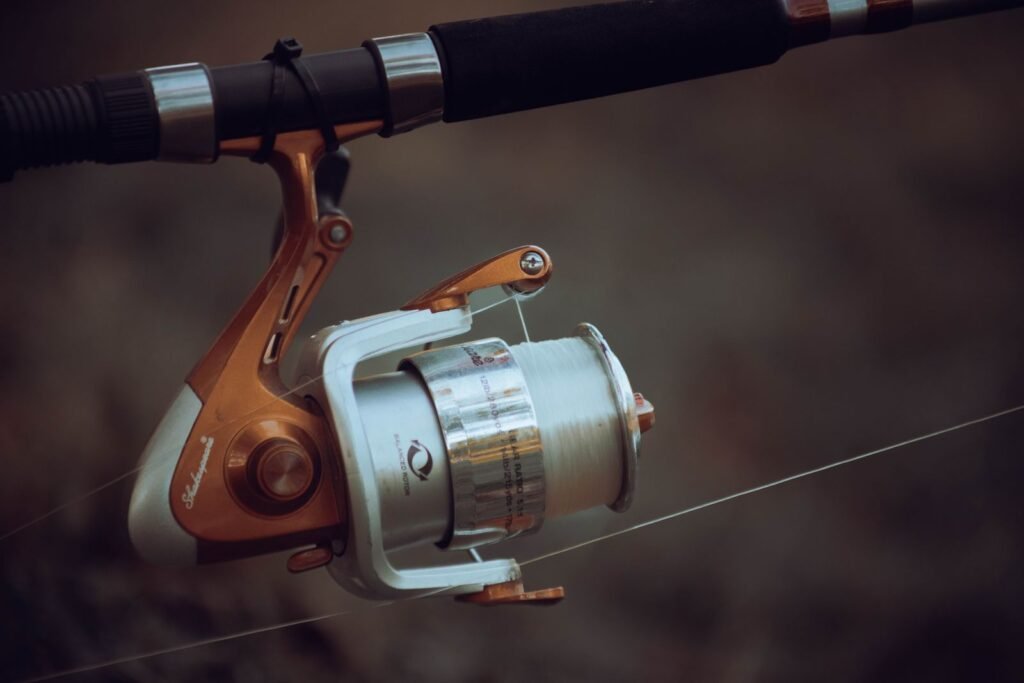
What you need
- Your spinning reel, ideally mounted on the rod so you can run the line through the guides.
- A filler spool of new line. Check the line capacity printed on the reel spool (for example, “6 lb / 140 yd”) so you buy enough.
- Scissors or nail clippers to trim tag ends.
- Electrical tape if you’re spooling braid without a backing.
- A wet rag or a cup of water (optional) to wet the line and keep it from heating up as it slides through your fingers.
- A helper or a pencil (optional). A spinning reel is the one type of reel where you do not want the filler spool spinning on a pencil, but a helper can hold the spool flat and add tension.
If you’re still choosing a reel, our guide to the best spinning reels explains which sizes match which line weights.
How to spool a spinning reel, step by step
These steps work for monofilament and fluorocarbon. Braid has a couple of extra steps, covered in the next section.
- Strip the old line. Pull off all of it, or at least down to any backing you want to keep. Line that’s been sitting on the spool for a season is weaker and holds coils.
- Open the bail. This is the step people forget most. If the bail is closed when you tie on, you can’t get the line under the roller correctly.
- Run the line through the first (largest) rod guide, then down to the reel. This keeps the line lined up the way it will come off when you cast.
- Tie an arbor knot. Wrap the tag end around the spool, tie an overhand knot around the main line, then tie a second overhand knot in the tag end. Pull the main line so the knot slides down and cinches against the spool. Trim the tag to about 1/4 inch.
- Close the bail by hand, not by cranking. Make sure the line sits on the line roller.
- Lay the filler spool flat on the floor, label side up. The rule is that line should come off the filler spool in the same direction the reel winds it on. Berkley describes this as the line coming off the filler spool counterclockwise, and with most brands, label side up gets you there.
- Do the twist test. Crank 15–20 turns, then let a foot or two of slack hang between the rod tip and the reel. If the slack line hangs straight or loosely, you’re good. If it curls and spins on itself, the spool is the wrong way. Strip those turns off, flip the filler spool over, and try again.
- Keep tension. Pinch the line lightly between your thumb and finger about 12 inches above the reel as you crank. Firm enough that the line packs tightly, not so firm that it burns your fingers or stretches.
- Watch the spool fill evenly. The line should lay level from front to back. If it builds up toward the front or back, the reel may need a spool shim, but on most reels it lays fine.
- Stop about 1/8 inch below the lip of the spool. Berkley recommends 1/8 to 3/16 inch. Cut the line from the filler spool, tie on a lure or swivel, and tape or clip the loose end of the filler spool.
That’s really all there is to how to spool a spinning reel. Once you’ve done it twice, it takes about five minutes.
Why the direction matters
A spinning reel puts a small twist in the line every time the bail wraps it around the spool. When line comes off a filler spool in the opposite direction, those twists stack up, and the line goes on the reel already twisted. Then it comes off in tight coils that jump off the spool on the cast. Matching the direction cancels most of that out. The label-up rule is a shortcut, not a law. Some line brands wind their filler spools the other way, which is why the twist test matters more than the label.
How to spool a spinning reel with braid
Braid is great on spinning reels: thin, strong and almost no stretch. But it’s slick, and if you tie it straight to a bare metal spool, the whole line can spin around the spool when you set the hook or a fish pulls drag. You’ll hear the drag but the line won’t actually go anywhere. There are two fixes:
- Mono or fluoro backing (my preference). Tie on mono with an arbor knot and wind on enough to cover the spool, usually a third to half of it. Then connect the braid to the backing with a double uni knot and fill the rest. The backing grips the spool, and it also saves you from buying a full spool’s worth of expensive braid you’ll never cast.
- Tape. Put a single wrap of electrical tape around the bare spool, tie the braid on with an arbor knot over the tape, and spool up. Faster, but you use more braid.
Braid has no memory, so direction-related twist is less of a problem, but keep the tension firm. Loosely packed braid can dig into itself and create loops. Fill to the same 1/8 inch below the lip.
Most anglers then add a short leader of fluorocarbon or mono to the end of the braid, both because braid is highly visible in clear water and because it’s easier to tie lures to. A double uni knot is the easiest braid-to-leader connection to learn. The FG knot is thinner and passes through guides more smoothly, but it takes practice.
If you’re picking a braid, our braided fishing line guide compares the popular options by diameter, coating and color.
Common spooling mistakes
| Mistake | What happens | The fix |
|---|---|---|
| Filler spool facing the wrong way | Line twist, loops on the cast, tangled leaders | Do the 15–20 crank twist test and flip the spool if line curls |
| Overfilling | Loose coils jump off the spool; wind knots | Stop 1/8 inch below the lip; strip off extra |
| Underfilling | Shorter casts because line rubs the spool lip | Fill to within 1/8 to 3/16 inch |
| No tension | Loose line that digs in and tangles later | Pinch the line a foot above the reel while cranking |
| Closing the bail by cranking | Line can miss the roller | Flip the bail closed by hand |
| Braid on a bare spool | Line slips around the spool under pressure | Use mono backing or a wrap of tape |
| Filler spool on a pencil | Adds twist with every turn | Lay the spool flat for spinning reels |
If your line is already twisted, you can usually fix it without respooling. Take off the lure, let 50 feet or more of line trail behind a moving boat or downstream in current, then reel it back in under light tension. Berkley suggests the same trick, especially after landing fish on light line. A small barrel swivel above your lure also helps with spinners that rotate.
How much line, and what weight?
Your reel spool tells you the capacity. A small 1000-size reel might hold around 100 yards of 4 lb mono, while a 2500-size holds a lot more. You rarely need the full spool for trout or panfish in a lake, but a full spool casts best, which is why the fill line matters.
| Fishing | Typical line | Reel size |
|---|---|---|
| Small stream trout, panfish | 2–4 lb mono or fluoro | 500–1000 |
| Lake trout fishing (stocked rainbows, browns) | 4–6 lb mono or fluoro | 1000–2500 |
| Bass, bigger trout, light all-around | 6–10 lb mono, or 10–15 lb braid with a fluoro leader | 2500–3000 |
Oregon’s fish and wildlife department lists 2–6 lb monofilament on an ultralight spinning rod as its light trout and panfish setup, which lines up with what I use. For trout specifically, our guide to the best fishing line for trout goes deeper on mono vs. fluoro and where each one shines. For other species and setups, see our main fishing line guide.
When to respool
- Mono: at least once a season if you fish regularly, and any time it looks chalky, feels stiff, or holds coils off the spool. Mono weakens with sunlight and age.
- Fluorocarbon: similar to mono, though it tends to hold up a little longer. Replace it when it gets springy and coils badly.
- Braid: lasts much longer. Many anglers reverse it (flip it end-for-end onto a different spool so the unused line is on top) before replacing it.
- Any line: when you’ve cut off enough that the spool is noticeably low, or when the first 10–20 feet feel nicked or frayed. Cut off the damaged section before every trip.
Fresh, properly spooled line is one of the cheapest upgrades you can make. It matters most on light trout setups, where a single wind knot can cost you a fish. Once you’re spooled up, our guide on how to catch trout in a lake covers where to go and what rig to tie on first.
Spinning reel spooling FAQ
Which way should the line come off the spool when spooling a spinning reel?
The same direction the reel winds it on, which for most spinning reels means the filler spool lies flat with the label side up. Because some brands wind their spools differently, crank 15–20 turns and check the slack line. If it curls on itself, flip the filler spool over.
How full should I fill a spinning reel?
To about 1/8 inch below the lip of the spool. Berkley recommends 1/8 to 3/16 inch. Overfilling causes loops and wind knots; underfilling shortens your casts.
Do I need backing to spool braid on a spinning reel?
You need something for the braid to grip. Most anglers put on mono backing first and join the braid with a double uni knot. The other option is a single wrap of electrical tape on the bare spool, with the braid tied over it.
What knot do you use to tie line to a spinning reel?
An arbor knot. Wrap the line around the spool, tie an overhand knot around the main line, tie a second overhand knot in the tag end, then pull it snug against the spool.
Can I spool a spinning reel by myself?
Yes. Lay the filler spool flat on the floor, pinch the line about a foot above the reel for tension, and crank. A helper is nice but not necessary.
How do I get line twist out of my spinning reel?
Remove the lure and let a long length of line trail behind a moving boat or in river current, then reel it back under light tension. If the twist keeps coming back, respool with the filler spool flipped over.
What size line should I put on a spinning reel for trout?
Most trout anglers use 4–6 lb mono or fluorocarbon. For small streams and panfish, 2–4 lb works well on an ultralight reel.