The Best Ice Cleats and Microspikes for Winter Hiking (2026)
 By Ian Freng
Updated November 23, 2026
When I hike on icy trails in winter, I’ve found that boot tread alone does very little on hard, refrozen ice, and a pair of stretch-on traction devices that weighs well under a pound makes the biggest difference for the least weight. The best ice cleats depend on where you’ll walk: steel spikes for steep, icy mountain trails, small carbide studs for trails that turn into icy streets, and coils or beads for sidewalks and packed snow around town. This guide compares five options and covers how to size them to your boots, how to get them on and off, and where they stop being enough.
Quick answer: Our top pick is the Kahtoola MICROspikes (best overall). Stretch-on traction with 12 stainless steel spikes per foot, built for ice and packed snow on mountain trails. Best for: icy and snowy hiking trails.
- Best for trail-to-town: Kahtoola EXOspikes
- Most spikes per foot: Hillsound Trail Crampon Ultra
- Best for icy sidewalks and work: Yaktrax Diamond Grip
- Best for packed snow and walking: Yaktrax Pro
Best ice cleats compared
| Product | Traction | Spikes | Weight (pair) | Best for | Buy |
|---|---|---|---|---|---|
 Kahtoola MICROspikes
Best overall |
Steel spikes + chains | 12 per foot, 0.41 in | 11.9 oz (M) | Icy and snowy hiking trails | $71.96 at Amazon |
 Kahtoola EXOspikes
Best for trail-to-town |
Carbide studs | 12 per foot, 0.29 in | 7.3 oz (M) | Icy streets and moderate trails | $63.96 at Amazon |
 Hillsound Trail Crampon Ultra
Most spikes per foot |
Steel spikes + chains | 18 per foot, ~1/2 in | 14.25 oz (M) | Steep, icy hiking trails | $49.88 at Amazon |
 Yaktrax Diamond Grip
Best for icy sidewalks and work |
Steel beads on cable | Beads (no spikes) | Varies by size | Sidewalks, driveways, work | $41.32 at Amazon |
 Yaktrax Pro
Best for packed snow and walking |
Steel coils | Coils (no spikes) | Light (coils) | Packed snow, walking, jogging | $17.65 at Amazon |
Amazon price as of Nov 23, 2026 5:26 pm GMT+0000. Prices and availability are accurate as of the date/time indicated and are subject to change.
We may earn a commission when you buy through links on this page, at no extra cost to you. As an Amazon Associate we earn from qualifying purchases.
Quick picks
- Best overall: Kahtoola MICROspikes: 12 steel spikes per foot on a stretchy harness: the standard for icy winter trails.
- Best for trail-to-town: Kahtoola EXOspikes: low-profile carbide studs for icy streets and moderate trails.
- Most spikes per foot: Hillsound Trail Crampon Ultra: 18 stainless spikes and a strap over the top for steep, icy trails.
- Best for icy sidewalks and work: Yaktrax Diamond Grip: steel beads that grip ice from every angle, sized for work boots.
- Best for packed snow and walking: Yaktrax Pro: light steel coils and a removable strap for walking and jogging on packed snow.
How I picked these
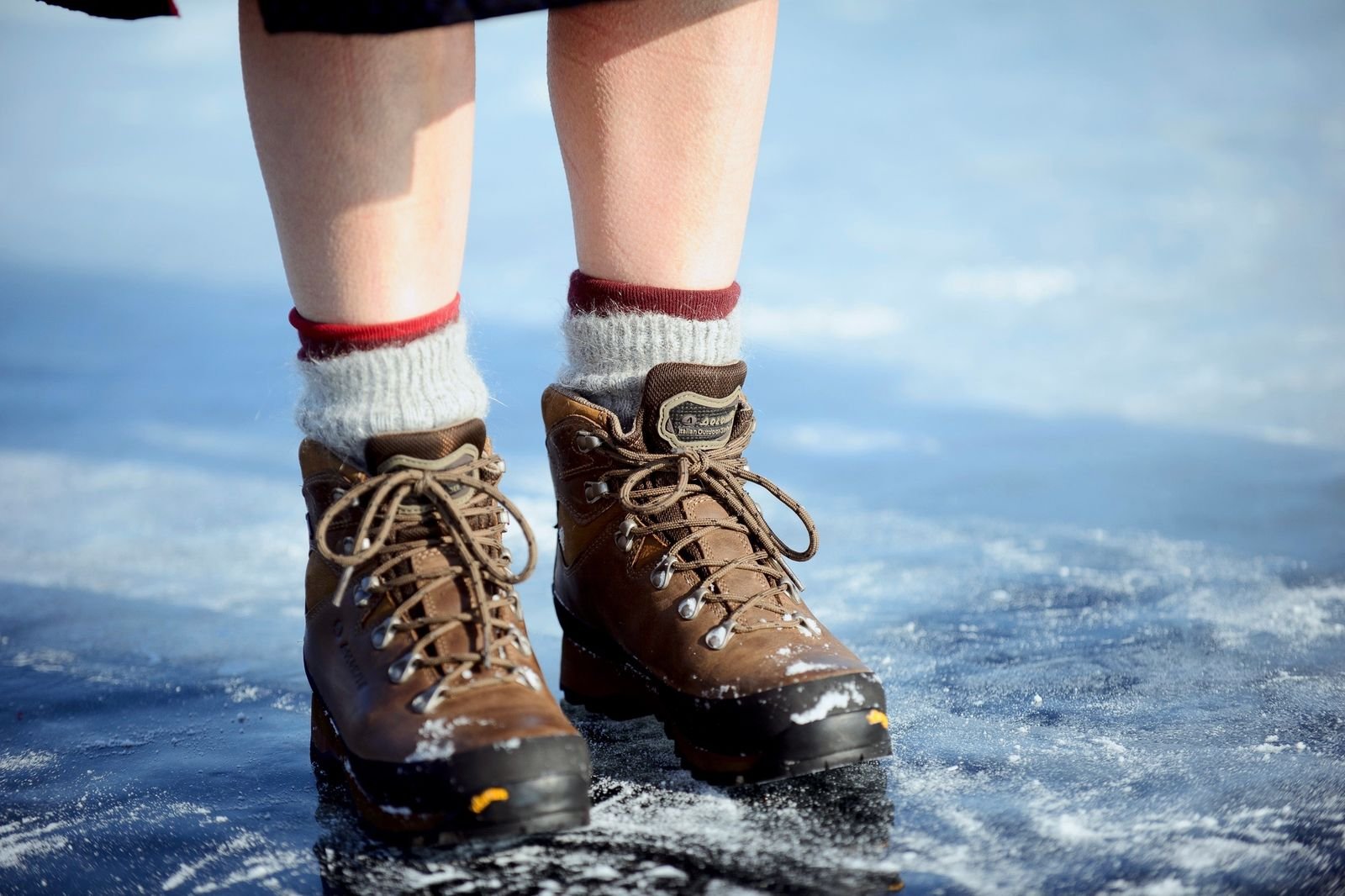
I’ve been hiking for 20 years, and slipping on a frozen trail is one of the easiest ways to get hurt outside in winter. I compared these traction devices on the type and length of their spikes, how securely the harness holds, weight, sizing for different boots, and the terrain each one is built for. I haven’t used every pair on this list. Specs and intended uses come from the makers’ own product pages and spec sheets, and every pick was in stock at Amazon when this guide was published.
One rule shaped the list: these are traction devices for walking and hiking, not climbing gear. None of them replaces a real crampon and an ice axe on steep snow, glaciers or technical terrain, and we say so in each pick and in the safety section below.
1. Kahtoola MICROspikes: best overall
Kahtoola MICROspikes Footwear Traction
Stretch-on traction with 12 stainless steel spikes per foot, built for ice and packed snow on mountain trails.
- Traction Steel spikes + chains
- Spikes 12 per foot, 0.41 in
- Weight (pair) 11.9 oz (M)
- Best for Icy and snowy hiking trails
What we like
- 12 heat-treated stainless steel spikes per foot, 0.41 in long
- Welded stainless steel chains
- Elastomer harness stays stretchy down to -22°F (Kahtoola)
- Separate size charts for hiking boots and insulated boots
- 4-year limited warranty (Kahtoola)
What we don't
- Overkill and noisy on bare pavement
- Heavier than city-style cleats
- Not a crampon for technical terrain
Amazon price as of Nov 23, 2026 5:26 pm GMT+0000. Prices and availability are accurate as of the date/time indicated and are subject to change.
Kahtoola MICROspikes are the traction device most winter hikers end up with. Each foot gets 12 heat-treated, 400-series stainless steel spikes, about 0.41 inch long, linked by welded stainless steel chains. The spikes sit on a stretchy elastomer harness that pulls over the toe and heel of a hiking shoe, boot or insulated boot. Kahtoola says the harness stays elastic down to -22°F, which matters, because a stiff harness is hard to get on with cold hands.
Kahtoola describes them as aggressive traction for ice and packed snow in mountainous terrain, from day hikes to longer backcountry trips. A medium pair weighs 11.9 ounces, light enough to stuff in a daypack for the icy stretches. Kahtoola publishes separate size charts for hiking footwear and insulated boots, and notes that bulky or unusually shaped footwear may need a size up or down. It backs them with a 4-year limited warranty on purchases made since August 1, 2025.
Where it falls short: they’re more than you need for a city sidewalk, and steel spikes are loud and wear faster on bare pavement. On steep, hard snow or glaciers you need real crampons, an ice axe and the training to use them.
2. Kahtoola EXOspikes: best for trail-to-town
Kahtoola EXOspikes Footwear Traction
Lighter, lower-profile traction with 12 tungsten carbide spikes per foot for moderate trails and icy streets.
- Traction Carbide studs
- Spikes 12 per foot, 0.29 in
- Weight (pair) 7.3 oz (M)
- Best for Icy streets and moderate trails
What we like
- 12 tungsten carbide spikes per foot, 0.29 in long
- Light: 7.3 oz per pair (M)
- Elastomer harness stays stretchy down to -22°F (Kahtoola)
- Comfortable on mixed pavement and trail
- 4-year limited warranty (Kahtoola)
What we don't
- Shorter spikes grip less in steep, icy terrain
- No chains to bite into deeper snow
- Not for technical terrain
Amazon price as of Nov 23, 2026 5:26 pm GMT+0000. Prices and availability are accurate as of the date/time indicated and are subject to change.
Kahtoola EXOspikes are built for people who move between icy streets and moderate trails: dog walkers, runners, commuters and hikers on gentle winter routes. Instead of chains and long steel spikes, each foot has 12 tungsten carbide spikes, about 0.29 inch long, anchored in aluminum and TPU lugs on a flexible traction matrix. Kahtoola calls them built for versatile road-to-trail use.
At 7.3 ounces for a medium pair, they’re much lighter and lower profile than MICROspikes, so they’re easier to leave on when a trail crosses a parking lot or road. Kahtoola’s own comparison chart calls MICROspikes the dependable workhorse for steep, icy terrain, so choose EXOspikes for flatter, mixed ground and MICROspikes for mountain trails. Kahtoola also makes NANOspikes, a still lighter option aimed at roads and running.
Where it falls short: the shorter studs don’t bite as deep on steep ice or in loose snow over ice, so they’re not the pick for mountain trails. Like any traction device, they’re not crampons.
3. Hillsound Trail Crampon Ultra: most spikes per foot
Hillsound Trail Crampon Ultra
A heavy-duty trail traction device with 18 stainless steel spikes per foot and an extra strap over the instep.
- Traction Steel spikes + chains
- Spikes 18 per foot, ~1/2 in
- Weight (pair) 14.25 oz (M)
- Best for Steep, icy hiking trails
What we like
- 18 stainless steel spikes per foot, about 1/2 inch long
- Hook-and-loop strap adds security over the instep
- Elastomer harness fits hiking boots
- Sizes XS to XL
What we don't
- Heaviest pick here at about 14 oz per pair (M)
- Strap adds a step when putting them on
- Still not a crampon for technical terrain
Amazon price as of Nov 23, 2026 5:26 pm GMT+0000. Prices and availability are accurate as of the date/time indicated and are subject to change.
The Hillsound Trail Crampon Ultra is the most aggressive pick on this list. Each foot carries 18 stainless steel spikes of about half an inch, more spikes than the MICROspikes and a little longer, on chains under an elastomer harness. A hook-and-loop strap goes over the top of the foot to help keep the device centered on a boot during long climbs and descents.
That extra bite and security make it a good fit for steep, icy hiking trails, frozen trail runoff and winter routes where packed snow has turned to ice. The trade-off is weight: about 14.25 ounces for a medium pair, the heaviest here. Hillsound sells it in sizes from XS to XL. Check the size chart against your actual boot, not just your shoe size.
Where it falls short: it’s the heaviest pair here, and the strap makes it a little slower to put on. More spikes still don’t make it a crampon: for glaciers, steep snow climbs or technical ice, you need real crampons and an ice axe.
4. Yaktrax Diamond Grip: best for icy sidewalks and work
Yaktrax Diamond Grip All-Surface Traction Cleats
Traction cleats with case-hardened steel alloy beads on steel cable, made for icy sidewalks, driveways and job sites.
- Traction Steel beads on cable
- Spikes Beads (no spikes)
- Weight (pair) Varies by size
- Best for Sidewalks, driveways, work
What we like
- Case-hardened steel alloy beads on steel aircraft cable
- Grips from many angles on flat ice
- Sized for work boots and insulated boots (size up per Yaktrax)
- Natural rubber frame with zinc-coated steel chains
What we don't
- Not built for steep trails
- Beads and cable wear with heavy pavement use
- Heavier than coil cleats
Amazon price as of Nov 23, 2026 5:26 pm GMT+0000. Prices and availability are accurate as of the date/time indicated and are subject to change.
Not every slippery walk is on a trail. The Yaktrax Diamond Grip is built for icy sidewalks, driveways, parking lots and job sites. Instead of spikes, it uses case-hardened steel alloy beads strung on steel aircraft cable, with a natural rubber frame and zinc-coated steel chains and eyelets. The beads have many edges, so they grip ice from many angles as your foot rolls.
It’s a good choice for anyone who has to shovel, salt, deliver or walk the dog on ice every morning. Yaktrax’s sizing advice is to go up one size for hiking and work boots and two sizes for oversize or insulated boots, so it fits bulky winter footwear. For sizing and care details, check the chart on the packaging or the maker’s site before you order.
Where it falls short: it isn’t built for steep hiking trails, where steel spikes like the MICROspikes hold better. Heavy use on bare pavement wears the beads and cable over time.
5. Yaktrax Pro: best for packed snow and walking
Yaktrax Pro Traction Cleats for Walking, Jogging or Hiking on Snow and Ice
Light, low-profile traction with steel coils and a removable strap, made for walking and jogging on packed snow and ice.
- Traction Steel coils
- Spikes Coils (no spikes)
- Weight (pair) Light (coils)
- Best for Packed snow, walking, jogging
What we like
- 1.4 mm steel coils wrap the sole
- Removable performance strap for running
- Rated to -41°F
- Light and low profile
- Sizes S to XL
What we don't
- Coils grip packed snow better than hard, glazed ice
- Not for steep trails
- Coils can wear or break with heavy pavement use
Amazon price as of Nov 23, 2026 5:27 pm GMT+0000. Prices and availability are accurate as of the date/time indicated and are subject to change.
The Yaktrax Pro has been around for years and is still one of the simplest ways to add grip for walking and jogging in winter. Steel coils, 1.4 mm thick, wrap around a rubber frame that stretches over your shoe. The coils bite into packed snow and give some grip on ice without spikes poking out.
The Pro adds a removable performance strap over the top of the foot to keep it in place when you jog or walk fast, and Yaktrax rates it to -41°F. It’s light and low profile, so it’s easy to keep in a coat pocket or a car kit for icy parking lots and snowy sidewalks. For hard, glazed ice or hiking trails, choose spikes like the EXOspikes or MICROspikes instead.
Where it falls short: coils grip packed snow well but don’t bite into hard, glazed ice the way spikes do, and they’re not meant for steep trails. Coils can wear or break with lots of walking on bare pavement.
Ice cleats vs. microspikes vs. crampons vs. snowshoes
- Ice cleats (coils, beads or small studs), like the Yaktrax Pro, Yaktrax Diamond Grip and Kahtoola EXOspikes: for sidewalks, driveways, parking lots, packed snow and gentle trails. Light, low profile and easy to leave on.
- Microspikes and trail crampons, like the Kahtoola MICROspikes and Hillsound Trail Crampon Ultra: chains with short steel spikes for icy and snowy hiking trails, including moderately steep ones. This is what most winter hikers need.
- Crampons are a different tool: rigid frames with long points, including front points, that strap or clip to stiff mountaineering boots. They’re for steep snow, glaciers and technical ice, and they go with an ice axe and the training to use both. A traction device does not replace them.
- Snowshoes are for deep, soft snow. They spread your weight so you float instead of sinking. Many snowshoes have crampon teeth underneath, but on hard, packed trails microspikes are lighter and easier to walk in. Plenty of winter hikers carry both and switch as conditions change. See our guide to the best snowshoes.
How to choose the best ice cleats
- Match the traction to the terrain. Steep or icy mountain trails call for steel spikes and chains. Mixed trails and streets suit carbide studs. Flat sidewalks and packed snow are fine with coils or beads.
- Check the harness. A stretchy elastomer harness is easy to pull on and stays put. Kahtoola says its harness stays elastic down to -22°F, which helps when you’re putting them on with cold hands.
- Look for a strap if you move fast. The Yaktrax Pro and Hillsound Ultra add a strap over the top of the foot to keep the device centered when you run or climb.
- Think about weight and packing. EXOspikes weigh 7.3 ounces per pair in medium, while the Hillsound Ultra weighs about 14 ounces. If they’ll live in your pack all winter, lighter is easier.
- Buy for your boots, not your shoe size. See the sizing section below.
How to size ice cleats to your boots
Traction devices are sized to the boot, not the foot. A size 10 trail runner and a size 10 insulated winter boot have very different outsoles, and the wrong size either slides off or won’t stretch over the toe.
Kahtoola publishes separate charts for hiking shoes and boots and for insulated boots, and notes that bulky, narrow or unusually shaped footwear may need a size up or down. Yaktrax’s sizing advice for the Diamond Grip is to go up one size for hiking and work boots and two sizes for oversize or insulated boots. The best test is at home: put the device on the exact boots you’ll wear, walk around, and check that the spikes sit centered under the ball of the foot and the heel, with the harness snug and not overstretched. If you wear different boots for different trips, check the fit on each pair. For boot picks, see our guide to the best winter hiking boots.
How to put ice cleats on and take them off
- Put them on before you need them. Stop at the first icy patch, not halfway down a frozen slope. Find a flat, safe spot to stand.
- Toe first, then heel. Hook the front of the harness over the toe of your boot, then stretch the back over the heel. On devices with a strap, fasten it last.
- Center the spikes. Check that the chains or coils sit evenly under the sole, with nothing twisted. Walk a few steps and adjust.
- Take them off heel first. Pull the heel loop down and off, then slide the toe out. Knock off snow and ice before you pack them.
- Take them off indoors. Metal spikes and coils can be slippery on smooth floors like tile, and they can scratch floors. Remove them at the door.
- Inspect them every trip. Kahtoola says to inspect the device before each use and remove it from footwear between uses. Look for broken links, cracked rubber or a stretched-out harness, and dry them before storing to slow rust.
Ice cleat safety: what they can and can’t do
Traction devices make walking on ice and packed snow much safer, but they have limits. They’re not crampons. They’re not designed for glaciers, steep snow climbs, technical ice or terrain where a slip could become a long fall. In that terrain you need rigid crampons, an ice axe and training in how to use them, or a guide.
Even on hiking trails, use good judgment. Shorten your stride on ice, keep your weight over your feet, and use trekking poles for balance on icy descents. See our guide to the best trekking poles. If a trail turns from icy to steep, hard snow and you’re not equipped for it, turning around is the right call. Check trail conditions and the weather before you go, and dress for the cold with our guide to what to wear hiking in winter.
Best ice cleats FAQ
What are the best ice cleats?
For winter hiking, the best ice cleats for most people are Kahtoola MICROspikes, with 12 stainless steel spikes per foot on a stretchy harness. For mixed trail and town use, Kahtoola EXOspikes are lighter and lower profile. For icy sidewalks and work, the Yaktrax Diamond Grip is a strong choice.
Are microspikes the same as crampons?
No. Microspikes are short spikes on chains attached to a stretchy harness, made for icy and snowy hiking trails. Crampons have rigid frames, long points and front points, attach to stiff mountaineering boots, and are made for steep snow, glaciers and technical ice with an ice axe.
What size ice cleats should I get?
Size them to the boots you’ll wear, not your shoe size. Kahtoola has separate charts for hiking boots and insulated boots, and Yaktrax suggests going up one size for hiking and work boots and two for oversize or insulated boots. Try them on your boots at home before your first trip.
Can you wear ice cleats indoors or on pavement?
Take them off indoors, since metal spikes and coils can be slippery on smooth floors like tile and can scratch floors. Walking on bare pavement is fine for short stretches, but it wears spikes, beads and coils faster. Low-profile options like EXOspikes handle mixed pavement and ice best.
Do I need ice cleats or snowshoes?
It depends on the snow. In deep, soft snow, snowshoes keep you from sinking. On packed snow and ice, ice cleats or microspikes are lighter and give better grip. Many winter hikers carry both and switch as conditions change.
Are Yaktrax good for hiking?
Yaktrax coils and beads work well for walking on packed snow, sidewalks and gentle paths. For hiking trails with hard ice or steep sections, steel spikes like Kahtoola MICROspikes or the Hillsound Trail Crampon Ultra grip much better.
Final thoughts on the best ice cleats
Kahtoola MICROspikes are the go-to pick for icy winter trails, and the Hillsound Trail Crampon Ultra adds more spikes for steep, icy routes. Kahtoola EXOspikes suit trails that turn into icy streets, the Yaktrax Diamond Grip is built for sidewalks and work, and the Yaktrax Pro is a light choice for walking and jogging on packed snow. Size them to your boots, put them on before the ice, and remember that none of them are crampons.
To round out your winter kit, see our guides to the best winter hiking boots, the best snowshoes and the best trekking poles, plus what to wear hiking in winter.