The Best Indoor Propane Heater for Power Outages (2026)
 By Ian Freng
Updated November 23, 2026
When I plan for a winter power outage, I’ve found that heat is the hardest need to cover safely, because the fuels that make the most heat are the same ones that make carbon monoxide. The best indoor propane heater is one the maker rates for indoor use, with a low-oxygen shutoff and a tip-over switch, and you still run it by the manual: a window cracked, a CO alarm on, and never while you sleep. This guide covers three heaters made for indoor use, what their manuals actually allow in a home, and the safety steps that matter more than any heater you buy.
Quick answer: Our top pick is the Mr. Heater Portable Buddy (best overall). A 4,000/9,000 BTU radiant heater with a low-oxygen pilot (ODS) and tip-over switch, rated for emergency indoor heat on 1 lb cylinders.
- Best for larger rooms: Mr. Heater Big Buddy PRO
- Best permanent install: Dyna-Glo 10,000 BTU Thermostatic Wall Heater
Best indoor propane heaters compared
| Product | Heat output | Heats up to | Run time | Indoor rating | Buy |
|---|---|---|---|---|---|
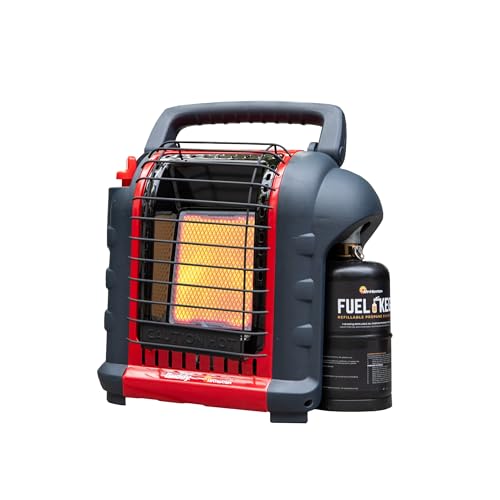 Mr. Heater Portable Buddy
Best overall |
4,000 / 9,000 BTU | 225 sq ft | 3-6 h per 1 lb | Emergency indoor (1 lb) | $79.99 at Amazon |
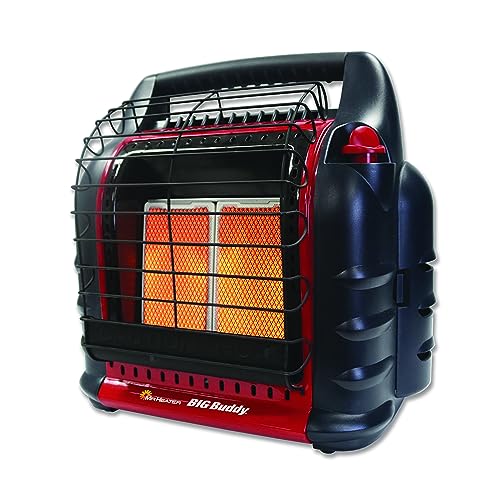 Mr. Heater Big Buddy PRO
Best for larger rooms |
4,000 / 9,000 / 18,000 BTU | 450 sq ft | 3-12 h on two 1 lb | Emergency indoor (1 lb) | $158.00 at Amazon |
 Dyna-Glo 10,000 BTU Thermostatic Wall Heater
Best permanent install |
8,000-10,000 BTU | 300 sq ft | Depends on tank size | Vent-free (installed) | $179.58 at Amazon |
Amazon price as of Nov 23, 2026 5:24 pm GMT+0000. Prices and availability are accurate as of the date/time indicated and are subject to change.
We may earn a commission when you buy through links on this page, at no extra cost to you. As an Amazon Associate we earn from qualifying purchases.
Quick picks
- Best overall: Mr. Heater Portable Buddy: the proven, compact heater rated for emergency indoor use, with ODS and tip-over shutoff.
- Best for larger rooms: Mr. Heater Big Buddy PRO: three heat settings up to 18,000 BTU and room for two 1 lb cylinders.
- Best permanent install: Dyna-Glo 10,000 BTU Thermostatic Wall Heater: an installed blue flame wall heater with a thermostat that runs without electricity.
How I picked these
I’ve been prepping for 13 years and hiking for 20, and keeping a family warm through a long outage without power is one of the problems I’ve spent the most time planning for. For this guide I only considered propane heaters that the maker itself rates for indoor use. I compared them on heat output, run time, the safety shutoffs they carry, and what each owner’s manual says about ventilation, room size and emergency use in a home. Specs and rules come from the makers’ manuals and product pages and from the Amazon listings, and every pick was listed on Amazon when this guide was published.
Here’s the most important thing we learned reading the manuals. The portable heaters here are rated for emergency indoor heating in a home only when they run on disposable 1 lb propane cylinders. Their hose kits for 20 lb tanks are for recreational enclosures like cabins and ice huts, with the tank outside. Each manual also calls for a fresh-air opening, says not to run other fuel-burning appliances inside, and says never to run the heater while you sleep. We didn’t include any “outdoor only” heater, and we left out the Massachusetts and Canada versions of these models, which are sold under different rules.
1. Mr. Heater Portable Buddy: best overall
Mr. Heater Portable Buddy MH9BX 4,000/9,000 BTU Indoor-Safe Portable Propane Radiant Heater (F232000)
A 4,000/9,000 BTU radiant heater with a low-oxygen pilot (ODS) and tip-over switch, rated for emergency indoor heat on 1 lb cylinders.
- Heat output 4,000 / 9,000 BTU
- Heats up to 225 sq ft
- Run time 3-6 h per 1 lb
- Indoor rating Emergency indoor (1 lb)
What we like
- Two heat settings: 4,000 and 9,000 BTU
- Oxygen depletion sensor (ODS) pilot and tip-over switch
- Heats up to 225 sq ft, per Mr. Heater
- Manual allows bedroom use on HI or LO
- Runs on one 1 lb cylinder: no power needed
What we don't
- About 3 to 6 hours per 1 lb cylinder
- Needs a 9 sq in fresh-air opening at floor and ceiling
- Not for sleeping, and not for homes in California
Amazon price as of Nov 23, 2026 5:24 pm GMT+0000. Prices and availability are accurate as of the date/time indicated and are subject to change.
The Mr. Heater Portable Buddy is the heater most people picture when they think of indoor propane heat, and its manual explains why. It’s labeled for recreational and emergency indoor use, with an oxygen depletion sensor (ODS) pilot that shuts the heater off if oxygen in the room drops, and a tip-over switch that shuts it off if it’s knocked over. It has two settings, 4,000 and 9,000 BTU, and Mr. Heater rates it to heat up to 225 square feet. That’s one room, which is the right goal in an outage: close the doors and heat the space you’re in.
The manual is specific about how to use it in a home. For emergency indoor heating it must run on a disposable 1 lb propane cylinder, and Mr. Heater estimates 3 to 6 hours per cylinder depending on the setting. It needs a fresh-air opening of at least 9 square inches, about 3 by 3 inches, at the ceiling and at floor level. The manual allows it in a bedroom on HI or LO, limits bathroom use to LO, and says never to leave it unattended or run it while sleeping. For a cabin or ice hut, an optional Mr. Heater hose lets it run from a 20 lb tank kept outdoors, with a fuel filter that’s replaced every year.
Where it falls short: run time on a 1 lb cylinder is short, so plan on a stack of cylinders for a long outage, and it can’t heat more than a room. It’s not for use in a home in California or for sale in Massachusetts.
2. Mr. Heater Big Buddy PRO: best for larger rooms
Mr. Heater 18,000 BTU Big Buddy PRO Series Heater (MH18B)
A bigger Buddy with 4,000, 9,000 and 18,000 BTU settings, two cylinder inlets, tip-over and low-oxygen shutoff.
- Heat output 4,000 / 9,000 / 18,000 BTU
- Heats up to 450 sq ft
- Run time 3-12 h on two 1 lb
- Indoor rating Emergency indoor (1 lb)
What we like
- Three heat settings: 4,000, 9,000 and 18,000 BTU
- Heats up to 450 sq ft, per the listing
- Takes one or two 1 lb cylinders for longer run time
- Tip-over switch and low-oxygen shutoff
- Rated for emergency indoor heating on 1 lb cylinders
What we don't
- Needs an 18 sq in fresh-air opening
- Bulkier than the Portable Buddy
- Check the listing for whether a fan is included
Amazon price as of Nov 23, 2026 5:24 pm GMT+0000. Prices and availability are accurate as of the date/time indicated and are subject to change.
The Big Buddy PRO Series is the current version of Mr. Heater’s MH18B Big Buddy, and it’s the step up when one small room isn’t enough, like an open living room and kitchen. It has three settings, 4,000, 9,000 and 18,000 BTU, and the Amazon listing rates it for up to 450 square feet. Like the Portable Buddy, it has a tip-over switch, and the listing says it shuts off automatically if it’s tipped over, if the pilot goes out, or if it detects low oxygen.
Its biggest practical advantage is that it holds two 1 lb cylinders. Mr. Heater’s manual gives rough run times of 1.5 to 6 hours on one cylinder and 3 to 12 hours on two, depending on the setting. Because it makes more heat, it needs more air: the manual calls for a fresh-air opening of at least 18 square inches, about 4.25 by 4.25 inches. It’s rated for emergency indoor heating on disposable 1 lb cylinders, and the manual says never to run it while sleeping. Older Big Buddy units had a small fan that ran on D batteries or an AC adapter, but retailer listings note Mr. Heater has removed the fan from some recent MH18B units. If a fan matters to you, check the current listing before you buy.
Where it falls short: it’s heavier and larger than the Portable Buddy, needs twice the fresh-air opening, and burns through cylinders fast on high. Don’t count on a fan unless the listing shows one.
3. Dyna-Glo 10,000 BTU Thermostatic Wall Heater: best permanent install
Dyna-Glo BFSS10LPT-2P 10,000 BTU Liquid Propane Blue Flame Thermostatic Vent Free Wall Heater, White
A 10,000 BTU vent-free propane wall heater with a built-in thermostat that needs no electricity to run.
- Heat output 8,000-10,000 BTU
- Heats up to 300 sq ft
- Run time Depends on tank size
- Indoor rating Vent-free (installed)
What we like
- Thermostat knob holds the room at your setting
- No electricity needed: works in an outage
- 8,000 to 10,000 BTU, up to 300 sq ft, per the listing
- Push-button ignition
- Wall-mounted, so it's out of the way of kids and pets
What we don't
- Must be plumbed to a large propane tank and installed to code
- Not for sale in California; some areas restrict vent-free heaters
- Pilot may go out above 4,500 ft
Amazon price as of Nov 23, 2026 5:24 pm GMT+0000. Prices and availability are accurate as of the date/time indicated and are subject to change.
Portable heaters are a stopgap. If you live where outages last days and you already have propane at the house, an installed vent-free heater is the other way to get indoor propane heat. Dyna-Glo’s BFSS10LPT-2P is a 10,000 BTU blue flame wall heater, and its Amazon listing gives an adjustable 8,000 to 10,000 BTU output for up to 300 square feet. It has a built-in thermostat, so it cycles to hold the room at the level you set instead of running flat out, which saves propane over a long outage. The listing says it needs no electricity, and the manual lists push-button ignition.
This is a different kind of purchase. It runs on propane only, connects to a gas line rather than a 1 lb cylinder, and the BFSS10LPT listings say propane use requires a 100 lb tank or larger with a two-stage regulator. Like the portable heaters, it uses air from the room, and the manual says adequate combustion and ventilation air must be provided. It’s sold as supplemental heat, it isn’t for sale in California, and listings note the pilot may go out above 4,500 feet. Dyna-Glo says its blue flame vent-free heaters carry an oxygen depletion sensor, so confirm that and the room-size limits in this model’s manual, and plan on a qualified gas installer to run the line and check for leaks.
Where it falls short: it’s not portable, it needs a big tank, a proper gas line and installation, and vent-free heaters are restricted in some states and cities. It’s supplemental heat, not a replacement for your furnace, and it’s not suited to high-altitude homes.
Carbon monoxide: the rules that matter more than the heater
- Put in CO alarms before you need them. The CDC says to install battery-operated or battery back-up CO detectors near every sleeping area, check the batteries when you change your clocks in spring and fall, and replace them per the maker’s instructions or about every 5 years. The CPSC says to put them on every level of the home and outside sleeping areas, and recommends interconnected alarms. A plug-in alarm with no battery backup won’t help in a power outage.
- Crack a window, even with an indoor-rated heater. These heaters are unvented, so they use oxygen from the room and release combustion gases into it. Each manual sets a minimum fresh-air opening: 9 square inches for the Portable Buddy and 18 for the Big Buddy, and the Portable Buddy manual says at both the ceiling and floor level. The Dyna-Glo manual also calls for adequate combustion and ventilation air. An indoor rating means the heater is built for this use, not that it’s safe in a sealed room.
- Never use outdoor equipment for heat. The CDC says never to use a portable gas camp stove indoors, never to burn charcoal indoors, and never to heat your home with a gas oven. Never run a generator inside a home or garage, even with the doors and windows open. Keep it outside, more than 20 feet from windows, doors and vents.
- Run one fuel-burning appliance at a time. The Buddy manuals say not to use other fuel-burning appliances inside while the heater runs.
- If anyone feels sick, get out. If someone gets a headache, dizziness or nausea, or the CO alarm sounds, turn off the heater, get everyone into fresh air and call 911. The manuals say these symptoms can mean the heater isn’t working properly and needs service.
Every heater on this list burns propane inside your home, and burning fuel makes carbon monoxide (CO), a gas you can’t see or smell. According to the CDC, more than 400 Americans die each year from unintentional CO poisoning not linked to fires, more than 100,000 visit an emergency room, and more than 14,000 are hospitalized. Symptoms are often described as flu-like: headache, dizziness, weakness, upset stomach, vomiting, chest pain and confusion. The CDC warns that people who are asleep or impaired can die before they ever feel symptoms. That’s why the Mr. Heater manuals say never to run the heater while you sleep, no matter which safety features it has, and it’s a good rule for any fuel-burning heater.
What ODS and tip-over switches do (and don’t do)
An oxygen depletion sensor (ODS) is a special pilot light. When oxygen in the room drops below a safe level, the pilot flame changes and the heater shuts off its gas supply. The CPSC describes ODS-equipped heaters as designed for indoor use, in contrast to older portable heaters without one, which are meant for outdoor use only.
A tip-over switch shuts the heater off if it’s knocked over or tilted. The manuals note that bumping or moving a lit heater can also trip it, which is normal: just relight it.
Here’s what neither one does: an ODS is not a carbon monoxide alarm. It reacts to low oxygen, not to CO, and a heater that’s dirty or damaged can make CO before oxygen drops far enough to trip it. Treat the ODS as a backup, and keep a separate battery CO alarm in the room. The Mr. Heater manuals also say never to leave the heater unattended while it’s burning and to keep children and pets away. Keep the clearances the manuals list: 30 inches above, 24 inches in front and 6 inches to the sides for the Buddy heaters.
How to choose the best indoor propane heater
- Check the indoor rating on the box and in the manual. Look for wording like “for recreational and emergency indoor use.” Many propane heaters, including tank-top heaters and patio heaters, are outdoor only. So are the Massachusetts and Canada versions of some models.
- Size it to one room. In an outage, heat the smallest space your household can share. The Portable Buddy is rated for up to 225 square feet, the Dyna-Glo for up to 300, and the Big Buddy for up to 450.
- Follow the room limits in the manual. The Portable Buddy manual allows bedroom use on HI or LO and bathroom use on LO only. Neither Buddy heater is for running while you sleep.
- Plan your fuel. Emergency home use for the portable heaters means 1 lb cylinders. Mr. Heater’s run times range from about 1.5 to 6 hours per cylinder depending on the heater and setting, and the manuals say run time drops when it’s below 20°F. Count how many hours a day you’ll run it and buy cylinders to match.
- Mind the altitude. The Mr. Heater manuals say the heaters may shut off above 7,000 feet, and may not relight, because there’s less oxygen in the air. Listings for the Dyna-Glo note its pilot may go out above 4,500 feet.
- Know your local rules. The Mr. Heater manuals say the heaters aren’t for use in a dwelling home in California, and the Dyna-Glo isn’t for sale in California. If you’re unsure, check with your local fire department.
Propane cylinder storage and handling
The manuals are strict about where propane goes. Attach and detach cylinders outdoors, away from flames and ignition sources. When the heater isn’t in use, disconnect the cylinder. Cylinders must be stored outdoors, in a well-ventilated spot out of reach of children, and not in a building, garage or other enclosed area. The heater itself can be stored indoors only with the cylinder removed. Never bring a refillable propane tank indoors.
Every time you connect a cylinder or hose, the manuals say to check for leaks with soapy water: look for bubbles, listen for a hiss and smell for the rotten-egg odor. Don’t use the heater if it leaks. Use only Mr. Heater hoses and parts made for your heater, never cook or warm food on it, and don’t use it if any part has been under water. For a long outage, a backup generator kept outside can run a small electric heater instead, but the same CO rules apply.
Make the heat go further in an outage
- Pick one room. Choose a small interior room with a door, close it off and hang blankets over doorways to unused rooms.
- Block drafts. Roll towels along the bottom of doors and close curtains at night, but leave the fresh-air opening the manual calls for.
- Layer up and insulate. Wear wool and fleece layers and a hat, use sleeping bags, and keep hand warmers and emergency blankets on hand so you can turn the heater off at night.
- Run the heater in cycles. Warm the room, then turn the heater off and let your layers hold the heat. It saves fuel and limits how long you’re burning anything indoors.
- Never sleep with it running. Turn it off before bed and rely on sleeping bags and blankets overnight.
Best indoor propane heater FAQ
What is the best indoor propane heater?
For most households, our top pick for an outage is the Mr. Heater Portable Buddy. Its manual rates it for emergency indoor heating on 1 lb cylinders, and it has an oxygen depletion sensor and a tip-over switch. The Big Buddy suits larger rooms. If you want installed backup heat, a vent-free wall heater like the Dyna-Glo 10,000 BTU thermostatic model is the other option, installed to code.
Is it safe to use a propane heater indoors?
Only if the maker rates that heater for indoor use, and only if you follow its manual. That means a fresh-air opening, no other fuel-burning appliances running inside, a battery CO alarm, never leaving it unattended and never running it while you sleep. Never use a heater, grill, camp stove or generator indoors if it’s meant for outdoor use.
Do I need to crack a window with a Mr. Heater Buddy?
Yes. The Buddy heaters are unvented, so they use the room’s oxygen. The Portable Buddy manual calls for a fresh-air opening of at least 9 square inches, about 3 by 3 inches, at the ceiling and floor level. The Big Buddy calls for 18 square inches.
Can I sleep with a propane heater on?
No. The Mr. Heater manuals say never to operate the heater while sleeping. The CDC warns that people who are asleep can die from carbon monoxide before they have symptoms. Turn the heater off and use sleeping bags and blankets overnight.
Can I hook a 20 lb tank to a Buddy heater inside my house?
Not for emergency home heating. The manuals rate the portable heaters for emergency indoor heating only on disposable 1 lb cylinders. A hose to a 20 lb tank is allowed in recreational enclosures like cabins and ice huts, with the tank outside. Refillable tanks should never be brought or stored indoors.
Does an oxygen depletion sensor detect carbon monoxide?
No. An ODS shuts the heater off when oxygen gets low. It isn’t a CO detector. Keep a battery-powered or battery back-up CO alarm near the heater and near every sleeping area.
Final thoughts on the best indoor propane heater
The best indoor propane heater for most people is the Mr. Heater Portable Buddy: it’s rated for emergency indoor use, it has an oxygen depletion sensor and a tip-over switch, and it heats one room well. The Big Buddy PRO covers a bigger space, and the Dyna-Glo thermostatic vent-free heater is the choice for installed backup heat. Whichever you pick, the heater is only half of the plan. Use 1 lb cylinders indoors, keep the fresh-air opening the manual calls for, put battery CO alarms near every sleeping area, store propane outside, and never run it while you sleep.
For the rest of your plan, see what to do during a power outage, how to prepare for a long-term power outage and how to prepare for a winter storm. If you’d rather run electric heat, read what size generator do I need and our guide to the best generator for home backup. For low-tech warmth, see the best hand warmers and best emergency blankets.