The Best Emergency Blankets for Survival and Car Kits (2026)
 By Ian Freng
Updated November 22, 2026
When I build out a car kit or a day-hike bag, I’ve found that the best emergency blanket is the one you’ll actually have with you: a 3-ounce reflective blanket in every pack and glovebox does more good than a perfect one left at home. But a space blanket alone is not a sleeping bag. It reflects body heat and blocks wind and rain, and it works much better with insulation under you. Below are five emergency blankets for different jobs, from cheap mylar multi-packs to a reusable tarp and a wool blanket for the car, plus how to use them so they actually keep someone warm.
Quick answer: Our top pick is the SOL Emergency Blanket (4-pack) (best overall). A 2.9 oz orange emergency blanket made of metalized polyethylene that resists shredding, sold as a 4-pack. Best for: packs, cars, first aid kits.
- Best reusable: SOL Sport Utility Blanket
- Best for the car and camp: Arcturus Heavy Duty Survival Blanket
- Best budget multi-pack: Primacare Mylar Blankets (10-pack)
- Best for real warmth: EverOne 80% Wool Blanket
Best emergency blankets compared
| Product | Size | Weight | Reusable | Best for | Buy |
|---|---|---|---|---|---|
 SOL Emergency Blanket (4-pack)
Best overall |
56 x 84 in | 2.9 oz each | A few uses | Packs, cars, first aid kits | Check price on Amazon |
 SOL Sport Utility Blanket
Best reusable |
83 x 60 in | Not listed | Yes | Shelter, ground tarp, camping | $31.49 at Amazon |
 Arcturus Heavy Duty Survival Blanket
Best for the car and camp |
60 x 82 in | 1.4 lb | Yes | Car trunk, camp, ground cover | Check price on Amazon |
 Primacare Mylar Blankets (10-pack)
Best budget multi-pack |
84 x 52 in | Not listed (very light) | Single use | Stocking many kits | Check price on Amazon |
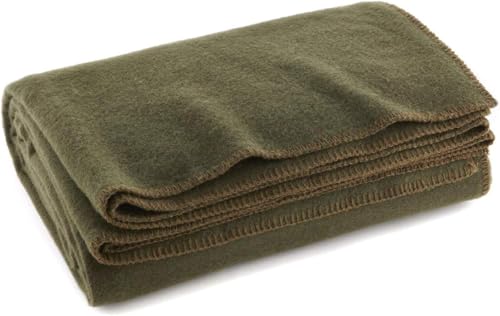 EverOne 80% Wool Blanket
Best for real warmth |
66 x 90 in | Not listed (heavy) | Yes, for years | Car kits, outages, camp | Check price on Amazon |
Amazon price as of Nov 22, 2026 1:52 pm GMT+0000. Prices and availability are accurate as of the date/time indicated and are subject to change.
We may earn a commission when you buy through links on this page, at no extra cost to you. As an Amazon Associate we earn from qualifying purchases.
Quick picks
- Best overall: SOL Emergency Blanket (4-pack): a tougher-than-mylar, high-visibility blanket for every kit.
- Best reusable: SOL Sport Utility Blanket: a bigger, tougher sheet that works as a blanket, tarp or shelter.
- Best for the car and camp: Arcturus Heavy Duty Survival Blanket: a grommeted reflective tarp with a fabric backing for the trunk or camp.
- Best budget multi-pack: Primacare Mylar Blankets (10-pack): cheap mylar blankets to put one in every bag, car and first aid kit.
- Best for real warmth: EverOne 80% Wool Blanket: an 80% wool, fire retardant blanket that stays warm even when damp.
How I picked these
I’ve been prepping for 13 years and hiking for 20, and an emergency blanket is in every kit I’ve ever put together. I compared these blankets on size, weight, durability, how reusable they are and what job each one does best: an ultralight blanket for a pack, a tough reusable sheet for shelter, or real warmth in a car. Specs come from the makers’ own product pages where available, and every pick was in stock at Amazon when this guide was published.
Heat reflection percentages like “reflects 90% of body heat” are the makers’ own claims, not independent test results. We note them, but we chose blankets mainly on size, toughness and how well they fit each job.
1. SOL Emergency Blanket (4-pack): best overall
SOL Emergency Blanket, 90% Heat Reflective, Orange, 56 x 84 in, 4 Pack
A 2.9 oz orange emergency blanket made of metalized polyethylene that resists shredding, sold as a 4-pack.
- Size 56 x 84 in
- Weight 2.9 oz each
- Reusable A few uses
- Best for Packs, cars, first aid kits
What we like
- Polyethylene that won't shred like mylar if nicked
- High-visibility orange for signaling
- Quiet: less crinkle in wind
- Waterproof and windproof
- 2.9 oz each, 4-pack covers several kits
What we don't
- Single-person size
- Not breathable: condensation builds up inside
- Reflection figure is the maker's claim
The SOL Emergency Blanket is the one to put in every pack, glovebox and first aid kit. Survive Outdoors Longer makes it from vacuum-metalized polyethylene instead of thin mylar film, and says it won’t shred if it gets nicked or punctured, which is the classic failure of cheap space blankets. It weighs 2.9 oz, measures 56 x 84 inches, and is waterproof and windproof.
The outside is bright orange, so it doubles as a signal panel for searchers, and the material is quieter in wind than crinkly mylar. SOL says it reflects 90% of body heat. The 4-pack gives you one for each family member’s bag or one for the car, the house, the hiking pack and a spare.
Where it falls short: it fits one adult, and like every non-breathable blanket it traps moisture, so you’ll get damp inside it after a while. It’s tougher than mylar but still not meant for daily reuse.
2. SOL Sport Utility Blanket: best reusable
SOL Sport Utility Blanket
A larger, reusable reflective blanket that doubles as a tarp, ground cloth or emergency shelter.
- Size 83 x 60 in
- Weight Not listed
- Reusable Yes
- Best for Shelter, ground tarp, camping
What we like
- Large 83 x 60 inch size
- Tougher material for repeated use
- Works as a shelter, ground tarp or cape
- Waterproof, tear-resistant fabric
What we don't
- Heavier and bulkier than a basic blanket
- Green is less visible for signaling
Amazon price as of Nov 22, 2026 1:52 pm GMT+0000. Prices and availability are accurate as of the date/time indicated and are subject to change.
The SOL Sport Utility Blanket is the upgrade when you want something you can use more than once. At 83 x 60 inches it’s big enough to wrap up in or to rig as a lean-to, and reinforced corner grommets let you pitch it as an emergency shelter or ground tarp. A shoulder clasp lets you wear it as a cape.
It’s made from a tear-resistant, waterproof fabric, and SOL says the reflective side holds in up to 80% of your body heat. It packs into a stuff sack with a built-in rescue whistle and a tinder-cord drawstring, so it’s a good fit for a daypack, a hunting bag or under the seat of a truck. For a full shelter setup, see our guide to the best survival shelters.
Where it falls short: it’s heavier and bulkier than the basic SOL blanket, and the green color is better for blending in than for being found.
3. Arcturus Heavy Duty Survival Blanket: best for the car and camp
Arcturus Heavy Duty Survival Blanket, Insulated Thermal Reflective Tarp, 60 x 82 in
A reusable reflective tarp with a mylar side, a polypropylene backing and four grommets.
- Size 60 x 82 in
- Weight 1.4 lb
- Reusable Yes
- Best for Car trunk, camp, ground cover
What we like
- Mylar reflective side plus two layers of polypropylene
- 4 reinforced grommets for tying it down
- Comes in its own waterproof carry bag
- Durable enough for repeated camp use
What we don't
- 1.4 lb: too heavy for an ultralight kit
- Bulkier to pack
- No published heat figure from the maker
The Arcturus Heavy Duty Survival Blanket sits between a space blanket and a tarp. One side is reflective mylar, and the other is two layers of polypropylene, which makes it far tougher than a thin sheet and more pleasant to sit or lie on. Arcturus lists it at 60 x 82 inches and 1.4 lb, with four reinforced grommets and a waterproof carry bag.
It’s a great fit for a car trunk kit: lay it on the snow while you change a tire, wrap up in it while you wait, or tie it up as a windbreak. At camp it works as a ground cover under a tent or sleeping pad, with the reflective side up to bounce heat back toward you.
Where it falls short: at 1.4 lb it’s too heavy for an ultralight pack, and Arcturus doesn’t publish a heat retention figure, so treat it as a tough, reflective tarp rather than a substitute for a sleeping bag.
4. Primacare Mylar Blankets (10-pack): best budget multi-pack
Primacare HB-10 Emergency Mylar Thermal Blankets, 10 Pack, 84 x 52 in, Silver
A 10-pack of classic silver mylar emergency blankets for stocking many kits at once.
- Size 84 x 52 in
- Weight Not listed (very light)
- Reusable Single use
- Best for Stocking many kits
What we like
- 10 blankets for the price of one or two premium ones
- Full 84 x 52 inch size
- Waterproof, very light and tiny when folded
- Easy to hand out in an emergency
What we don't
- Thin mylar tears easily once nicked
- Noisy in wind
- Basically single use
If you want an emergency blanket in every backpack, every car and every first aid kit, a multi-pack of classic mylar blankets is the cheapest way to do it. Primacare’s HB-10 pack gives you 10 silver, waterproof mylar blankets, each 84 x 52 inches, which is enough to wrap an adult.
Mylar is the original space blanket material: a very thin plastic film with a metal coating that reflects heat. It folds down very small, so there’s no reason not to carry one. Keep a few extras in the car to hand out at an accident scene, to kids or to anyone who gets cold while you wait for help.
Where it falls short: thin mylar tears quickly once it’s nicked, it’s loud in the wind, and it’s hard to refold, so plan on these being single use. For anything you’ll use more than once, choose the SOL or Arcturus.
5. EverOne 80% Wool Blanket: best for real warmth
EverOne Olive Drab 80% Wool Fire Retardant Blanket, 66 x 90 in
A large, military-style 80% wool blanket that's fire retardant, for car kits, home outages and camp.
- Size 66 x 90 in
- Weight Not listed (heavy)
- Reusable Yes, for years
- Best for Car kits, outages, camp
What we like
- 80% wool keeps insulating even when damp
- Fire retardant
- Large 66 x 90 inch size fits two
- Durable and washable for years of use
What we don't
- Heavy and bulky: a car or home item, not a backpack item
- Not waterproof on its own
A reflective blanket blocks wind and reflects heat, but it doesn’t trap warm air the way real insulation does. That’s where a wool blanket earns a spot in a car or home kit. The EverOne blanket is 80% wool in a military-style olive drab, measures 66 x 90 inches, and is treated to be fire retardant.
Wool’s big advantage is that it keeps insulating even when it’s damp, unlike cotton. Pair it with a reflective blanket for the best of both: wool for insulation and the reflective layer outside it to block wind and moisture. It’s also the blanket to grab during a winter power outage, when you’re heating one room and need to hold onto every bit of warmth.
Where it falls short: it’s heavy and bulky, so it belongs in a car trunk, a home kit or a camp bin rather than a backpack, and it isn’t waterproof without a cover.
How emergency blankets work
Emergency blankets, also called space blankets or mylar blankets, came out of NASA’s space program. In the mid-1960s NASA developed a superinsulation made of layered, metalized thin films. According to NASA, the shiny films reflected radiated heat, and the gaps between the layers prevented heat conduction.
A single emergency blanket is one of those shiny layers, without the gaps. It reflects some of the heat your body radiates, and because it’s waterproof and windproof, it also cuts heat lost to wind and rain. What it doesn’t do well is stop conduction, the heat you lose by touching cold ground or snow. That’s why a space blanket alone can still leave you cold, and why insulation underneath matters so much.
The limits of a space blanket (and how to work around them)
- Insulate from the ground first. Wilderness Medical Society guidance on treating hypothermia stresses insulation and a vapor barrier from the ground and the elements, especially for the head and neck and between the person and the ground. A pack, a foam pad, spruce boughs or a wool blanket under you does more than another reflective layer.
- Use it as the outer layer. Wrap insulation (clothing, a sleeping bag, a wool blanket) around the person, then wrap the reflective blanket around the outside to block wind and hold in moisture and heat.
- Thin foil isn’t the best tool for a long wait. In a 2017 study of mountain rescue casualty bags, a thin foil bag let a test manikin cool faster than insulated bags and a vacuum mattress system. A foil blanket is an emergency layer, not a replacement for real insulation.
- Expect condensation. Reflective blankets don’t breathe, so sweat and moisture build up inside. Vent it if you’re active, and dry out when you can.
- Protect it from tears. Thin mylar rips quickly once nicked. Polyethylene blankets like the SOL hold up better.
How to use an emergency blanket for hypothermia
- Get the person out of the wind and wet, into a car, a building or any shelter you can make.
- Remove wet clothing and replace it with dry layers.
- Put insulation under them: a pad, a pack, a wool blanket or a heavy-duty reflective tarp.
- Warm the center of the body: the chest, neck, head and groin. The CDC suggests skin-to-skin contact under loose, dry layers if you have nothing else.
- Wrap insulation around them, then wrap the emergency blanket around the outside, covering the head but leaving the face clear.
- Give warm, non-alcoholic drinks if they’re awake and able to swallow, and call 911 or get help.
The CDC lists the warning signs of hypothermia in adults as shivering, exhaustion, confusion, fumbling hands, memory loss, slurred speech and drowsiness. In babies, watch for bright red, cold skin and very low energy. If someone’s body temperature is below 95°F, the CDC says to get medical attention immediately.
Where to keep emergency blankets
- Every car: Ready.gov includes a blanket in its car emergency kit. Keep a reflective blanket in the glovebox and a wool blanket or heavy-duty tarp in the trunk for winter. See our car emergency kit list.
- Home kit: the American Red Cross lists an emergency blanket in its basic survival kit. Add a few to your emergency preparedness kit for power outages.
- Hiking and hunting packs: a 3 oz blanket belongs in every day pack, alongside the other survival kit essentials.
- Bug-out bags and first aid kits: they take almost no space. See our bug out bag list.
- Check them yearly. Look for tears or brittle spots, and replace any blanket you’ve opened and used.
Mylar vs. polyethylene vs. wool
Mylar blankets are the cheapest and lightest. They’re great for stocking many kits but tear easily and are loud in wind. Polyethylene reflective blankets, like the SOL, cost a little more and weigh about the same, but resist shredding and are quieter. Heavy-duty reflective tarps, like the SOL Sport Utility Blanket and Arcturus, are reusable and double as shelters or ground covers. Wool is the only one here that’s real insulation, and it stays warm when damp, but it’s heavy. The best setup for a car or home combines a wool blanket with a reflective blanket outside it.
Emergency blanket FAQ
What is the best emergency blanket?
For most kits, the best emergency blanket is the SOL Emergency Blanket: it’s light, high-visibility orange, and made of polyethylene that resists shredding better than mylar. For a reusable blanket that doubles as a shelter, choose the SOL Sport Utility Blanket or the Arcturus Heavy Duty Survival Blanket. For real warmth in a car or during an outage, add a wool blanket.
Do emergency blankets actually work?
Yes, as part of a system. They reflect radiated body heat and block wind and rain, which slows heat loss. They don’t stop heat lost to cold ground, so put insulation under the person and use the blanket as the outer layer. A space blanket alone is not a substitute for a sleeping bag.
Which side of an emergency blanket faces in?
Follow the instructions printed on yours. On two-color blankets the reflective side usually goes toward the body, and if you want to be seen by searchers, the brightly colored side, like the orange of the SOL blanket, goes out.
Can you reuse an emergency blanket?
Thin mylar blankets are basically single use, because they tear and are hard to refold. Polyethylene blankets like the SOL survive a few uses, and heavy-duty reflective tarps like the SOL Sport Utility Blanket and Arcturus are built to be reused.
How many emergency blankets should I have?
At least one for each person in your household in your home kit, one in every car, and one in every hiking, hunting or bug-out pack. A multi-pack makes this cheap.
Are emergency blankets good for power outages?
They help. In a winter outage, wrap an emergency blanket around a wool blanket or sleeping bag, or use reflective blankets to cover windows and close off unused rooms. Never use a grill, camp stove or generator indoors for heat.
Final thoughts on the best emergency blankets
The best emergency blanket for most people is the SOL Emergency Blanket 4-pack: light, tough for its weight and bright orange. Add the SOL Sport Utility Blanket or Arcturus if you want something reusable that doubles as a shelter, a Primacare multi-pack to stock every kit cheaply, and a wool blanket for real warmth in the car or during an outage. Remember the rule that makes them work: insulate from the ground, and use the reflective blanket as the outer layer.
For the rest of your cold-weather prep, see how to prepare for a winter storm, what to do during a power outage and our guide to the best hand warmers.