
Bug Out Bag List: The Complete 72-Hour Checklist
 By Ian Freng
Updated November 17, 2026
When I pack a bug out bag, I’ve found that the most useful test is walking a couple of miles with it on. The hot spots, the rattling gear and the “why is this so heavy?” items show up within the first mile, and that walk tells you what to cut better than any checklist can. Most first-time bags are too heavy, not too light.
That’s the balance this bug out bag list is built around: everything you need to get through 72 hours away from home, and nothing that turns the bag into an anchor. I’ve been backpacking for 16 years and prepping for 13, so the list borrows from both. It follows the 3-day evacuation supply the Red Cross recommends and the basic kit from Ready.gov, organized the way you’d actually pack it.
The short version
- Water: carry 2 to 3 liters plus a filter or purification tablets, not 3 gallons.
- Food: 3 days of light, high-calorie food that needs no cooking or only hot water.
- Shelter and warmth: a tarp or emergency shelter, an emergency blanket or light sleeping bag, rain gear and an insulating layer.
- Fire and light: two ways to start a fire and a headlamp with spare batteries.
- Health and safety: a first aid kit, your medications, a knife or multi-tool and a whistle.
- Paperwork: copies of IDs and documents, cash, and a paper map.
- Weight: keep the loaded bag to about 20 to 25% of your body weight or less.
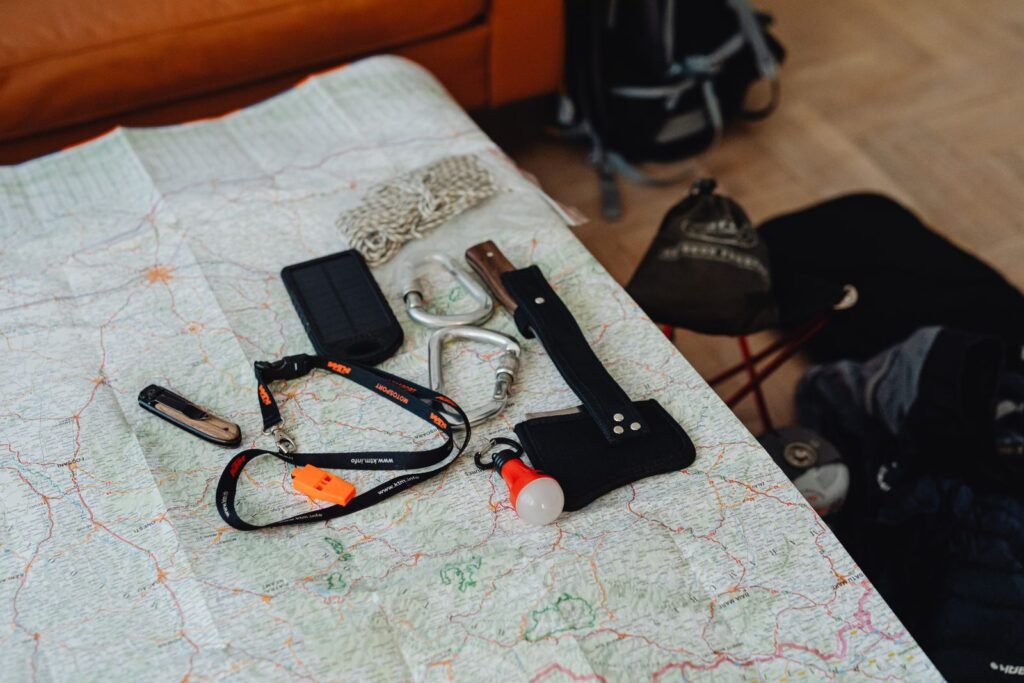
How heavy should a bug out bag be?
A good target is no more than about 20 to 25% of your body weight, and lighter is better. For a 180 lb adult, that’s 36 to 45 lb at the very most. That’s the same range experienced backpackers use for multi-day trips, and those are people who train to carry a pack. If you don’t hike regularly, aim toward the low end.
The reason is simple: a bug out bag is for leaving on foot or by car when things are going badly, and you may have to carry it farther than you planned. A bag you can’t walk with isn’t an emergency kit. It’s a box of supplies you’ll abandon on the side of the road.
The water problem
Water is where most bags go wrong. The Red Cross recommends a gallon per person per day, and a 3-day supply of water weighs about 25 lb on its own, because a gallon of water weighs about 8.3 lb. That’s fine in a car or at home, but not on your back.
The fix is to carry 2 to 3 liters (about 4.5 to 6.5 lb) and a way to make more: a water filter, purification tablets, or both. Add a collapsible bottle or bag for collecting water. Here’s our guide on how to purify water if you’ve never done it.
The complete bug out bag list
Check items off as you pack. The weights are typical for each item and will vary with the brand you choose.
Water (about 5 to 7 lb)
- ☐ 2 to 3 liters of water in sturdy bottles or a hydration bladder
- ☐ A water filter (2 to 12 oz)
- ☐ Purification tablets as a backup (under 1 oz)
- ☐ A collapsible water bag for collecting and carrying more
- ☐ A small metal cup or pot, which also lets you boil water
Food (about 4 to 6 lb for 3 days)
- ☐ Calorie-dense emergency food bars or freeze-dried meals
- ☐ Trail mix, nut butter packets, jerky and other no-cook snacks
- ☐ Electrolyte packets
- ☐ A spoon (a long-handled one reaches into meal pouches)
- ☐ Optional: a small stove and fuel if your meals need hot water
Shelter and sleep (about 2 to 4 lb)
- ☐ A tarp or emergency shelter
- ☐ An emergency blanket or bivy
- ☐ A lightweight sleeping bag or quilt, if weight allows
- ☐ 50 feet of paracord for pitching a tarp and other repairs
Clothing (about 3 to 4 lb)
- ☐ A rain jacket
- ☐ An insulating layer: a fleece or light puffy
- ☐ Two pairs of wool hiking socks (wet feet end long walks)
- ☐ A spare base layer and underwear
- ☐ Warm hat and gloves
- ☐ A bandana or buff
- ☐ Wear sturdy, broken-in shoes, and don’t pack new ones
Fire and light (about 1 lb)
- ☐ Two ways to start a fire: a ferro rod or fire starter and a lighter
- ☐ Waterproof matches or tinder
- ☐ A headlamp and spare batteries
- ☐ A small backup flashlight
First aid and hygiene (about 1 to 2 lb)
- ☐ A compact first aid kit
- ☐ A 7-day supply of your prescription medications, plus copies of the prescriptions
- ☐ Blister care (moleskin or tape), since you’ll be walking
- ☐ Hand sanitizer, a small bar of soap and toilet paper in a zip bag
- ☐ Sunscreen, lip balm and insect repellent
- ☐ Spare glasses or contacts
Tools (about 1 to 2 lb)
- ☐ A fixed-blade knife or a multi-tool
- ☐ Duct tape (wrap some around a water bottle to save space)
- ☐ A whistle
- ☐ Work gloves
- ☐ N95 masks (smoke, dust and debris)
- ☐ A compass
Communication and navigation (about 1 to 2 lb)
- ☐ Paper maps of your area with two or three routes marked
- ☐ A small emergency radio for news and NOAA weather alerts
- ☐ A charged power bank and phone cable
- ☐ Optional: two-way radios if your group might split up
- ☐ A written list of phone numbers and a meeting place
Documents and money (a few ounces)
- ☐ Copies of IDs, insurance cards, prescriptions and important papers in a waterproof bag
- ☐ A USB drive with scans of the same documents
- ☐ Optional: a Faraday bag for the drive and spare electronics
- ☐ Cash in small bills
- ☐ Spare house and car keys
Pre-packed kit or build your own?
A pre-packed survival kit is the fastest way to have something ready tonight, and the better ones cover the basics. But every kit we’ve looked at leaves out the most personal items, like your medications, documents, clothing that fits and food you’ll actually eat. Many also skimp on the bag itself.
Our approach is to start with a good pack and build from this list, using a pre-packed kit only as a starting point if it saves time. If you’re choosing a pack, our bug out bag guide compares pre-packed kits and empty packs, and our tactical backpack guide covers sturdier options.
How to pack it
- Heavy items go close to your back and in the middle of the pack: water, food and tools. That keeps the weight from pulling you backward.
- Light, bulky items go at the bottom: sleep gear and spare clothes.
- Things you need fast go on top or in outside pockets: rain jacket, headlamp, first aid kit, map, water filter and snacks.
- Waterproof the inside. A trash compactor bag as a pack liner keeps everything dry for almost no weight.
- Adjust the fit. Most of the weight should ride on your hips, not your shoulders. Tighten the hip belt first, then the shoulder straps.
Bug out bags for the whole family
Everyone who can carry a bag should have one, sized to them. Kids can carry their own water, snacks, a jacket, a headlamp, a whistle and a comfort item, while adults carry the shared gear like the shelter, filter and first aid kit. For pets, pack food, water, a collapsible bowl, a leash, medications and vaccination records.
Your bug out bag is the grab-and-go part of a bigger plan. Keep a larger home emergency kit for sheltering in place and a car emergency kit for the road.
Keep it ready
Store the bag where you can grab it in seconds, like a hall closet or by the door, not buried in the garage. Every six months, work back through this bug out bag list: rotate food and water, check medications, swap clothes for the season, test the headlamp and recharge the power bank. Then put the bag on and walk with it, because that’s the only real test.
Bug out bag list FAQ
What should be in a bug out bag?
At minimum: water and a way to purify more, 3 days of food, a shelter or emergency blanket, rain gear and a warm layer, two ways to start a fire, a headlamp, a first aid kit and your medications, a knife or multi-tool, a whistle, a paper map, copies of documents and cash.
How heavy should a bug out bag be?
Keep the loaded bag to no more than about 20 to 25% of your body weight, and lighter if you don’t hike regularly. Walk a couple of miles with it to find out what you can actually carry.
How much water should I carry in a bug out bag?
Carry 2 to 3 liters plus a water filter or purification tablets. Three days of water at a gallon a day weighs about 25 lb, which is too heavy to carry far, so plan to filter more along the way.
Is a bug out bag the same as a go bag?
They’re very similar. A go bag is the general term for a grab-and-go evacuation kit; bug out bag usually means a more rugged version built to carry on foot for about 72 hours.
How often should I update my bug out bag?
Every six months. Rotate food and water, check medication dates, swap clothing for the season, test lights and radios, and recharge batteries.