The Best Gravity Water Filter Systems for Camp and Home (2026)
 By Ian Freng
Updated November 23, 2026
When I filter water at camp or during a power outage, I’ve found that gravity does the work better than my hands do: you fill a bag, hang it from a branch or a door, and clean water drips into your bottle while you set up camp or deal with everything else. This guide covers the best gravity water filter for each job, from a 6-ounce squeeze-and-hang kit to a 6-liter group bag and a countertop unit for the kitchen. It also covers what these filters do not remove, because most of them stop bacteria and parasites but not viruses, and that matters in a flood or outage.
Quick answer: Our top pick is the Katadyn BeFree Gravity 6L (best overall). A 6-liter gravity bag with Katadyn’s 0.1 micron BeFree membrane, rated at up to 2 liters per minute and cleaned with a shake.
- Best for groups: Platypus GravityWorks 6.0L
- Best lightweight: Sawyer Squeeze + Cnoc 2L Bladder
- Most versatile kit: Waterdrop Filter Straw Gravity Kit
- Best countertop for home: LifeStraw Home 35-Cup Dispenser
Best gravity water filters compared
| Product | Capacity | Pore size | Flow rate | Filter life | Buy |
|---|---|---|---|---|---|
 Katadyn BeFree Gravity 6L
Best overall |
6 L | 0.1 micron | Up to 2 L/min | Up to 1,000 L | $119.95 at Amazon |
 Platypus GravityWorks 6.0L
Best for groups |
6.0 L + 6.0 L clean | 0.2 micron | 1.75 L/min | 1,500 L | $154.95 at Amazon |
 Sawyer Squeeze + Cnoc 2L Bladder
Best lightweight |
2 L | 0.1 micron | Not published | Up to 100,000 gal | $64.99 at Amazon |
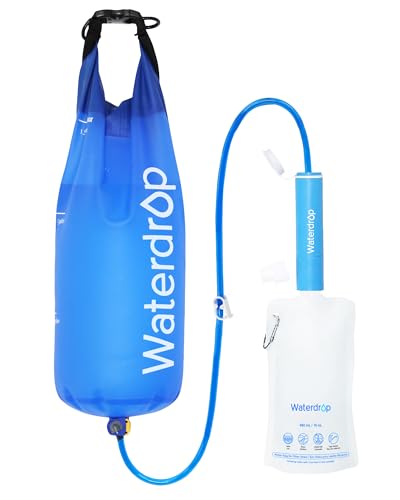 Waterdrop Filter Straw Gravity Kit
Most versatile kit |
Gravity bag + pouch | 0.1 micron | Not published | About 1,400 gal (replace) | $99.99 at Amazon |
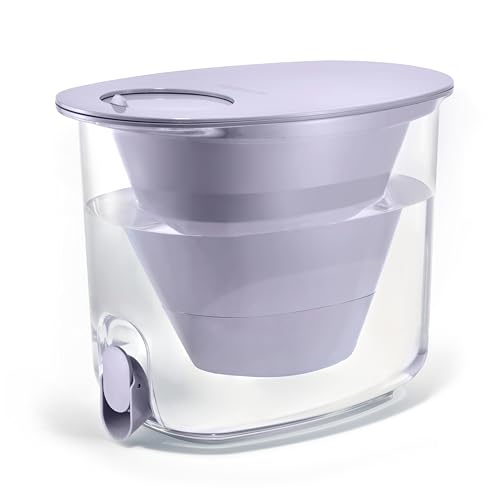 LifeStraw Home 35-Cup Dispenser
Best countertop for home |
35 cups | 0.2 micron | Not published | 264 gal membrane / 40 gal carbon | $92.47 at Amazon |
Amazon price as of Nov 23, 2026 5:26 pm GMT+0000. Prices and availability are accurate as of the date/time indicated and are subject to change.
We may earn a commission when you buy through links on this page, at no extra cost to you. As an Amazon Associate we earn from qualifying purchases.
Quick picks
- Best overall: Katadyn BeFree Gravity 6L: the same fast BeFree filter I use, on a 6-liter bag for families and small groups.
- Best for groups: Platypus GravityWorks 6.0L: a two-bag system that filters 6 liters at a time straight into a clean reservoir.
- Best lightweight: Sawyer Squeeze + Cnoc 2L Bladder: the classic Sawyer Squeeze paired with a wide-mouth 2-liter bag you can squeeze or hang.
- Most versatile kit: Waterdrop Filter Straw Gravity Kit: a filter straw, a collapsible pouch and a gravity bag in one kit.
- Best countertop for home: LifeStraw Home 35-Cup Dispenser: a countertop gravity dispenser that adds a carbon stage for lead, PFAS and taste.
How I picked these
I’ve been hiking for 20 years, backpacking for 16 and prepping for 13, and safe water is the first thing I plan for on a trip or in an outage. I compared these gravity filters on what they remove, how much water they hold, how fast they run, how long the filter lasts and how easy they are to clean in the field. Specs and removal claims come from each maker’s own product pages and fact sheets, not from marketing copy on resale listings.
I left out one popular countertop brand on purpose. In late 2022 and 2023 the U.S. EPA issued stop-sale orders on Berkey filters, treating the silver in the filter media as an unregistered pesticide, and the company has been fighting those orders in court. Whatever the outcome, we’d rather point you to filters with clear, current claims. You can read the first EPA order here.
1. Katadyn BeFree Gravity 6L: best overall
Katadyn BeFree Gravity 6L Water Filter, 0.1 Micron EZ-Clean Membrane
A 6-liter gravity bag with Katadyn's 0.1 micron BeFree membrane, rated at up to 2 liters per minute and cleaned with a shake.
- Capacity 6 L
- Pore size 0.1 micron
- Flow rate Up to 2 L/min
- Filter life Up to 1,000 L
What we like
- Fast: up to 2 liters per minute (Katadyn)
- 6-liter bag with a level window
- Cleans by shaking or swishing, no backflushing
- Quick-release valve shuts off automatically
- Light for its size at about 263 g
- 2-year guarantee (Katadyn)
What we don't
- Does not remove viruses
- Filter life up to 1,000 L, less in dirty water
- Bulkier than the 3.0L size
Amazon price as of Nov 23, 2026 5:26 pm GMT+0000. Prices and availability are accurate as of the date/time indicated and are subject to change.
I use the Katadyn BeFree 3.0L on backpacking trips and keep it in my home outage kit, and it’s the simplest gravity filter I’ve found. The 3.0L was out of stock on Amazon when we published, so our pick here is its bigger sibling, the BeFree Gravity 6L. According to Katadyn’s fact sheets, both use the same BeFree filter: a 0.1 micron hollow-fiber EZ-Clean Membrane that removes bacteria, cysts and sediment, rated at up to 2 liters per minute and up to 1,000 liters depending on water quality. The 6L just puts it on a larger bag, which suits a family, a car camping trip or a home kit.
You fill the bag, hang it by the strap, and filtered water runs out of the hose into a bottle, pot or jug. The bag has a window with a scale so you can see how much is left. The outlet has a quick-release valve that shuts off when you pull the hose, which keeps the clean side away from dirty water while you refill. When the flow slows, you clean the filter by shaking or swishing it in water, with no backflush syringe to carry. Katadyn lists the 6L at about 263 grams with a 2-year guarantee. Katadyn also makes the BeFree Gravity in 3.0L and 10L sizes with the same filter, so pick the bag that fits your group.
Where it falls short: it doesn’t remove viruses, so in a flood or a boil-water emergency you still need to disinfect the filtered water. Silty water shortens the filter’s life, and a solo backpacker may prefer the lighter 3.0L size.
2. Platypus GravityWorks 6.0L: best for groups
Platypus GravityWorks 6.0L Water Filter System
A two-reservoir gravity system with a 0.2 micron hollow-fiber filter, rated at 1.75 liters per minute.
- Capacity 6.0 L + 6.0 L clean
- Pore size 0.2 micron
- Flow rate 1.75 L/min
- Filter life 1,500 L
What we like
- Separate 6-liter dirty and clean bags
- 1.75 L/min rated flow
- Cartridge rated for 1,500 liters
- Tested against EPA and NSF guidelines for bacteria and protozoa (Platypus)
- Backflushes without extra tools
What we don't
- Does not remove viruses
- Bulkier than a single-bag filter
- A frozen filter can be ruined
Amazon price as of Nov 23, 2026 5:26 pm GMT+0000. Prices and availability are accurate as of the date/time indicated and are subject to change.
The Platypus GravityWorks is the classic group gravity filter. It comes with two 6-liter reservoirs: one for dirty water and one for clean water. You hang the dirty bag, and the filtered water runs through the hose into the clean bag, so you end up with 6 liters of clean water stored and ready to pour. Platypus rates the flow at 1.75 liters per minute and the cartridge at 1,500 liters.
The filter is a 0.2 micron hollow-fiber cartridge. Platypus says each one is tested against EPA and NSF guidelines for removing 99.9999% of bacteria and 99.9% of protozoa. When the flow slows, you backflush it by raising the clean bag above the dirty bag so water runs back through the filter. It’s a great fit for car camping, family trips, base camps and a home kit, where you want a big batch of clean water at once.
Where it falls short: it doesn’t remove viruses, and the two-bag kit is bulkier than a single-bag filter. Like other hollow-fiber filters, the cartridge can be ruined if wet fibers freeze, so keep it warm in cold weather.
3. Sawyer Squeeze + Cnoc 2L Bladder: best lightweight
Sawyer Squeeze Water Filtration System with Cnoc Premium 2 Liter Bladder
A Sawyer Squeeze filter bundled with a wide-mouth Cnoc 2-liter bladder that works as a squeeze or gravity setup.
- Capacity 2 L
- Pore size 0.1 micron
- Flow rate Not published
- Filter life Up to 100,000 gal
What we like
- Whole kit weighs under 6 ounces (Sawyer)
- 0.1 micron absolute hollow-fiber filter
- Sawyer claims 99.99999% bacteria and 99.9999% protozoa removal
- Wide-mouth bag is easy to fill from a stream
- Works as a squeeze filter or a gravity setup
What we don't
- Does not remove viruses
- 2-liter bag means more refills for a group
- No warranty if the filter freezes
Amazon price as of Nov 23, 2026 5:26 pm GMT+0000. Prices and availability are accurate as of the date/time indicated and are subject to change.
The Sawyer Squeeze is one of the most popular trail filters in the U.S., and this kit pairs it with a better bag. Sawyer’s bundle includes the Squeeze, a Cnoc Premium 2-liter bladder, a cleaning coupling and a cleaning plunger. The bladder is made of BPA-free TPU and has a wide mouth, so you can scoop water from a creek instead of slowly filling a narrow pouch.
Sawyer says the kit can work as a squeeze filter or in a gravity setup. At camp, fill the bladder, hang it with the filter pointing down, and let water drip into your bottle or pot. On the trail, squeeze it for a quick refill. Sawyer rates the 0.1 micron absolute membrane at 99.99999% of bacteria and 99.9999% of protozoa such as Giardia and Cryptosporidium, and says the filter lasts up to 100,000 gallons. The whole kit weighs under 6 ounces, which is very light for a complete filter setup.
Where it falls short: it doesn’t remove viruses, and a 2-liter bag is small for a group. Sawyer is blunt about cold: there’s no warranty for a frozen filter, so keep it in a pocket or your sleeping bag on freezing nights.
4. Waterdrop Filter Straw Gravity Kit: most versatile kit
Waterdrop Gravity Water Filter Straw, Camping Water Filtration System
A 3-in-1 kit: a 0.1 micron filter straw you can drink through, squeeze from a pouch or hang from a gravity bag.
- Capacity Gravity bag + pouch
- Pore size 0.1 micron
- Flow rate Not published
- Filter life About 1,400 gal (replace)
What we like
- Use it three ways: straw, squeeze pouch or gravity bag
- 0.1 micron hollow-fiber membrane
- Activated carbon fiber stage for taste and smell (Waterdrop)
- Backwashes with the included pouch or a standard bottle
What we don't
- Does not remove viruses
- Waterdrop lists 99.99% bacteria removal, lower than the others here
- No NSF or EPA test claims listed
- Replace about every 1,400 gallons or yearly
Amazon price as of Nov 23, 2026 5:26 pm GMT+0000. Prices and availability are accurate as of the date/time indicated and are subject to change.
The Waterdrop kit is built around a filter straw, and it comes with two bags: a collapsible pouch for squeezing and a larger gravity bag for hanging. That makes it flexible. Drink straight from a stream, squeeze a pouch into a bottle, or hang the gravity bag at camp and let it drip.
Waterdrop says the straw uses a pre-filter, a 0.1 micron hollow-fiber membrane that intercepts 99.99% of bacteria and blocks protozoa, an activated carbon fiber stage to improve smell and taste, and a final polyester membrane for rust and sediment. It recommends replacing the filter every year or after about 1,400 gallons. To keep it flowing, Waterdrop says to backwash it after and before each use with the pouch, the bag or a standard 27.5 mm thread bottle, and not to clean it with chemicals.
Where it falls short: Waterdrop’s 99.99% bacteria claim is lower than the other filters here, and it doesn’t list NSF or EPA testing. It doesn’t remove viruses. Treat it as a flexible backup or a light camp filter rather than your main filter for questionable water.
5. LifeStraw Home 35-Cup Dispenser: best countertop for home
LifeStraw Home High-Capacity Water Filter Dispenser, 35-Cup, Wisteria
A 35-cup countertop gravity dispenser with a membrane microfilter plus a carbon filter for lead, PFAS and chlorine taste.
- Capacity 35 cups
- Pore size 0.2 micron
- Flow rate Not published
- Filter life 264 gal membrane / 40 gal carbon
What we like
- Two stages: membrane microfilter and carbon filter
- Membrane rated for bacteria, parasites and microplastics
- LifeStraw says it meets NSF 53 for lead and NSF P473 for PFOA/PFOS
- Big 35-cup tank for a household
- No power needed
What we don't
- Carbon filter needs replacing about every 40 gallons
- Not portable
- Does not remove viruses
Amazon price as of Nov 23, 2026 5:26 pm GMT+0000. Prices and availability are accurate as of the date/time indicated and are subject to change.
Most gravity filters are made for the trail. The LifeStraw Home 35-Cup Dispenser is made for the kitchen counter, which makes it a good everyday filter that also earns its keep in an emergency. You pour water into the top, and it drips through two stages into the tank below. No power or plumbing is needed.
LifeStraw says the 0.2 micron membrane microfilter removes bacteria, parasites and microplastics and lasts 264 gallons (1,000 liters), or up to a year. The second stage is a carbon filter that LifeStraw says meets NSF 53 for lead and several other metals, NSF 42 for chlorine and NSF P473 for PFOA and PFOS, and lasts about 40 gallons (150 liters). That makes it the pick here for improving everyday tap water as well as for having a filter ready when the power goes out.
Where it falls short: it isn’t portable, the carbon filter needs frequent replacing, and it doesn’t remove viruses. During a boil-water advisory, follow the advisory: boil or disinfect the water even after it’s filtered.
How to choose the best gravity water filter
- Group size: one or two people can get by with a 2- or 3-liter bag, like the Sawyer Squeeze with its Cnoc bladder or the Katadyn BeFree 3.0L. For three or more, a 6-liter bag like the BeFree 6L or Platypus GravityWorks saves trips to the water.
- Where you’ll use it: backpackers should look for a light single bag. Car campers and families can carry a bigger, heavier kit. For the house, a countertop unit like the LifeStraw Home is easier to live with every day.
- Pore size: the CDC says a filter with pores of 0.3 micron or smaller removes bacteria and parasites, but not viruses. Every filter on this list is 0.2 micron or smaller.
- Clean side vs. dirty side: two-bag systems keep filtered water in its own reservoir. Single-bag systems need a clean bottle, pot or jug under the hose.
- Filter life and cleaning: ratings run from about 1,000 liters to much more, but silty water shortens any filter’s life. A filter you can clean by shaking or backflushing keeps flowing longer.
- Cold weather: wet hollow-fiber filters can be damaged by freezing, and Sawyer offers no warranty on a frozen filter. In winter, sleep with the filter in your bag and keep it in an inside pocket during the day.
What a gravity filter removes (and what it doesn’t)
A gravity filter is a hollow-fiber or membrane filter fed by gravity instead of a pump or a squeeze. The pores are small enough to trap bacteria and protozoa such as Giardia and Cryptosporidium. According to the CDC, a filter with an absolute pore size of 0.3 micron or smaller removes bacteria and parasites, but not viruses. Viruses are too small.
That’s fine for most clear backcountry streams in the U.S. and Canada, where protozoa and bacteria are the main concern. It’s not enough for floodwater, water near human waste, or travel in places where viral illness from water is common. In those cases the CDC says to filter first and then disinfect, because chemical disinfectants kill viruses and bacteria and work better in clear water. A chlorine dioxide tablet after your gravity filter covers both. See how to purify water for the options.
Filters also don’t remove dissolved chemicals, salt or fuel. The LifeStraw Home adds a carbon stage for lead, PFAS and chlorine taste, but no portable filter here is meant for water you suspect is contaminated with chemicals. Find another source instead.
How to set up and use a gravity filter
- Collect the cleanest water you can. Choose flowing water over still water, and scoop from below the surface without stirring up mud.
- Let silty water settle. Fill a pot or jug, let the sediment sink, then pour the clearer water into the dirty bag. Your filter will clog much more slowly.
- Hang it high. More height between the bag and the outlet means faster flow. A branch, a door hook or a cabinet handle all work.
- Keep the clean side clean. Don’t let the outlet hose touch the dirty water or the ground, and use a separate bottle or bag for clean water.
- Clean the filter when it slows. Shake the BeFree, backflush the GravityWorks or the Sawyer with its plunger, and backwash the Waterdrop straw as Waterdrop directs.
- Dry it and protect it. After a trip, follow the maker’s drying or storage steps, and never let a wet filter freeze.
Gravity filters for home emergencies
A gravity filter is one of the most useful things you can own for a long power outage or a water main break. It needs no power, it can filter rainwater, pool water you’ve pre-treated, or water from a creek, and it can make several gallons for a household in an afternoon.
Keep two things in mind. First, if your water utility issues a boil-water advisory, follow it: the CDC says boiling is the best way to kill germs, and a filter alone doesn’t remove viruses. Second, a filter is a backup, not a water supply. Store water too, so you’re not depending on finding a clean source on day one. Ready.gov’s long-standing guidance is at least one gallon per person per day for several days.
Gravity vs. squeeze vs. pump filters
Gravity filters are the easiest for groups and camp: hang the bag and walk away. They’re slower to set up if you just want a quick drink on the trail. Squeeze filters, like the Sawyer Squeeze, are lighter and faster for one person, but squeezing several liters gets tiring. Pump filters can draw from shallow puddles and seeps, but they’re heavier and take work. Many people carry a squeeze filter on the trail and a gravity bag at camp. Our best survival water filters guide compares squeeze, bottle and purifier options too.
Best gravity water filter FAQ
What is the best gravity water filter?
For most people, the best gravity water filter is a Katadyn BeFree Gravity: it’s light, fast and cleans with a shake. I use the 3.0L; the 6L has the same filter on a bigger bag. For groups, the Platypus GravityWorks 6.0L filters into its own clean bag. For home, the LifeStraw Home 35-Cup Dispenser adds a carbon stage for lead and PFAS.
Do gravity water filters remove viruses?
No. The filters in this guide remove bacteria and protozoa, but the CDC says filters with pores of 0.3 micron or smaller still don’t remove viruses. If viruses are a concern, disinfect after filtering with chlorine dioxide tablets or boil the water.
How fast is a gravity filter?
It depends on the filter, how high you hang it and how dirty the water is. Katadyn rates the BeFree at up to 2 liters per minute, and Platypus rates the GravityWorks at 1.75 liters per minute. Sawyer and Waterdrop don’t publish gravity flow rates. Flow slows as the filter clogs, so clean it regularly.
Can a gravity filter freeze?
Yes, and it can be ruined. Once a hollow-fiber filter is wet, ice can damage the fibers without any visible sign. Sawyer offers no warranty on a frozen filter and recommends replacing one you think has frozen. In cold weather, keep it in an inside pocket or your sleeping bag.
Is a gravity filter good for emergencies at home?
Yes. It needs no power and can filter a household’s water in batches. Pair it with stored water and a disinfectant, and follow any boil-water advisory from your utility, since filters don’t remove viruses.
How long does a gravity filter last?
Makers rate their filters by volume: about 1,000 liters for the Katadyn BeFree and 1,500 liters for the Platypus GravityWorks, while Sawyer rates the Squeeze for up to 100,000 gallons and Waterdrop recommends replacing its straw yearly or after about 1,400 gallons. Dirty, silty water shortens that, and a filter that has frozen should be replaced.
Final thoughts on the best gravity water filter
The Katadyn BeFree is the gravity filter I reach for: I use the 3.0L, and the BeFree Gravity 6L puts the same fast, easy-to-clean filter on a bigger bag. Choose the Platypus GravityWorks 6.0L for groups, the Sawyer Squeeze with a Cnoc bladder for a light kit, the Waterdrop kit for flexibility, and the LifeStraw Home 35-Cup Dispenser for the kitchen. Remember that none of them remove viruses, so carry a disinfectant for floodwater and travel, and never let a wet filter freeze.
For the rest of your water plan, see our best survival water filters, how to purify water, how to store water long term and the best water storage containers. Then add a filter to your emergency preparedness kit and your bug out bag.